
Apostille or consular legalisation: why half the guides online are out of date
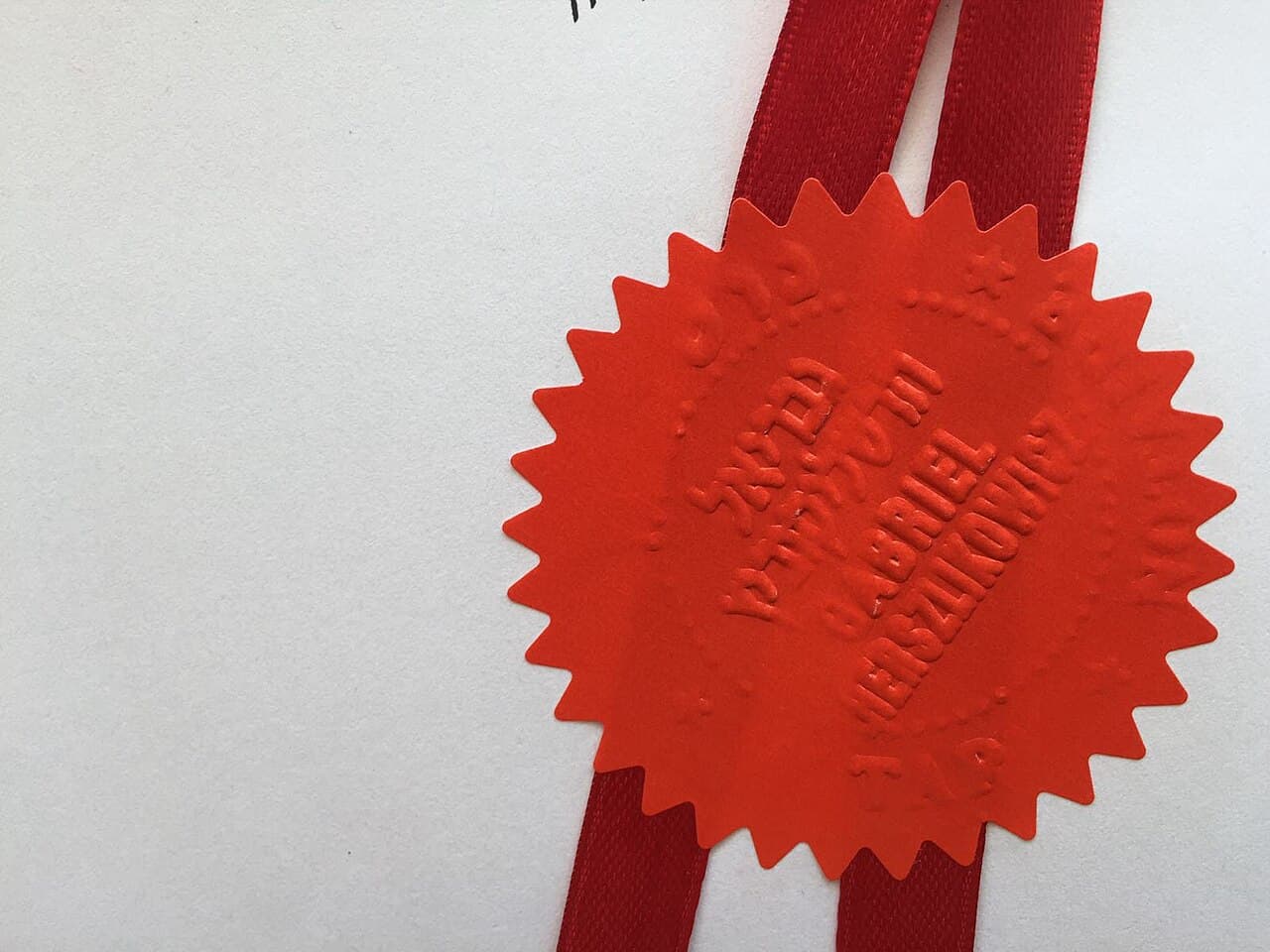
Photo: Hidith · CC BY-SA 4.0 · Wikimedia Commons
Two procedures that are constantly confused
A school certificate, a degree or an official statement issued in one country carries no weight in another by itself. For a university to accept it, the authenticity of the signature and seal has to be confirmed. There are two different procedures for that, and you do not choose between them — the choice follows from whether both countries belong to the same treaty.
An apostille is a single certificate issued by a designated authority in the country where the document was issued. With it, the document is accepted in every state party to the 1961 Hague Convention abolishing the requirement of legalisation for foreign public documents.
Consular legalisation is a chain: confirmation by a ministry inside the country, then by the foreign ministry, then by the destination country's consulate. Slower, more expensive, and used where the Convention does not apply.
Confusing the two costs money: people go through the three-step chain where one stamp would have done.
China: legalisation has not been needed since 7 November 2023
This is the significant change of recent years, and it is exactly what most guides still fail to reflect.
China acceded to the Hague Convention on 8 March 2023, and it entered into force for China on 7 November 2023. From that date, public documents exchanged between China and other contracting states need only an apostille, and consular authentication is no longer required.
For an applicant from a contracting state this means something simple: a certificate or degree bearing an apostille issued at home is accepted by a Chinese university without a visit to the Chinese consulate.
Two details worth keeping. Within mainland China, apostilles on Chinese documents are issued by the Ministry of Foreign Affairs and by authorised local foreign affairs offices. And in Hong Kong and Macao the Convention was already in force before 2023 — nothing changed there.
Where an apostille is enough, and where it is not
Russia has been party since 31 May 1992, so the question reduces to whether the destination country is. Across the destinations we work with, the picture is this.
- An apostille is enough: China (since 07.11.2023), Germany, France, Italy, Spain, Czechia, Poland, Hungary, Türkiye, Japan, South Korea.
- An apostille does not apply — legalisation is required: the UAE and Malaysia. Neither is party to the Convention, so documents go through the ordinary consular procedure; in the UAE, attestation is handled by the Ministry of Foreign Affairs.
Apostille, translation and notarisation are three different acts
The third source of confusion is treating an apostille as a kind of translation into an international language. It is not.
An apostille confirms the authenticity of the signature and seal on a document. It says nothing about the contents and does not make the document legible to whoever receives it. Translation is a separate act. Notarising that translation is another.
The practical consequence: having an apostille does not remove a translation requirement, and having a notarised translation does not substitute for an apostille. These are three independent requirements, and a university may ask for any combination of them.
We'll check your university's requirements before you go to a notary
We ask the university for the exact format, build the sequence around your country and your deadline, and check the finished set before it is sent.
The receiving institution decides the order
The expensive mistake here is not choosing the wrong procedure but doing things in the wrong order. Whether the apostille goes on the original or on a notarised copy, whether the translation comes before or after it, whether the translation itself needs apostilling — all of this varies.
There is no universal answer, and an article that offers one is misleading. The rule is set by whoever receives the document: the specific university, sometimes the specific faculty.
So the sequence runs: first a written question to the university about the form it wants the document in, and only then the notary, the translation and the apostille. Redoing it on paper is cheaper than redoing it after paying.
Italy is a case of its own, where recognition of the certificate is added on top: whether the university wants a Dichiarazione di valore or a CIMEA statement. That is worked through in the piece on the order of documents for Italy.
What to check before paying for anything
A short list that saves both money and weeks of waiting.
- Whether the destination country is party to the Hague Convention — that decides apostille versus legalisation.
- Whether the guide you found describes the pre-November-2023 procedure, if China is involved.
- What exactly the university wants: original, notarised copy, translation, and in what order.
- Whether the translation itself needs a separate apostille — this requirement exists and tends to be discovered last.
- Processing times in your region: they vary, and the application deadline does not.
Why this matters more than it looks
Documents are rarely the reason an application is rejected. They are regularly the reason it is late — and in most countries missing a deadline means losing a year.
The good news is that this is the one part of admission that depends on sequence and nothing else. Not on competition, not on grades, not on luck.
The countries in this piece
 Russia
Read next

Get in touch to get started
Tell us about yourself and what you're specifically interested in — our specialists will help you find the right format.