
Applying to Italy: five documents, and the order they go in
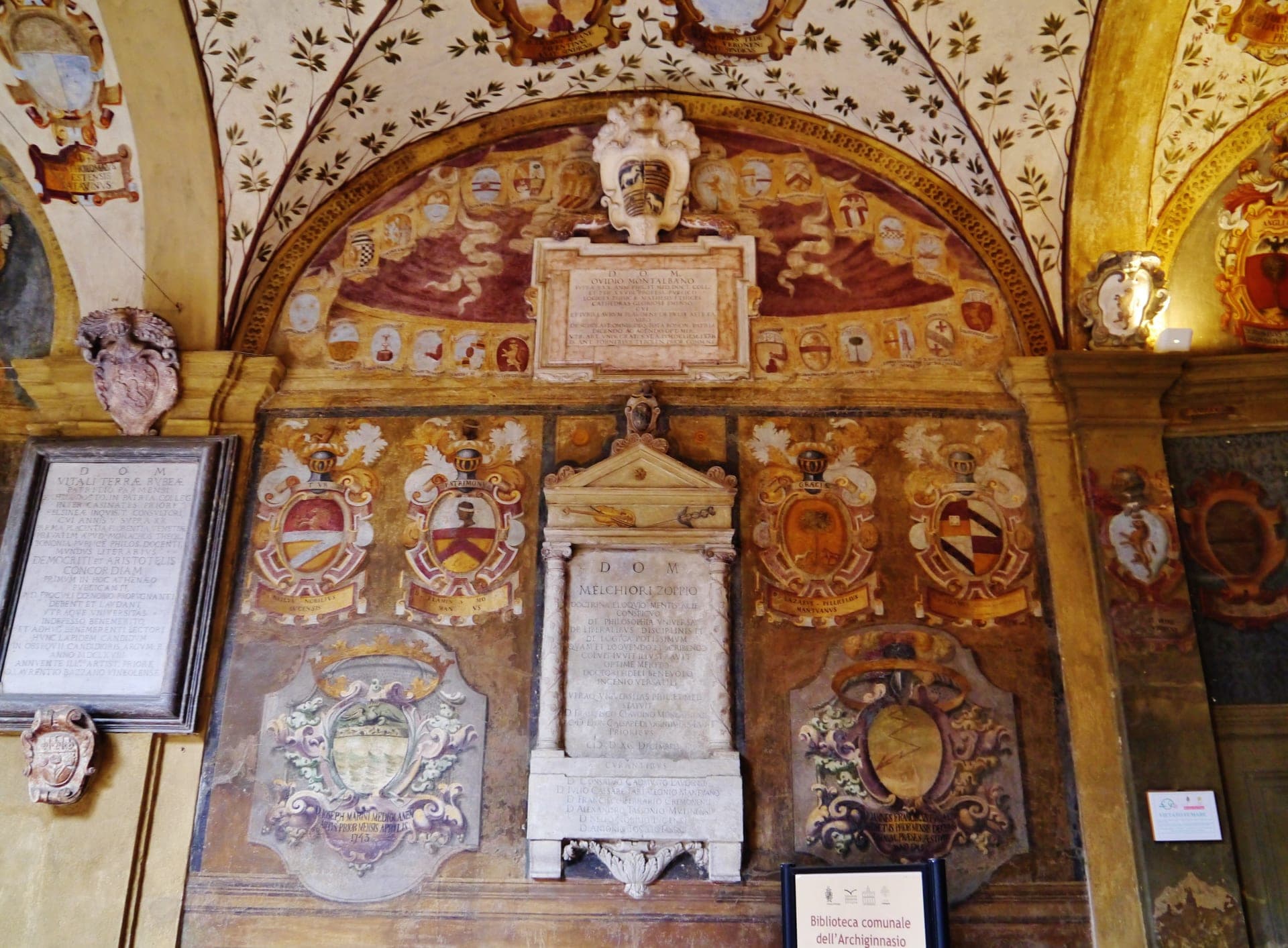
Photo: Zairon · CC BY-SA 4.0 · Wikimedia Commons
"Free study in Italy" is real, under a different name
Tuition at an Italian state university is not set by a price list but by family income. Ministry of Universities and Research decree 1014 of 03.08.2021 introduced the no tax area: below an ISEE of €22,000 the contribution falls to zero, and many universities extend partial reductions above that threshold.
That is where "you can study in Italy for free" comes from, and it is exactly half true. The reduction is not granted by itself: it has to be claimed, by filing an ISEE parificato — an Italian income calculation assembled from foreign documents. Without it the university places the student in the highest fee band, with no ill will involved; it is simply the default.
Add to that the fact that the rules differ between universities. Politecnico di Milano states outright that the ISEEU parificato determines the fee band but does not by itself confer full or partial exemption. Sapienza allows an ISEE to be declared only where there is income in Italy. These things are checked against the specific university, not against general articles — this one included.
Universitaly is not a formality, it is the door
For a non-EU applicant the process starts with pre-enrolment on the state Universitaly portal. It is the only channel: the application is made there and nowhere else.
What matters is what that entry unlocks. Until it exists, the Italian consulate will not accept a student visa application — not because something is missing, but because the procedure has not begun. People routinely discover this at the moment they book their visa appointment, and find they are a month late.
The closing date is set for each academic year and published in advance. It falls earlier than the intuition of anyone used to a different admissions calendar suggests.
Who decides whether your diploma counts
Not you and not the consulate — the university. It states whether it requires a Dichiarazione di valore, the declaration of value issued by the Italian diplomatic mission where the qualification was obtained, or whether a CIMEA statement of comparability is sufficient.
The difference is practical. A Dichiarazione di valore goes through the consulate and is tied to its calendar; a CIMEA statement is requested online and is usually faster. Choosing between them changes both the timeline and the order in which documents are translated and legalised.
So the question is asked in writing, before anything is translated. The university's answer is your document plan.
The entrance exam depends on the programme, not the country
Italy has no single entrance examination, and nothing confuses applicants more.
Medicine and dentistry in English mean IMAT, a national test sat on one day across Italy and at centres abroad, covering logical reasoning, biology, chemistry, physics and mathematics. Many bachelor's degrees — engineering, economics, the humanities — admit through the TOLC run by the CISIA consortium, which holds several sessions a year. Private universities such as Bocconi select on their own terms.
IMAT has one feature that decides the outcome: universities are entered as a ranked list of preferences, and the order in that list determines where your score places you. The same result can mean a place in Italy or no place at all, depending on how the list was ordered.
ISEE parificato: the most expensive line in the procedure
This is a statement of family income and assets, recalculated to the Italian method. It is assembled from certificates issued in your own country, which have to be translated, legalised and filed on time — usually through an authorised tax assistance centre (CAF).
The cost of getting it wrong is higher here than anywhere else in the process: without an ISEE the student pays the top rate for the whole year, and it cannot be corrected retrospectively. A recalculation applies only from the next academic year.
Which is why the ISEE is assembled alongside the application rather than after admission. By the time the acceptance letter arrives, the certificates should already be in hand.
DSU is where the real money is
The largest support available to an international student in Italy is regional rather than national. DSU programmes (diritto allo studio, the right to study) are run by regional agencies and include a cash grant, meals in student canteens, subsidised housing and exemption from tuition. International students are eligible.
DSU has no single national deadline. Each region sets its own, and it coincides with neither the university's dates nor the visa's. Missing it means losing the largest part of the support while remaining enrolled.
At national level there are MAECI scholarships from the Ministry of Foreign Affairs, €10,800, applied for strictly through studyinitaly.esteri.it. The list of eligible countries changes from one call to the next and has to be checked against the current year's official announcement rather than last year's articles.
The visa, and eight working days after arrival
Study requires a national type D visa for the purpose of "studio". The file is assembled to the requirements of the particular consulate and includes proof of accommodation, health insurance and financial guarantees.
Then comes the deadline almost nobody knows about in advance: within eight working days of entering Italy, an application for a permesso di soggiorno — the residence permit — must be submitted to the police headquarters for the place of residence. It is filed using a special kit from the post office, or through the support desk many universities run on site.
In parallel come the codice fiscale — the tax number, without which you can neither rent a flat nor open an account — and registration with the health service.
- Choose the programme and settle the language of instruction: Italian or English
- Obtain the language certificate at the required level (B2: CILS or CELI for Italian, IELTS or TOEFL for English)
- Establish in writing with the university: Dichiarazione di valore or CIMEA statement
- File the pre-enrolment on Universitaly
- Register for the entrance exam — IMAT, TOLC or the university's own selection
- Assemble and file the ISEE parificato
- Apply for DSU by your region's deadline
- Obtain the type D visa
- Within eight working days of arrival, apply for the permesso di soggiorno
What is actually hard about this
None of these steps is beyond anyone. The difficulty is elsewhere: they belong to different authorities, on different deadlines, with no shared calendar between them. Universitaly knows nothing about your region's DSU date; the region knows nothing about when you sit IMAT; the consulate knows none of it.
So an application to Italy almost never fails on knowledge. It fails on scheduling. An applicant with a good transcript and a passed exam can lose a year because the income certificate was filed after admission rather than alongside it.
That is the part worth paying someone to keep the calendar for.
The countries in this piece
 Italy
ItalyRead next



Get in touch to get started
Tell us about yourself and what you're specifically interested in — our specialists will help you find the right format.