
Can You Study Abroad After 25 or 30?
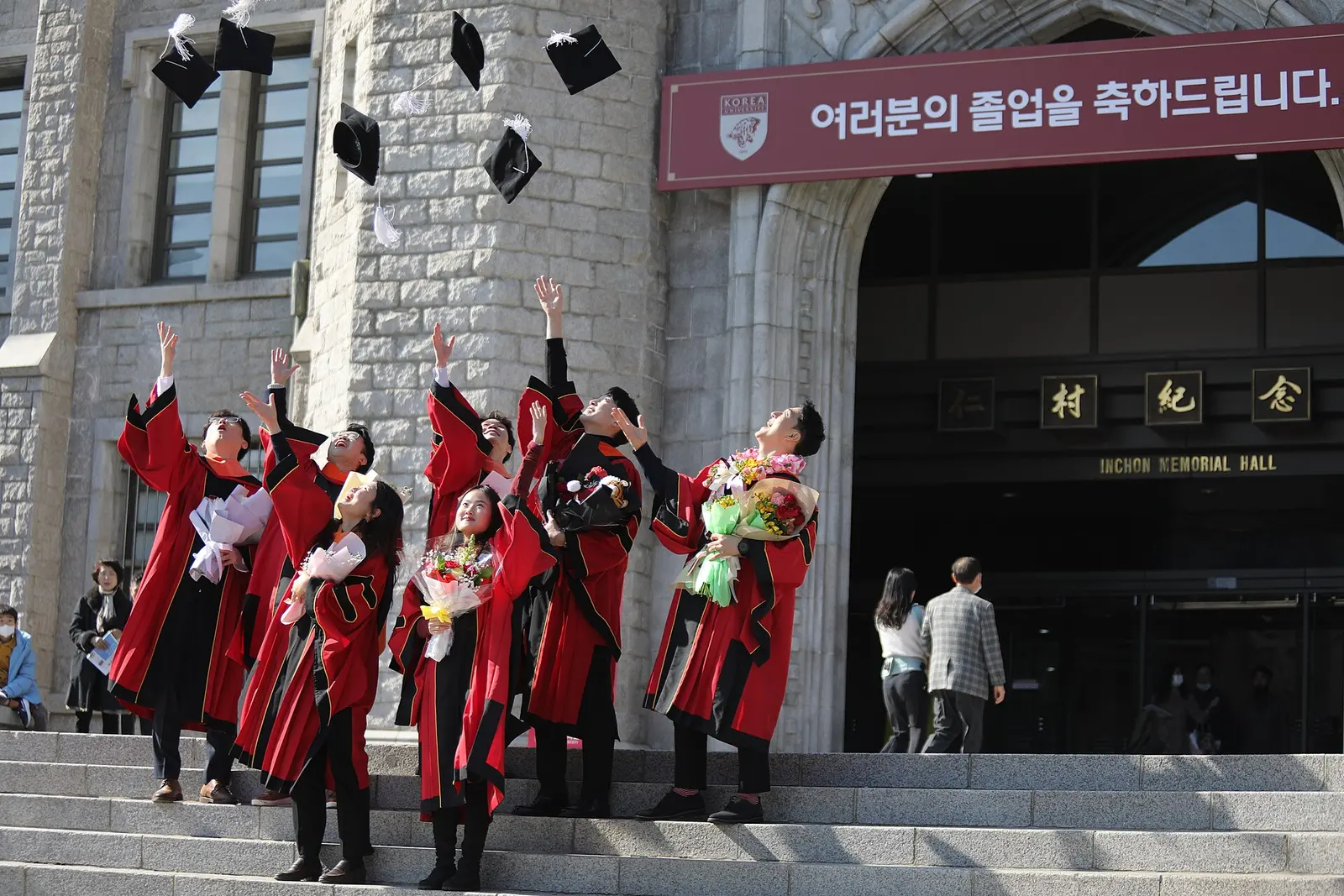
Photo: KUBS (Korea University Business School) · CC0 · Wikimedia Commons
The short answer
Yes, you can. Age is usually checked in two places: the scholarship terms and the university's own rules. So at 32 you may be too old for a government grant at bachelor's level. You can often still apply to a fee-paying programme, as long as the university sets no limit of its own.
We checked the terms below in November 2026 against the documents the programmes published. They depend on the university, the programme and the intake year, so check them again before you apply.
Government scholarships: this is where limits are strict
Here is what the latest terms we could open say:
- China, government scholarship, 2026/27 intake: bachelor's under 25, master's under 35, doctorate under 40.
- Türkiye, Türkiye Bursları: bachelor's under 21, master's under 30, doctorate under 35.
- Korea, GKS, 2026 intake: bachelor's under 25, master's and doctorate under 40.
- France, Eiffel, 2027 intake: master's up to 29, doctorate up to 35. A French university submits the application, students cannot apply themselves.
How age is counted
"Under 25" means you have not turned 25 yet. The Chinese scholarship looks at your age when you apply. Korea writes the date into its rules: the 2026 bachelor's intake took applicants born after 1 March 2001.
Japan's MEXT scholarship has a limit too. It gives a cut-off date of birth, different for each programme, and the date moves with every intake.
Look at the level as well. The higher the degree, the higher the limit: in Korea it is 25 for a bachelor's and 40 for a master's. If you are past the bachelor's limit, a master's may still be open.
We'll check the terms for your age
Send us your date of birth, education and budget. We'll tell you which countries and programmes fit.
Programmes with no upper limit
Stipendium Hungaricum. The University of Szeged's brochure on this Hungarian programme says plainly that the programme sets no upper age limit. Your application goes through a sending partner in your country, though, and it may have its own age rules. Find them out early.
Erasmus Mundus. The EU's official page for the programme names two conditions: a bachelor's degree or the final year of one. It says nothing about age. Each master's adds its own requirements.
Fee-paying study: universities can set their own limits
It is simpler without a scholarship, but you still need to check. Some universities put age in their admission rules. In its 2026 intake, Donghua University in China took fee-paying bachelor's students aged 16 to 35, and only under-25s for its own entrance scholarship.
If the university's rules say nothing about age, ask the admissions office before you pay an application fee.
Germany: insurance costs more after 30
In Germany, turning 30 changes what you pay for health insurance. Until then students pay a reduced rate, about €125 a month according to the University of Magdeburg. From 30 the reduction normally ends. The same university gives about €200 a month for voluntary cover with a statutory fund. Rates change, so work from the current ones.
Freie Universität Berlin says a student who turns 30 during their studies can stay with statutory insurance at a higher rate. If you arrive after 30, ask an insurer early. Private cover is sometimes cheaper, but moving back to statutory insurance is usually not possible.
What to do next
Write down your date of birth and the level you are aiming for. Compare them with the terms of the scholarships you want. If the grants are closed to you, work out the cost of fee-paying study and insurance.
You can look through the options in our university catalogue and check your level with the practice tests. If you would like us to check the terms, fill in the application form with your education, goal and budget.
Frequently asked questions
Can I get a scholarship at 30?
Yes, at master's and doctoral level such programmes exist. The master's limit is 35 in China and 40 in Korea. The Turkish scholarship and Eiffel are closed to 30-year-olds at master's level. Terms depend on the university, the programme and the intake year.
Is there an age limit for fee-paying study?
There is no single rule. Some universities put age in their admission rules, for example 16 to 35 for fee-paying bachelor's students at Donghua University in 2026. Check the terms of your university.
Does studying in Germany cost more after 30?
Insurance does. The reduced student rate usually applies until 30, and then the contribution goes up: about €125 and about €200 a month according to the University of Magdeburg. Rates change every year.
Still have questions about this topic?
Tell us about your situation — we'll give you a specific answer, not generic phrasing.



Write to us
Tell us where you'd like to study and what you're interested in. We'll suggest where to start and how we can work together.