
Japan
World-class research and the MEXT scholarship — with a realistic view of the language
Tell us about your profile — we will answer for this country: requirements, timing and where to start.
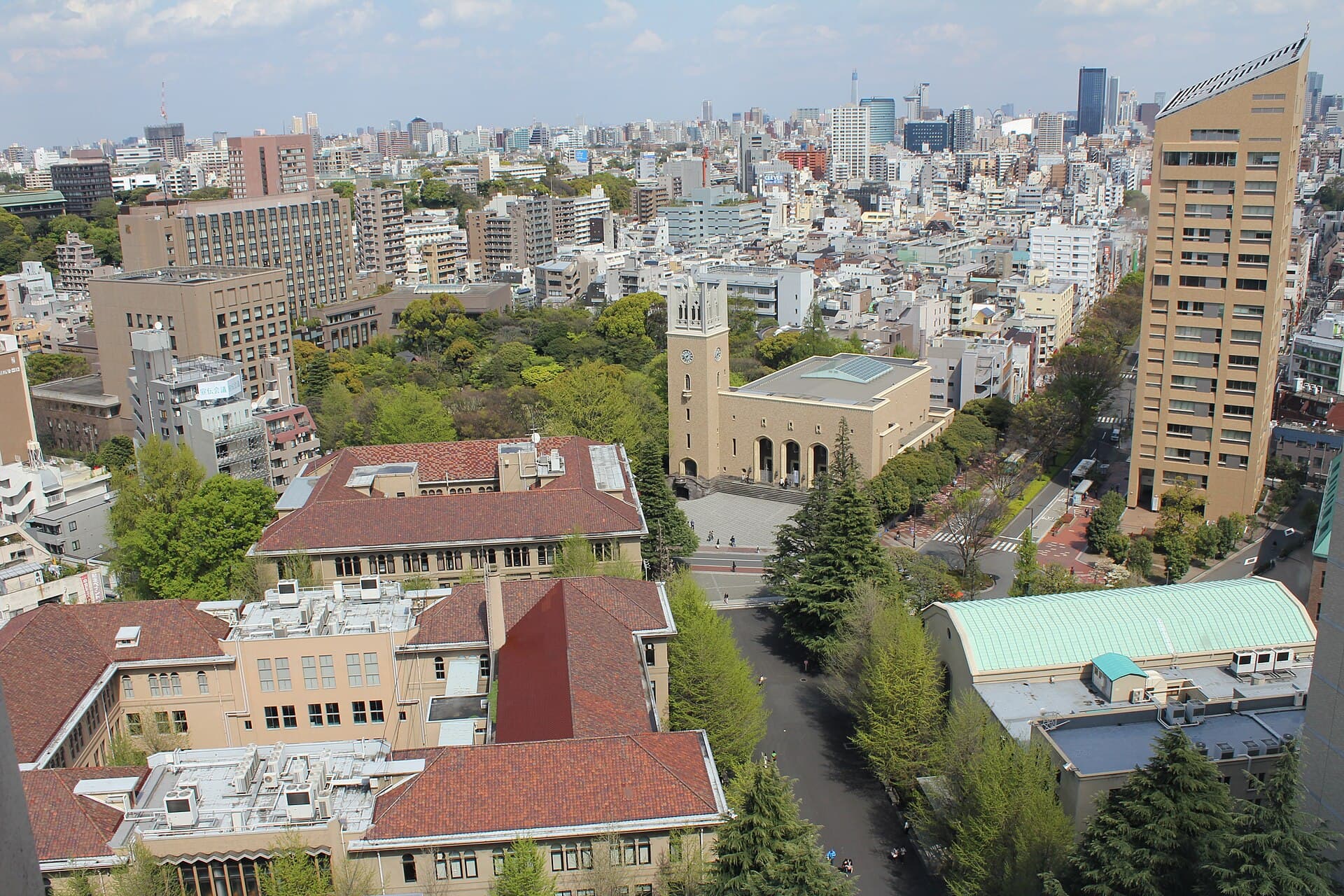
Photo: XIIIfromTOKYO · CC BY-SA 3.0 · Wikimedia Commons
Everything about admission to Japan
The four parts admission is made of. Start with whichever matters most right now.
For every country we name the catch before you pay anything. If it makes your plan unrealistic we will say so plainly and point you to something that actually works. A lost deal costs us less than money taken for an unreachable goal.
Why Japan — and what the headline statistic hides
Japan offers access to world-class research at a cost well below the US and UK, and international student numbers reached a record in 2025 — over 408,000, up more than 20% in a year.
That figure needs reading correctly, though. Only around 152,000 of them are in university degree programmes; the rest are in language schools and vocational colleges. JASSO records more than 140,000 students in Japanese language institutes alone. For planning purposes this matters: the route into a Japanese university most often begins with a language year.
Language: the factor that decides whether your plan is realistic
English-taught programmes exist in Japan but remain a minority, concentrated in specific initiatives at leading universities. The mainstream route is Japanese-medium study via the EJU examination, run by JASSO twice a year in June and November.
The scale of EJU tells the story: in FY2024 its results were used by 494 of 983 universities, including roughly three quarters of national and public institutions. Without Japanese, in other words, the field narrows sharply.
One further note: requirements for evidencing Japanese proficiency for student status have been tightening. We do not state specific wording or dates here, as this must be confirmed directly with Japan's Immigration Services Agency before applying.
The MEXT scholarship, visa and costs
The MEXT (Monbukagakusho) government scholarship comes in two routes: embassy recommendation and university recommendation. It provides tuition exemption, a monthly stipend and round-trip airfare. We do not publish the payment amounts — check them in the annual application guidelines on your embassy's site.
The visa runs through the "Student" (留学) status of residence: your institution applies for a Certificate of Eligibility (COE) at a regional immigration bureau, after which the visa is issued at the embassy. The maximum period of status is 4 years and 3 months.
Study is not free. Per official Study in Japan data, standard tuition at national universities is ¥535,800 per year plus a ¥282,000 admission fee. Since 2024, however, national universities may set fees for international students around 20% above the standard rate — the University of Tokyo, for instance, raised undergraduate tuition from AY2025. Verify figures with the specific university.
UNIPROFI in Japan
In Japan our job is to help build a realistic plan: whether you need a language year, which programmes are genuinely available in English, and how EJU timing lines up with application deadlines.
Write to us if you are considering Japan — we will tell you where this direction stands and what can be done now.
Universities in Japan
See all

Worth reading on this


Get in touch to get started
Tell us about yourself and what you're specifically interested in — our specialists will help you find the right format.