
How Much Does It Cost to Study in France in 2026/27? The First Year, Added Up
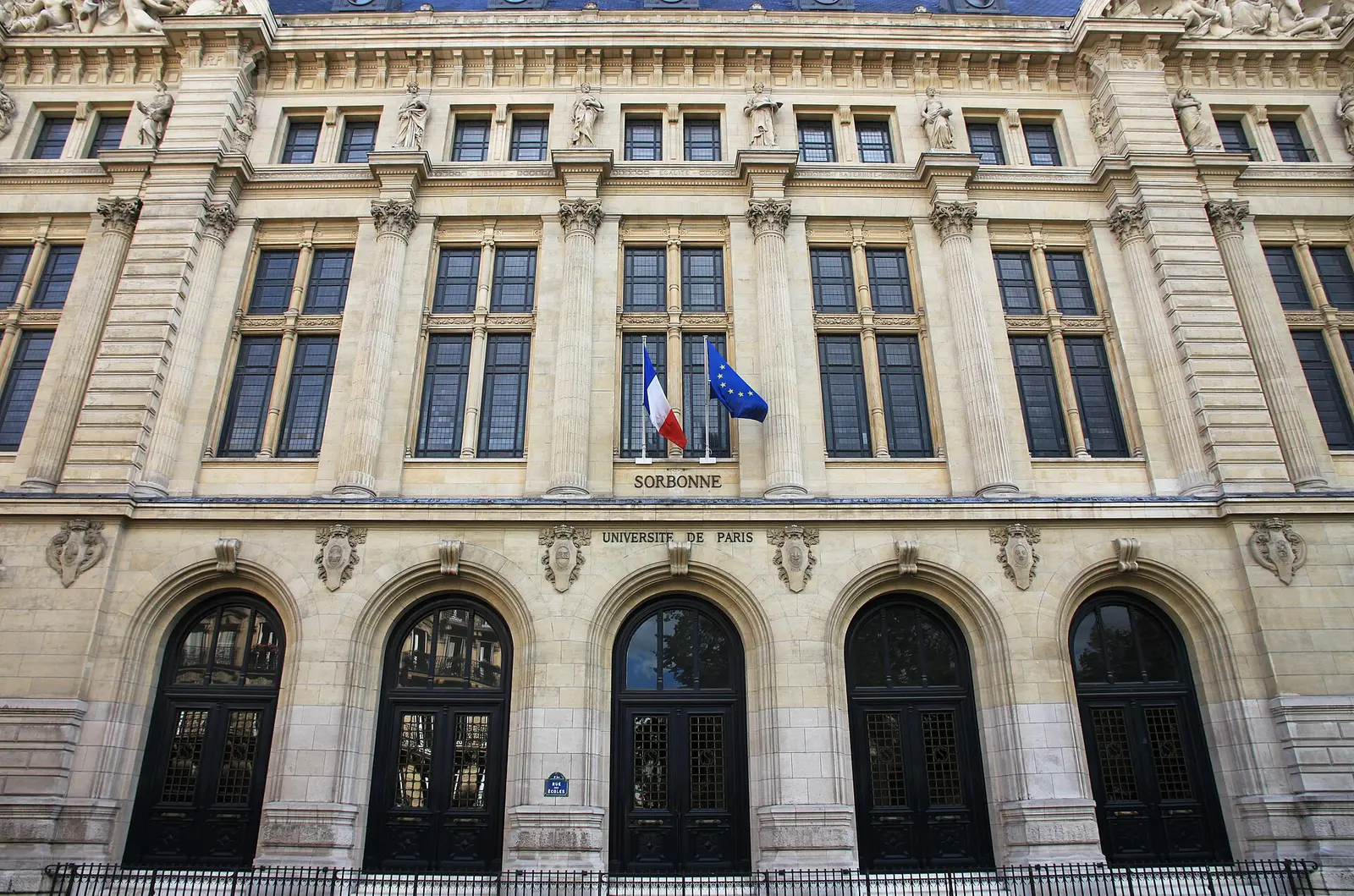
Photo: NonOmnisMoriar · CC BY-SA 3.0 · Wikimedia Commons
The short answer
If you are from outside the EU and your university has not waived the higher fee, plan for at least €13,537 for a bachelor's and €14,585 for a master's in the first year. That covers tuition, the CVEC contribution and the 12 months of living money checked for your visa.
These figures apply to public universities in the 2026/27 academic year. We checked them on 1 November 2026. Conditions depend on the university, the programme and the intake year. We have not yet found official amounts for 2027/28, so check them again if you are applying for next year.
Three rules that changed in 2026
Older budgets online no longer work. Three things changed in France within three months:
- Tuition. Decree no. 2026-385 of 19 May 2026 limited waivers of the higher fee. In 2026/27 a university can waive it for up to 30% of its foreign students, in 2027/28 for up to 25%, and later for up to 20%.
- Money for the visa. For applications from 1 August 2026, the minimum rose from €615 to €877.50 a month.
- Housing help. Since 1 July 2026, non-EU students without a social-criteria scholarship generally cannot get the APL housing benefit.
What the first-year total is made of
This is the calculation for a non-EU student over 12 months:
- Tuition: €2,902 for a bachelor's, €3,950 for a master's.
- CVEC contribution: €105. You pay it when you enrol, and it funds student life and campus services.
- Living money for the visa: €877.50 × 12 months = €10,530.
- Total: €13,537 for a bachelor's, €14,585 for a master's.
Tuition and living money are counted separately
This is an easy mistake. Campus France's US site says plainly that €877.50 for each month must remain in your hands after tuition is paid. So the same money cannot cover both lines. If you are staying for less than 12 months, count the living money by the number of months.
Add the visa validation after you arrive. Campus France gives a tax of €100, the government portal service-public gives €150, so budget €150. You must validate the visa within 3 months of arrival.
Flights, the consular fee, the Campus France fee and document translations depend on your country and are not in the total above.
€877.50 is enough for the visa, but too little for Paris
The threshold shows the consulate that you have the money. It is not a budget. Here is what is left of it after rent, using Campus France figures from June 2026:
- Paris, private studio: from €800, leaving €77.50 at most.
- Paris, Crous room: €450, leaving €427.50.
- Another city, studio: from €400, leaving €477.50 at most.
- Another city, Crous room: €350 on average, leaving €527.50.
We'll work out France for your budget
Tell us your level of study, the city you want and the amount you have. We'll tell you which universities fit and how much you are short.
How to stay within budget
Crous rooms are the cheapest, but they are hard to get: Campus France says demand far exceeds supply. If you are planning on Paris, budget for a studio and prepare more than the minimum. In another city a studio starts at half the price: from €400 instead of from €800.
There is some good news too. Since 4 May 2026, a meal in Crous canteens costs €1 for all students with a valid student card and an Izly account.
One more thing to keep in mind. Under article R. 422-2, the threshold equals 47% of the minimum wage on the day you apply. If the wage rises, so does the threshold. When you renew your documents for the second year, you will need the amount in force at that moment.
Who can still get APL
The rule has applied since 1 July 2026, and it also covers students who were already receiving the benefit.
The French government scholarship (BGF) does not give this right: Campus France points out that it is awarded on merit, so it does not count as a social-criteria scholarship. These groups keep the right:
- citizens of the EU, EEA and Switzerland;
- students with a social-criteria scholarship (CROUS and some regional health and social-work scholarships);
- students who work as employees or are self-employed;
- students on an apprenticeship or professionalisation contract;
- refugees, stateless people and spouses of non-EU students.
Work helps, but it has a limit
Working keeps your right to APL. The service-public site gives no minimum number of hours, so the amount is worked out by your local CAF office. A non-EU student can work up to 964 hours a year. Go over that limit and your residence permit can be withdrawn.
So plan your budget without APL. If you do qualify, that money becomes your reserve.
Who pays less
The standard rate for 2026/27 is €178 for a bachelor's and €255 for a master's. Citizens of the EU, EEA and Switzerland pay it. Campus France lists other cases too:
- Standard fee by status: residents of Québec, holders of a long-term resident permit, people who have been French tax residents for more than two years, refugees and people with subsidiary protection.
- Full automatic waiver: French government scholarship holders and students under agreements between institutions or exchange programmes.
- Waiver on request: the university decides based on personal circumstances, such as conflict at home, disability or financial hardship. The 30%, 25% and 20% limits apply here.
- Doctorate: €398 a year. The higher fee does not apply to it.
Private schools and engineering schools
Private schools and business schools cost more: Campus France gives €6,000 to €18,000 a year or above. Engineering schools under other ministries set their own fees, so the figures above may not apply to them.
If you need a scholarship, look at grants in France. The university submits the Eiffel application, and a student cannot do it alone.
Five common mistakes
These mistakes cost time, and sometimes the visa:
- Budgeting with the old €615 threshold. It still appears on older pages.
- Using last year's fee. €2,895 and €3,941 were the 2025/26 amounts.
- Showing one sum for both tuition and living costs.
- Counting APL towards your rent.
- Relying on a waiver before the university confirms it in writing. The limit falls each year, and students waived for 2025/26 keep that waiver only at the same institution and until the end of the cycle.
What you can do yourself and what we can take on
You can work out your budget from this article yourself. The risk of a mistake is higher in the application: the order depends on your country and level, and a missed deadline can push your admission back a year.
We work out your route, fill in and check your file, and rehearse the interview if there is one. Campus France and Études en France costs $230. Visa D and OFII validation costs $160: we put the visa pack together and check the form. You pay Campus France and university fees separately, on their own invoices. The university and the consulate make the decisions.
What to do today
Write down your level of study, your city and the amount you have. Compare it with the lines above. If you have less than €13,537, look at grants in France or another country.
Check the deadline. For the first year of a bachelor's starting in autumn 2027, DAP applications through Études en France opened on 1 October 2026 and close on 15 December 2026, according to Campus France's US site. Confirm the date for your country. We explain how the application works in a separate article.
Look through universities in France and compare visa amounts in other countries. If you want a calculation for your case, fill in the form: we'll suggest universities and cities that fit your budget.
Frequently asked questions
Is studying in France free in 2026/27?
No. Even EU citizens pay €178 for a bachelor's and €255 for a master's, plus the €105 CVEC. Non-EU students pay €2,902 and €3,950 unless they have a waiver.
How much money do I need to show for a French student visa?
For applications from 1 August 2026, the minimum is €877.50 for each month, which is €10,530 for 12 months. This amount must remain after tuition is paid.
Can international students get APL?
Since 1 July 2026, a non-EU student gets APL only with a social-criteria scholarship, a job, an apprenticeship contract or another status on the CAF list, such as refugee status.
How many hours can a non-EU student work?
Up to 964 hours a year. Go over the limit and your residence permit can be withdrawn.
Still have questions about this topic?
Tell us about your situation — we'll give you a specific answer, not generic phrasing.
The countries in this piece
 France


Write to us
Tell us where you'd like to study and what you're interested in. We'll suggest where to start and how we can work together.