 Grants and scholarships
Funding a degree in Germany What you can really get
Which programmes actually exist, who can apply and where people most often go wrong.
- Main programme
- DAAD and university programmes
Send your transcript or degree, your average grade and your language level. We'll tell you which programmes suit you and which don't.
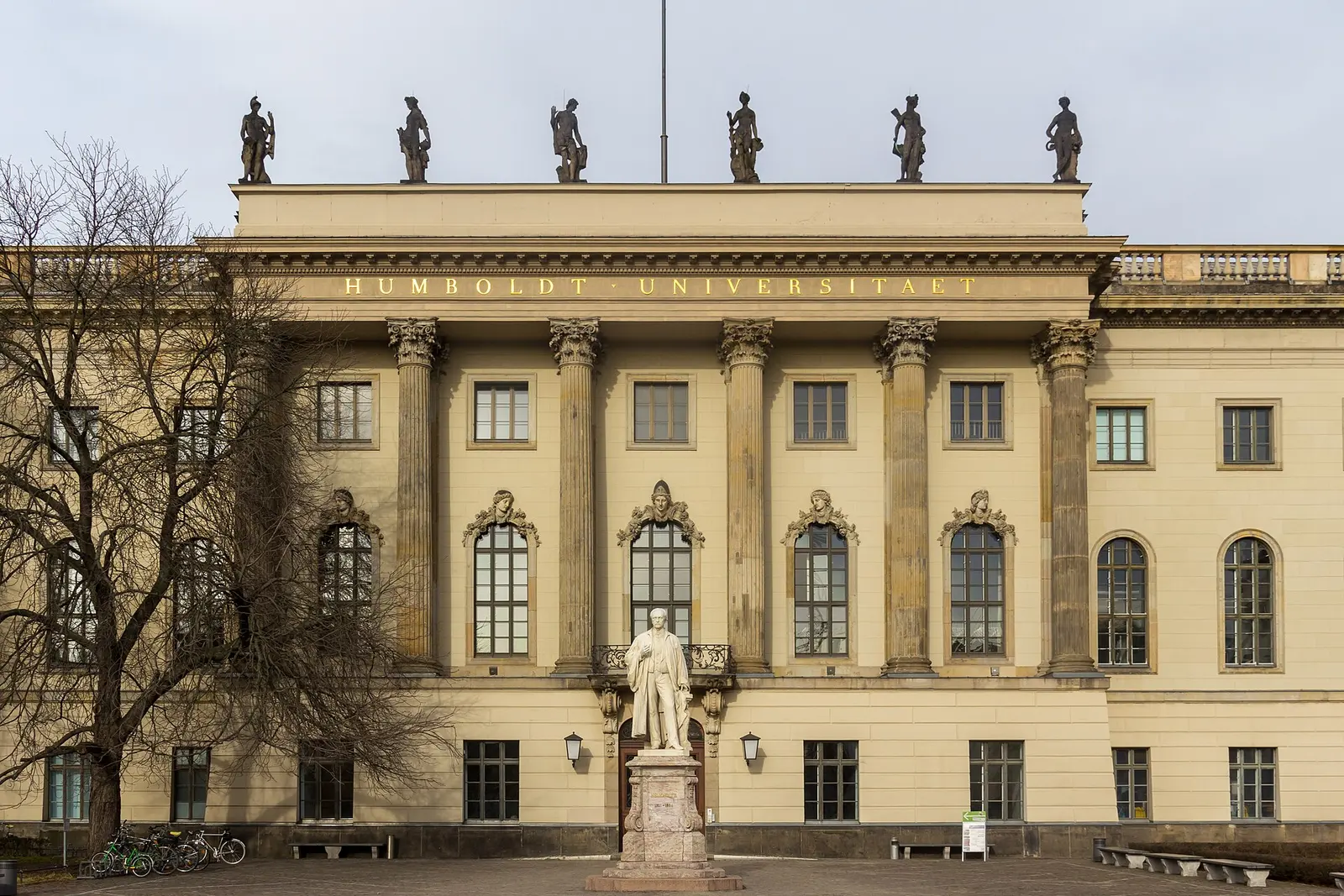
Photo: Photograph by Mike Peel (www.mikepeel.net). · CC BY-SA 4.0 · Wikimedia Commons
The biggest misconception: “Germany is free”
Tuition in Germany is decided by the state, not by the country. In most federal states public universities genuinely charge nothing for a first degree, international students included. But Baden-Württemberg — the state of Heidelberg, Tübingen, Freiburg, KIT and Stuttgart — has charged international students who came from outside the EU to study 1,500 euros per semester since the 2017/18 winter semester. It is set by the state's higher education fees act (Landeshochschulgebührengesetz) rather than by any one university, so moving to another university within the state does not help.
Individual universities charge outside Baden-Württemberg too. The Technical University of Munich charges non-EU applicants, as a rule, 2,000 or 3,000 euros per semester for a bachelor's degree and 4,000 or 6,000 euros per semester for a master's, the exact amount depending on the programme. For a master's that is 8,000 to 12,000 euros a year: ordinary European tuition, not free study in Germany.
On top of this every student everywhere pays the semester contribution (Semesterbeitrag), which funds the student union and a transport pass rather than teaching, and the amounts are small: at TUM it is 97 euros for the 2026 summer semester in Munich, Garching and Weihenstephan. The conclusion is simple — "how much does studying in Germany cost" has no answer until you name the state and the university, and a budget has to be built from a specific programme.
Why Germany
Germany is Europe's largest economy and a world leader in mechanical engineering, automotive engineering and applied sciences, with universities whose reputation in these fields has been built over decades. Higher education at public universities remains tuition-free in most German states and programs, even for international students — a rarity among developed countries.
A German degree opens doors not just to the German labor market but to the entire European Union, and Germany remains one of Europe's most stable and predictable countries for a long-term career and immigration path.
Visa, documents and cost
Applicants from Russia and most CIS countries do NOT need an APS certificate — it's only required for academic documents from China, Vietnam and India. Instead, the authenticity and equivalence of Russian documents is checked via the anabin database maintained by ZAB (Zentralstelle für ausländisches Bildungswesen) — usually handled by the university itself during application review, with no separate paid certificate involved.
While tuition at most public universities is free (aside from a small per-semester administrative fee), a visa requires proof of financial means — typically via a blocked account (Sperrkonto) covering the first year's living costs. One thing worth flagging: Russian citizens have recently run into more friction specifically here — not every Sperrkonto provider bank is currently willing to open one for a Russian passport, so it's worth checking this in advance.
How we help you win a scholarship
- 01
Your profile
We look at your grades, languages and goals, and tell you plainly which scholarships you qualify for.
- 02
Universities and scholarships
We pick up to five scholarships and universities with the best odds and put the deadlines in a calendar.
- 03
Documents and letters
Study plan, statement, recommendations, translations. We check every field of the form.
- 04
Applying and moving
We file the applications, follow the universities' replies and help with the visa and the move.
Applying to a university
We prepare and file the application for a place and a scholarship. The university's own fee is paid separately, on its invoice.
More on Germany
Write to us
Tell us where you'd like to study and what you're interested in. We'll suggest where to start and how we can work together.