
Beijing Jiaotong University
Beijing Jiaotong University
Tell us about your profile and we will answer for this university: your chances, the deadlines and what to prepare.
Shortlist a few and we'll compare them side by side and assess each one.
From imperial railway school to global transport powerhouse
Beijing Jiaotong University (北京交通大学, BJTU) traces its origins to the final years of the Qing dynasty. Its institutional ancestor, the Nanyang Public School, was founded in Shanghai in 1896 and gave rise to a family of Jiaotong (交通, meaning "communications, transport") universities across China. The Beijing branch, initially established in 1909 as the School of Railway Management, became the country's first institution of higher learning dedicated to training railway professionals. In 1921 it was incorporated into the unified Jiaotong University as the Beijing School, and in 1923 formally adopted the name Beijing Jiaotong University — though it would undergo several more name changes over the decades, most notably becoming Northern Jiaotong University in 1949, a title it retained until 2003 when the original name was restored.
For more than a century, BJTU has been inseparable from China's railway development. Faculty and alumni have participated in virtually every milestone — from the sovereignty struggles over railway rights in the early 1900s to the construction of the Qinghai–Tibet Railway, six railway speed-raising campaigns, and the design of modern high-speed rail and urban metro systems. Today BJTU is a key national university jointly supported by the Ministry of Education, China Railway Corporation, and the Beijing Municipal Government. It was selected for the 211 Project and the 985 Strength Discipline Innovation Platform; in 2012 it led the formation of the Collaborative Innovation Centre for Rail Transit Safety, one of the first fourteen centres approved under the national 2011 Project. The university has nurtured generations of engineers, managers, and researchers who continue to shape the country's transport infrastructure.
Chinese universities tighten portfolio and motivation-letter requirements every year — we track this university by university, so every application matches what the admissions committee actually expects right now.
Academic reputation and flagship disciplines
In the 2026 Academic Ranking of World Universities (ARWU), Beijing Jiaotong University ranks in the 401–500 band globally, with particularly strong showings in its core engineering fields. The 2025 Global Ranking of Academic Subjects places BJTU second in the world for Transportation Science & Technology — a natural fit for the nation's rail transport flagship — and within the global top 50 for Telecommunication Engineering (28th), Civil Engineering (37th), Instruments Science & Technology (41st), and Electrical & Electronic Engineering (51–75). Domestically, BJTU ranks around 50th among nearly 1,000 Chinese universities and 9th among Beijing institutions.
The university maintains eight national key disciplines, twenty first-level doctoral programmes, and thirty-four first-level master's programmes. Its research infrastructure comprises over fifty platforms at ministerial level or above, including the State Key Laboratory of Railway Traffic Control and Safety, the National Engineering Research Center of Rail Transportation Operation and Control System, and the National Engineering Laboratory on Interconnection Technology for Next Generation Internet. In recent years BJTU has supervised nearly 11,000 research projects — encompassing national 973 and 863 plans, natural science and social science funds — with total funding exceeding 3.6 billion RMB. The university publishes thousands of papers annually in SCIE- and EI-indexed journals, files more than 2,000 patent applications, and holds over 1,200 approved patents. Beyond transport, BJTU excels in information technology, economics, management, electronics, and automation — making it an attractive destination not only for aspiring rail engineers but also for students in data science, fintech, urban planning, and logistics.
Show the full profile
Campus and student life in the capital
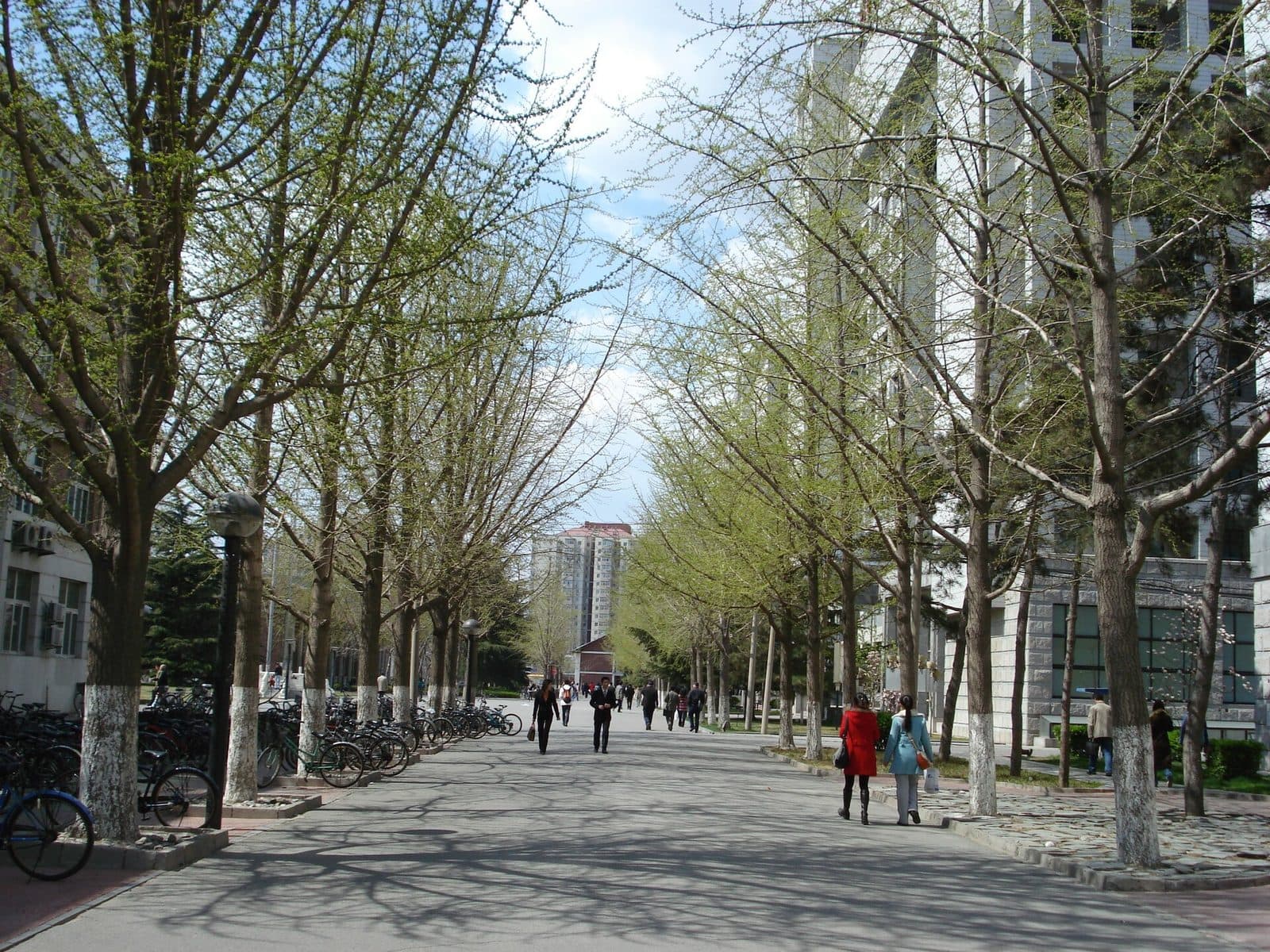
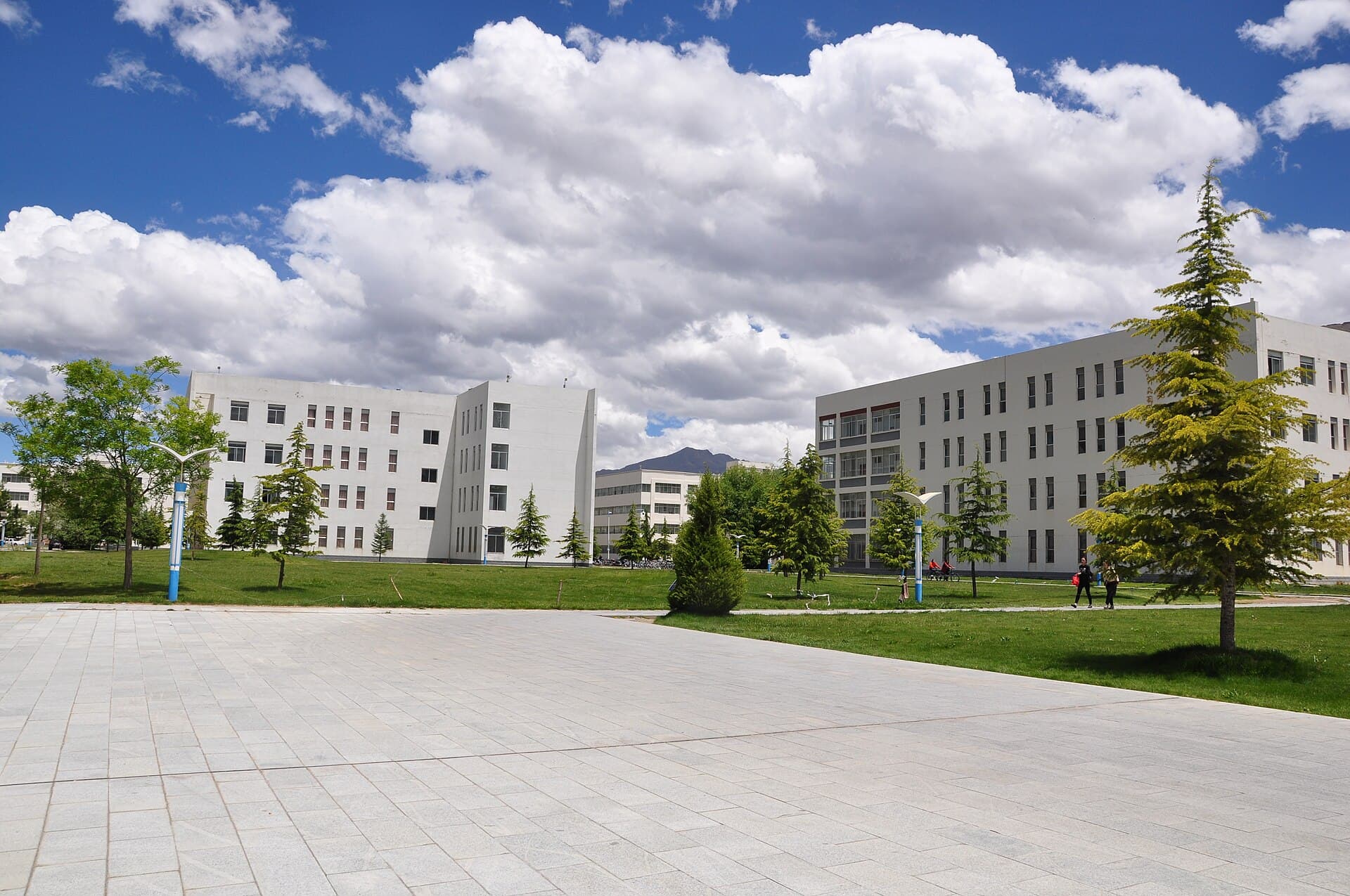
BJTU's main campus is located in Haidian District in northwestern Beijing, the city's traditional university quarter where it shares the neighbourhood with Peking University, Tsinghua University, and dozens of other leading institutions. Address: No.3 Shangyuancun, Haidian District, Beijing 100044. Students enjoy full access to the capital's cultural, recreational, and professional resources — libraries, museums, theatres, parks, shopping centres (the nearest major mall, Cade Mall, is one metro stop away at Xizhimen station), and countless internship and job opportunities. The campus features comprehensive Wi-Fi coverage, a library with over 4.5 million volumes and more than 140 databases (CNKI, Wanfang, SCI, EI), a multifunctional student recreation centre with several canteens (including a halal dining hall), a sports complex with a 50-metre swimming pool, gymnasiums, and courts for badminton, basketball, and volleyball, and an on-campus health clinic. An artificial lake, Ming Lake, fringed with weeping willows, serves as a favourite study and relaxation spot.
International students are housed in buildings 1, 4, 14, and C, mostly in double rooms equipped with air conditioning, internet, television, furniture, and (in most buildings) private bathrooms. Each dormitory has common lounges, laundry facilities, and shared kitchens. The university supports over one hundred student associations — from science and technology clubs and volunteer organisations to the Rainbow Chinese and Foreign Exchange Society, which fosters cross-cultural friendships, as well as basketball and football teams, the African Union, a photography club, and a symphony orchestra. The Haidian location, near the Xidan commercial district and the Zhongguancun tech hub, gives students wide access to part-time work, internships, and leisure.
Competition and entry requirements
Beijing Jiaotong University employs a competitive document review and interview process for undergraduate, master's, and doctoral admissions. For the 2026 cycle the university offers international students more than 170 programmes at all levels (including approximately 57 master's and 32 doctoral programmes), plus non-degree options — preparatory year, Chinese language courses, visiting scholar programmes, and short-term training.
Language requirements depend on the medium of instruction. For Chinese-taught programmes, applicants should have an HSK Level 5 certificate with a score of at least 180 (dated within two years) or a previous degree earned in Chinese. For English-taught programmes, applicants need IELTS 6.0 or above, or TOEFL 80+ (also within two years), or a previous degree completed in English. Some scholarship programmes may set different language thresholds, so always verify on the official website. Starting with the 2026–2027 academic year, all undergraduate applicants are required to take the China Scholastic Competency Assessment (CSCA) and submit scores for "Professional Chinese" and "Mathematics"; applicants to science and engineering majors must also take "Physics." The first CSCA test was administered in December 2025, and from 2026 onward tests are offered five times annually (January, March, April, June, December). CSCA requirements — which subjects, which language, whether mandatory — depend on the target university, programme, and admission year; applicants should verify the current, official requirements of the university and CSCA before registering.
Academic requirements are standard: a high-school diploma for bachelor's, a bachelor's degree for master's, and a master's degree for doctoral programmes. Applicants under 18 must provide guardianship documentation in Beijing. The application package includes notarised copies of diplomas and transcripts (with Chinese or English translations), a CV, a study or research plan (ranging from 1,000 words for undergraduates to 3,000 for doctoral candidates), a physical examination form (Foreigner Physical Examination Form), a certificate of no criminal record, a bank statement (balance of at least US$10,000 for the most recent month), and—for master's and doctoral applicants—two letters of recommendation from professors or associate professors and (mandatory for doctoral applicants) a letter of acceptance from a prospective supervisor. All materials are submitted online via bjtu.17gz.org; the application fee is non-refundable once paid. The general application window for 2026 runs from 1 November 2025 to 30 June 2026; for specific scholarship programmes the deadlines are shorter (for example, the Chinese Government Scholarship High Level Graduate Program closes on 28 February 2026).
Scholarships and funding opportunities
Tuition for self-funded international students ranges from 22,000 RMB per year (preparatory programme) to 34,000 RMB (Chinese-taught doctoral programmes). English-taught programmes are more expensive: bachelor's programmes cost 115,000 RMB annually (dual-degree programmes at Weihai campus run 120,000), master's programmes 35,000 (MBA 63,000), and doctoral programmes 40,000 RMB. The university and the Chinese government offer a wide array of scholarships covering tuition, accommodation, comprehensive medical insurance, and monthly stipends.
The Chinese Government Scholarship is available through three main channels: the Bilateral Program (Type A), the High Level Graduate Program for master's and doctoral students (Type B), and the Silk Road Program (Type B). The Type B scholarship for master's students provides 3,000 RMB per month and for doctoral students 3,500 RMB per month, in addition to full exemption from registration, tuition, laboratory, and basic internship fees, on-campus accommodation, and comprehensive medical insurance. Eligibility requires the appropriate prior degree (bachelor's for master's, master's for doctoral), an age limit of 35 (master's) or 40 (doctoral), the necessary language proficiency, and a clean legal record. Scholarship renewal depends on annual review performance. In addition to government scholarships, students may apply for programmes sponsored by the Ministry of Commerce, the Beijing Municipal Government Scholarship for International Students, the International Chinese Language Teachers Scholarship (Confucius Institute Scholarship), and Beijing Jiaotong University's own International Student Scholarship. Details on amounts, quotas, and application dates are updated annually on the College of International Education website (cie.bjtu.edu.cn) and www.campuschina.org.
How we help you apply
Admission to Beijing Jiaotong University demands meticulous document preparation, strict adherence to deadlines (especially for scholarship programmes with February–March cut-offs), CSCA testing for undergraduates, and strategic choice between Chinese-taught and English-taught tracks, each with its own language and academic demands. Errors in online forms, incorrect diploma translations, a research plan that misses the mark, or missing the CSCA registration window can derail months of effort.
The UNIPROFI team (uniprofi.org) specialises in preparing applicants for Chinese universities and offers several tiers of support. The Self-Guided Admission to China package suits those who prefer to submit documents independently but need expert guidance on programme selection, document verification, and system navigation. Guided Admission to China includes help building a competitive portfolio, editing your motivation letter, identifying potential supervisors for doctoral applicants, and coordinating multi-programme applications. Turnkey Admission to China offers end-to-end management — from application strategy to acceptance letter and visa support. For those aiming at top-tier institutions, including BJTU as one of your targets, the Admission to China's Top-10 Universities package provides enhanced interview preparation, research profile development, and faculty networking. Individual services — Consultation with a Tsinghua University expert, Admission strategy for China's top universities, Building a strong CV for Chinese universities, Motivation letter writing support, Matching up to 5 universities to your profile, Grants for studying in China, Mock interview for China's top universities, Chinese student visa support, as well as CSCA prep: foundation course and CSCA prep: intensive course — are available à la carte if you need targeted help. With UNIPROFI, you don't just submit an application — you build a competitive strategy grounded in real knowledge of admissions committees, current requirements, and your individual strengths.
Tell us about yourself — we'll build an admissions strategy for this exact university.
Many students get in through our preparatory Language Year — an intensive year of Chinese at a partner university, followed by a move onto the main program.
What the Language Year isFrom application to admission
Profile review and strategy
We study your academic profile, goals and budget, assess your real chances, and shortlist universities and grants for your specific situation.
Document preparation
We help with translation, notarization, your motivation letter, CV and recommendations — tailored to each university's requirements.
Filing applications and university correspondence
We file your documents, track status, respond promptly to admissions offices, and keep every deadline under control.
Visa, move and your first weeks
We arrange your visa, insurance and medical exam, help with housing and transfer, and stay in touch after you arrive.
How we support admission here
From filing documents on your own to admission at one of China's top-10 universities — pick the level of involvement that fits you, and see exactly what's included in each tier.
If you're not admitted to any of your chosen universities, then under the terms of the agreement we'll refund your payment minus documented expenses, or support a free re-application the following year.
Common questions about admission
Why apply through UNIPROFI specifically?
UNIPROFI is about a well-thought-out application and a strong outcome: we build an application path around your profile, goals and the requirements of your selected universities. You work with mentors who are current students or graduates of these schools, so you get real understanding of the system, campuses and opportunities — not theory. We take on complex cases (including minors and admission without an 11th-grade diploma), build an individual strategy for your profile and goals, and support you through every stage, from documents to your visa.
Do you guarantee admission?
We don't offer "guarantees for the sake of a sale," because no one can directly influence a university's decision. What we do is structure everything to minimize the risk of rejection — matching you to the right universities, building a strong application strategy, and preparing documents carefully. Any refund or re-application arrangement is governed only by the current service agreement and the circumstances of the case.
What are my actual chances of getting in?
We do not state a universal admission probability because the decision belongs to the university. We instead assess your profile, programme requirements and application strategy.
Can I apply on my own — why do I need you?
You can, but most students end up losing time, making mistakes, or settling for weaker universities. We save you months, help you start at a stronger level, and prevent the mistakes that can cost you admission.
Get in touch to get started
Tell us about yourself and what you're specifically interested in — our specialists will help you find the right format.