
Dalian University of Technology
Dalian University of Technology
Tell us about your profile and we will answer for this university: your chances, the deadlines and what to prepare.
Shortlist a few and we'll compare them side by side and assess each one.
A Century of Engineering Excellence
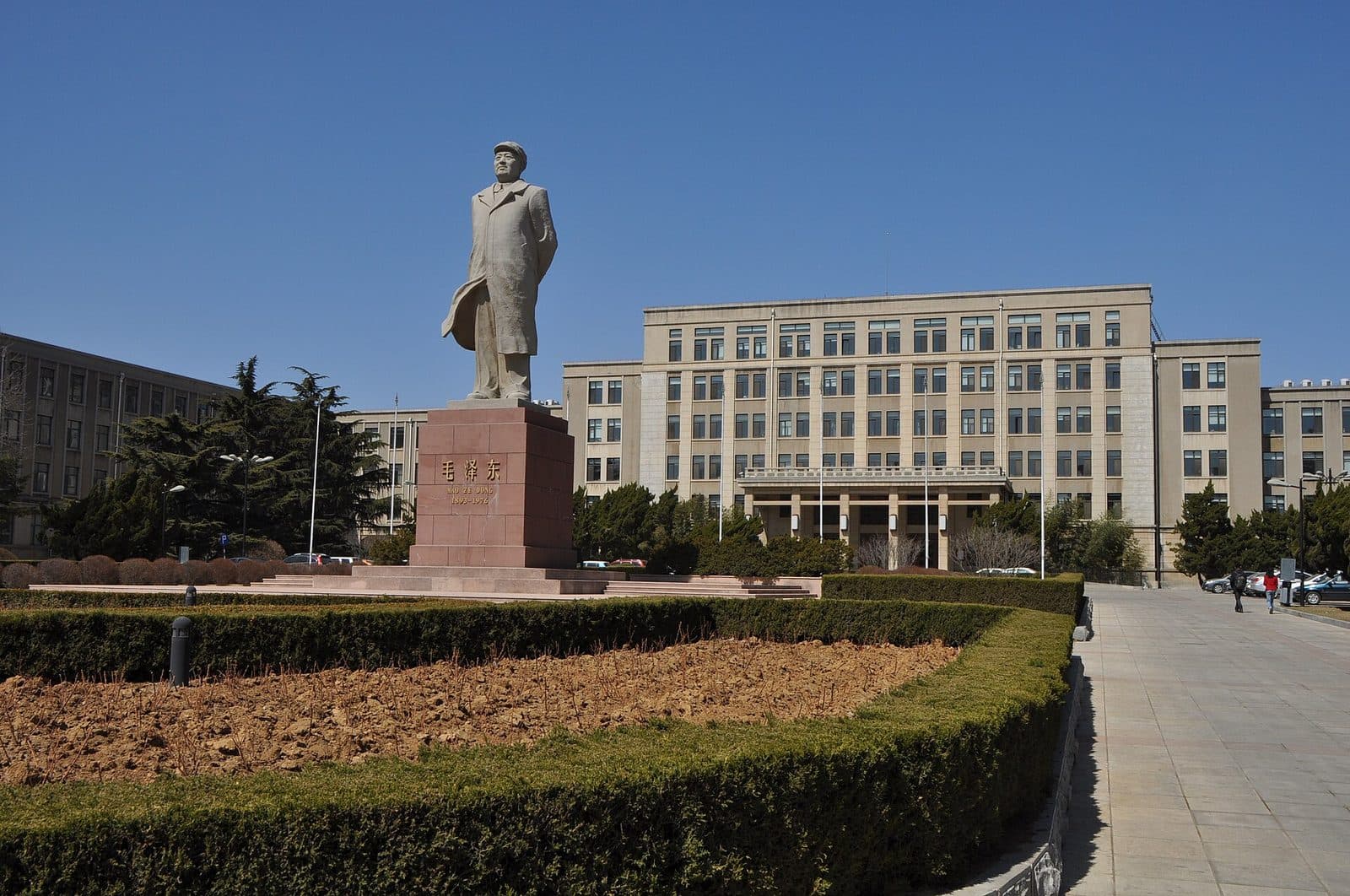
Dalian University of Technology (DUT) was founded in April 1949 as the Engineering College of Dalian University and became an independent institution in July 1950, reflecting the post-war reconstruction of China's technical capacity. Designated a national key university under direct Ministry of Education administration in 1960, it has grown into a comprehensive research institution. DUT joined China's "Project 211" in 1996 and "Project 985" in 2001, marking its recognition as a top-tier scientific research hub. In September 2017, it received Category-A status under the "Double First-Class" initiative—a designation reaffirmed in February 2022. Today, DUT ranks 28th among Chinese universities in national benchmarks, places in the ARWU world range of 151–200, and operates across its main Dalian campus and the Panjin Campus (established 2012), employing over 2,580 faculty members and teaching more than 43,500 students.
Chinese universities tighten portfolio and motivation-letter requirements every year — we track this university by university, so every application matches what the admissions committee actually expects right now.
Engineering Powerhouse
DUT's reputation rests on elite disciplinary clusters. Marine and Ocean Engineering ranks 3rd globally according to ShanghaiRanking's Global Ranking of Academic Subjects—a position reflecting the university's leadership in coastal protection, deep-water construction, and offshore drilling technology. Civil Engineering (11th globally), Chemical Engineering (11th), and Mechanical Engineering (19th) similarly anchor DUT's dominance in infrastructure and manufacturing innovation. The university has cultivated distinctive expertise: its Control Science and Engineering discipline leads research into complex switching systems and industrial energy management; its Vehicle Engineering group advances lightweight design for major national equipment projects; and its Chemistry & Chemical Engineering cluster drives commercialisation of fine chemicals for pharmaceutical, energy, and semiconductor industries. Across all fields, DUT maintains four "A+" and twenty-four "A−" disciplines in the Times China Ranking, with seven disciplines achieving Category-A status in the fourth-round national discipline evaluation. The School of Mechanical Engineering alone has produced foundational textbooks with over 1 million copies in circulation and holds seven National First-Class Courses—a testament to its influence on Chinese engineering education.
Show the full profile
World-Class Research Infrastructure
DUT hosts several State Key Laboratories that position it at the forefront of applied research. The State Key Laboratory of Coastal and Offshore Engineering (established 1986) is among China's first in its field, housing 104 permanent staff including members of the Chinese Academy of Sciences and Academy of Engineering. Its portfolio spans ocean dynamics, environmental protection, and disaster mitigation for coastal megaprojects. The State Key Laboratory of Fine Chemicals (1989), staffed by over 1,000 postgraduate researchers and thirty national high-level talents, leads innovation in pharmaceuticals, new energy materials, and optical electronics. The State Key Laboratory of Structural Analysis for Industrial Equipment (founded 1991) focuses on indigenous CAE software development—a strategic priority for China's equipment independence. Complementing these are national engineering research centres for shipbuilding, renewable energy, bridge and tunnel technology, and e-government simulation. DUT's research contributions include direct involvement in the Long March rocket programme, the C919 commercial aircraft's maiden flight, the lunar rover Yu Tu mission, and major infrastructure projects like the South-to-North Water Diversion. Over the past five years, DUT has captured over 1.39 billion yuan in research funding and won dozens of provincial and national science and technology awards.
Campus Life in a Coastal Gateway City
Dalian sits at the southern tip of the Liaodong Peninsula on the Yellow Sea, earning it epithets as the "Window of Northeast China" and the "Northern Pearl." With a population exceeding 6.6 million and a temperate climate—winters mild, summers cool, average annual temperature 8–11°C—it avoids the extremes that characterise much of northern China. The city is a major tourist destination featuring Tiger Beach, the world's largest city square (Xinghai Square), museums, and ocean parks. The DUT main campus in the Ganjingzi District sits on Linggong Road with excellent public-transport links; it comprises old and new sections offering modern libraries, sports complexes, dining halls, and recreational facilities. International students live in dedicated dormitories: the Nanshan Dormitory offers single rooms with shared bathrooms (600 yuan/month), while the International Student Dormitory provides single rooms with en-suite bathrooms (1,800 yuan/month) or doubles (1,200 yuan/month), shared kitchens, laundry facilities, and study lounges. The university actively organises cultural festivals, sports competitions, city excursions, and peer-mentoring to integrate international students into campus life. DUT maintains partnerships with 297 overseas institutions across 41 countries, enriching the intercultural experience.
Admission Requirements and Competitiveness in the 2026 Cycle
Undergraduate applicants for English-taught programmes must be non-Chinese citizens aged 18–25, hold a high school diploma (or pre-graduation certificate), and meet English-language requirements: TOEFL ≥80, IELTS ≥5.5, or Duolingo ≥100. As of the 2026/2027 academic year, all international undergraduate applicants are required to take the China Scholastic Competency Assessment (CSCA) and submit a valid score before application. Mandatory documents include a personal statement of at least 600 words (in English or Chinese), a signed recommendation letter from a high school principal or teacher, a Foreigner Physical Examination Form (six-month validity), copies of passport pages (valid beyond September 2026), a six-month-valid criminal background certificate (or a signed undertaking in its absence), and financial proof of at least RMB 50,000 in the applicant's name. Applications open on 1 November 2025, with the advised deadline of 30 June 2026; enrolment occurs in early September. Please note: the CSCA requirement, subject selection, and examination language vary by target university, programme, and admission year. Confirm current requirements with DUT's School of International Education and the official CSCA website (www.csca.cn) before registering.
Scholarships and Financial Support
DUT administers multiple scholarship pathways. The Chinese Government Scholarship (CGS)—High Level Postgraduate Programme and Silk Road Programme provide full coverage: tuition exemption, free on-campus housing, and monthly stipends of RMB 3,000 (master's students) or RMB 3,500 (doctoral students), plus comprehensive insurance. The DUT International Students Presidential Scholarship offers full or partial awards for bachelor's, master's, and doctoral students; full scholarships typically provide monthly allowances of RMB 1,500 (master's) or RMB 1,800 (doctoral) in addition to tuition coverage and housing. Bilateral scholarship programmes—negotiated between China's Ministry of Education and governments or organisations worldwide—are administered through your home country's overseas study dispatch authority; applications typically occur between November and April. For self-funded students, tuition for English-taught bachelor's programmes is approximately RMB 25,500 per year, and for master's and doctoral programmes, roughly RMB 28,000–40,000 annually. Accommodation costs vary by room type and duration; confirm current stipend rates and scholarship quotas with DUT's international office, as these adjust annually.
How we help you apply
Gaining entry to one of China's top ten engineering universities demands strategic planning, particularly with the CSCA now mandatory from 2026 and the volume of documentation required. UNIPROFI specialises in guiding international students through DUT's admissions process—from identifying the best-fit programme (mechanical engineering, marine technology, management, or humanities) to preparing for the CSCA, crafting a compelling study plan and recommendation letters, assembling compliant documents, and managing your correspondence with the university. Our team understands DUT's specific expectations and can help you navigate scholarship opportunities and life logistics in Dalian. If DUT or another elite Chinese university is your target, begin with a strategic consultation. UNIPROFI offers tiered support: Self-Guided Admission to China for students who manage the process independently with periodic expert input, Guided Admission to China for continuous support through university selection, documentation, and communication, Turnkey Admission to China for end-to-end management of the entire process, and the premium Admission to China's Top-10 Universities package, designed for highly competitive programmes and including intensive strategy development. Each tier can be enhanced with specialist services such as CSCA test preparation, motivation letter writing support, recommendation letter coordination, university matching, and mock interviews with top-university experts.
Tell us about yourself — we'll build an admissions strategy for this exact university.
Many students get in through our preparatory Language Year — an intensive year of Chinese at a partner university, followed by a move onto the main program.
What the Language Year isFrom application to admission
Profile review and strategy
We study your academic profile, goals and budget, assess your real chances, and shortlist universities and grants for your specific situation.
Document preparation
We help with translation, notarization, your motivation letter, CV and recommendations — tailored to each university's requirements.
Filing applications and university correspondence
We file your documents, track status, respond promptly to admissions offices, and keep every deadline under control.
Visa, move and your first weeks
We arrange your visa, insurance and medical exam, help with housing and transfer, and stay in touch after you arrive.
How we support admission here
From filing documents on your own to admission at one of China's top-10 universities — pick the level of involvement that fits you, and see exactly what's included in each tier.
If you're not admitted to any of your chosen universities, then under the terms of the agreement we'll refund your payment minus documented expenses, or support a free re-application the following year.
Common questions about admission
Why apply through UNIPROFI specifically?
UNIPROFI is about a well-thought-out application and a strong outcome: we build an application path around your profile, goals and the requirements of your selected universities. You work with mentors who are current students or graduates of these schools, so you get real understanding of the system, campuses and opportunities — not theory. We take on complex cases (including minors and admission without an 11th-grade diploma), build an individual strategy for your profile and goals, and support you through every stage, from documents to your visa.
Do you guarantee admission?
We don't offer "guarantees for the sake of a sale," because no one can directly influence a university's decision. What we do is structure everything to minimize the risk of rejection — matching you to the right universities, building a strong application strategy, and preparing documents carefully. Any refund or re-application arrangement is governed only by the current service agreement and the circumstances of the case.
What are my actual chances of getting in?
We do not state a universal admission probability because the decision belongs to the university. We instead assess your profile, programme requirements and application strategy.
Can I apply on my own — why do I need you?
You can, but most students end up losing time, making mistakes, or settling for weaker universities. We save you months, help you start at a stronger level, and prevent the mistakes that can cost you admission.
Get in touch to get started
Tell us about yourself and what you're specifically interested in — our specialists will help you find the right format.