
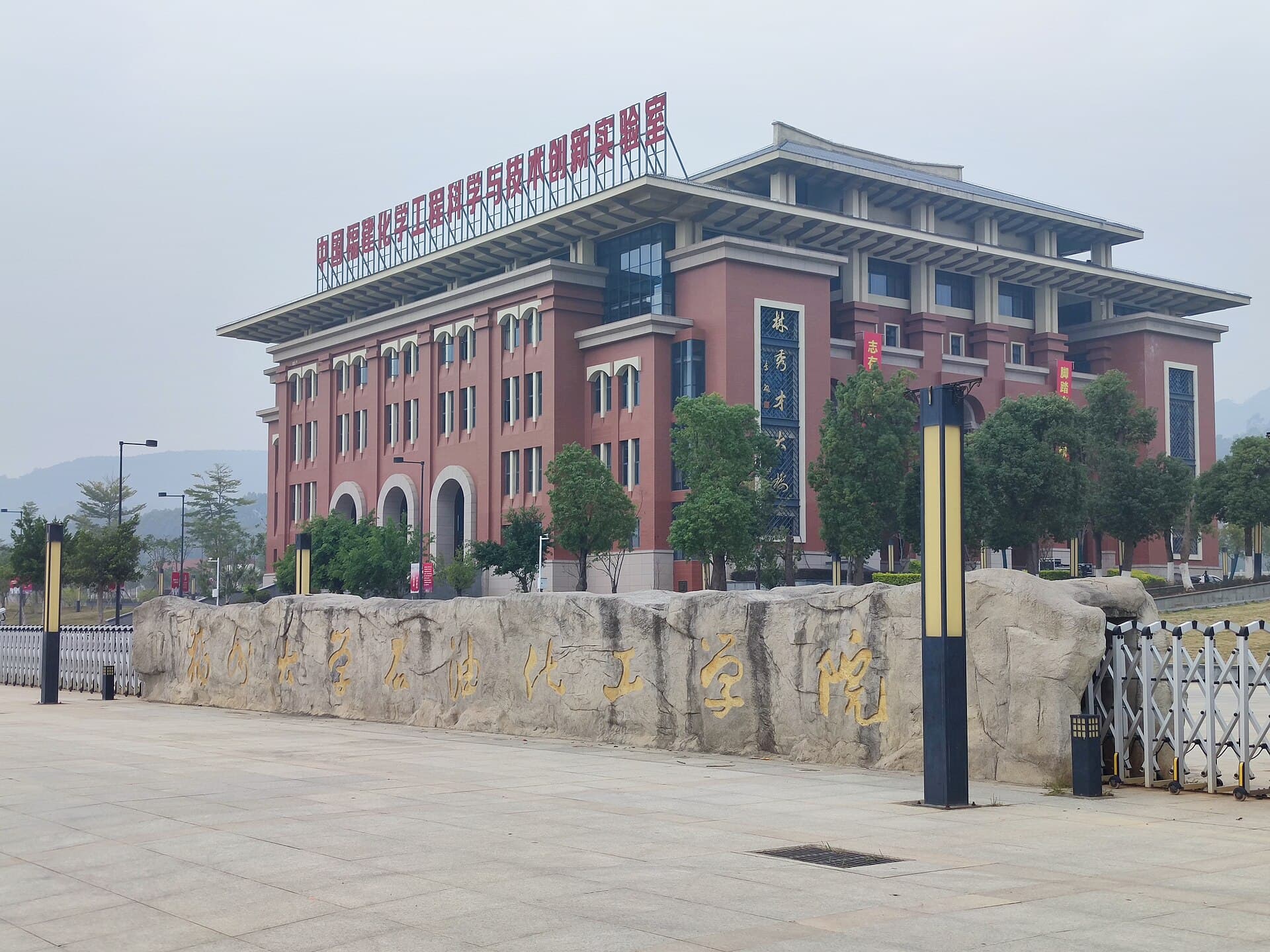
Fuzhou University
Fuzhou University
 Fuzhou
Tell us about your profile and we will answer for this university: your chances, the deadlines and what to prepare.
Photo: FradonStar · CC BY-SA 4.0 · Wikimedia Commons
Shortlist a few and we'll compare them side by side and assess each one.
History and standing
Fuzhou University (福州大学, Fúzhōu Dàxué) was founded in 1958 in Fuzhou, capital of Fujian Province, during China's rapid industrialization push. Over six decades, it has evolved from a regional engineering college into a comprehensive research university recognized nationally and internationally. While engineering remains at its core—reflecting the institution's original mission to train technical talent for the region's burgeoning industries—the university has since expanded to encompass science, medicine, economics, management, law, humanities, and the arts.
The university entered the national "211 Project" in the late 1990s, securing priority funding and infrastructure investment. Its most significant milestone came in 2017 when Chemistry was selected for China's inaugural "Double First-Class" (双一流) discipline construction list, a designation reaffirmed in 2022. This places Fuzhou University among a select group of institutions charged with building world-class disciplines and signals its entry into the upper tier of Chinese higher education.
In global rankings for 2025–2026, Fuzhou University stands 319th in the Academic Ranking of World Universities (ARWU, Shanghai Ranking), 383rd in US News Best Global Universities, and 801–1000 in Times Higher Education. Among mainland Chinese universities, it ranks 60th in ARWU and 54th in US News—respectable positions for a regional university with a strong disciplinary focus. According to Essential Science Indicators (ESI), 13 of its disciplines rank in the global top 1%, with three—Chemistry, Engineering, and Materials Science—in the top 1‰ (the top one-thousandth), a marker of world-leading research impact. The university enrolls over 40,000 full-time undergraduates (including approximately 14,000 at its independent Zhicheng College) and nearly 19,000 master's and doctoral candidates. Its faculty exceeds 3,500, including 11 academicians and dozens of recipients of prestigious national talent titles.
Chinese universities tighten portfolio and motivation-letter requirements every year — we track this university by university, so every application matches what the admissions committee actually expects right now.
Academic strengths
If Fuzhou University has flagship disciplines, they are undoubtedly chemistry, materials science, and chemical engineering. Chemistry has been selected twice for national "Double First-Class" construction (2017 and 2022) and ranks 72nd globally in the US News 2027 subject rankings, with Physical Chemistry placing 45th. Chemical Engineering ranks 43rd worldwide and an impressive 20th in the US News 2025–2026 subject rankings—a testament to genuine international competitiveness.
Key research platforms include the State Key Laboratory of Photocatalysis on Energy & Environment—one of the few national-level key labs housed at the university—the National Engineering Research Center of Chemical Fertilizer Catalyst, and several emerging national-priority laboratories in fluorine-nitrogen materials and green phosphate ore utilization. Research spans industrial catalysis (the university has a long history developing catalysts for ammonia synthesis), photocatalysis for water splitting and pollutant degradation, synthesis of functional materials, analytical chemistry for food safety (there is a Ministry of Education key laboratory dedicated to food safety analysis and detection), boron and fluorine organic chemistry, advanced display materials, and much more.
Materials Science is also in the ESI top 1‰. The College of Materials Science and Engineering works on eco-materials, polymers, energy materials (batteries, fuel cells, thermoelectrics), coatings, and composites. The "Materials Science and Engineering" undergraduate program is a national first-class major and has twice passed international engineering education accreditation, ensuring mutual recognition of degrees worldwide. Over the past five years, university researchers have published in Nature (6 papers) and Science (4 papers)—a rarity for a regional institution—and multiple scholars appear on global highly-cited researcher lists. Beyond chemistry and materials, strengths include environmental engineering (39th globally, US News 2027), nanoscience and nanotechnology (51st), civil engineering (56th), and electrical engineering (120th), underscoring broad engineering excellence.
The university maintains strong industry ties, partnering with companies such as CATL (the world's largest battery maker), regional Fujian chemical enterprises, and startups in new energy. Research funding accumulated during the 14th Five-Year Plan exceeded 2.3 billion yuan, with over 6,600 patents granted and four national science and technology awards won. For prospective students, this translates into access to cutting-edge laboratories, participation in real R&D projects, and internship opportunities at leading firms.
Show the full profile
Campus and life in Fuzhou
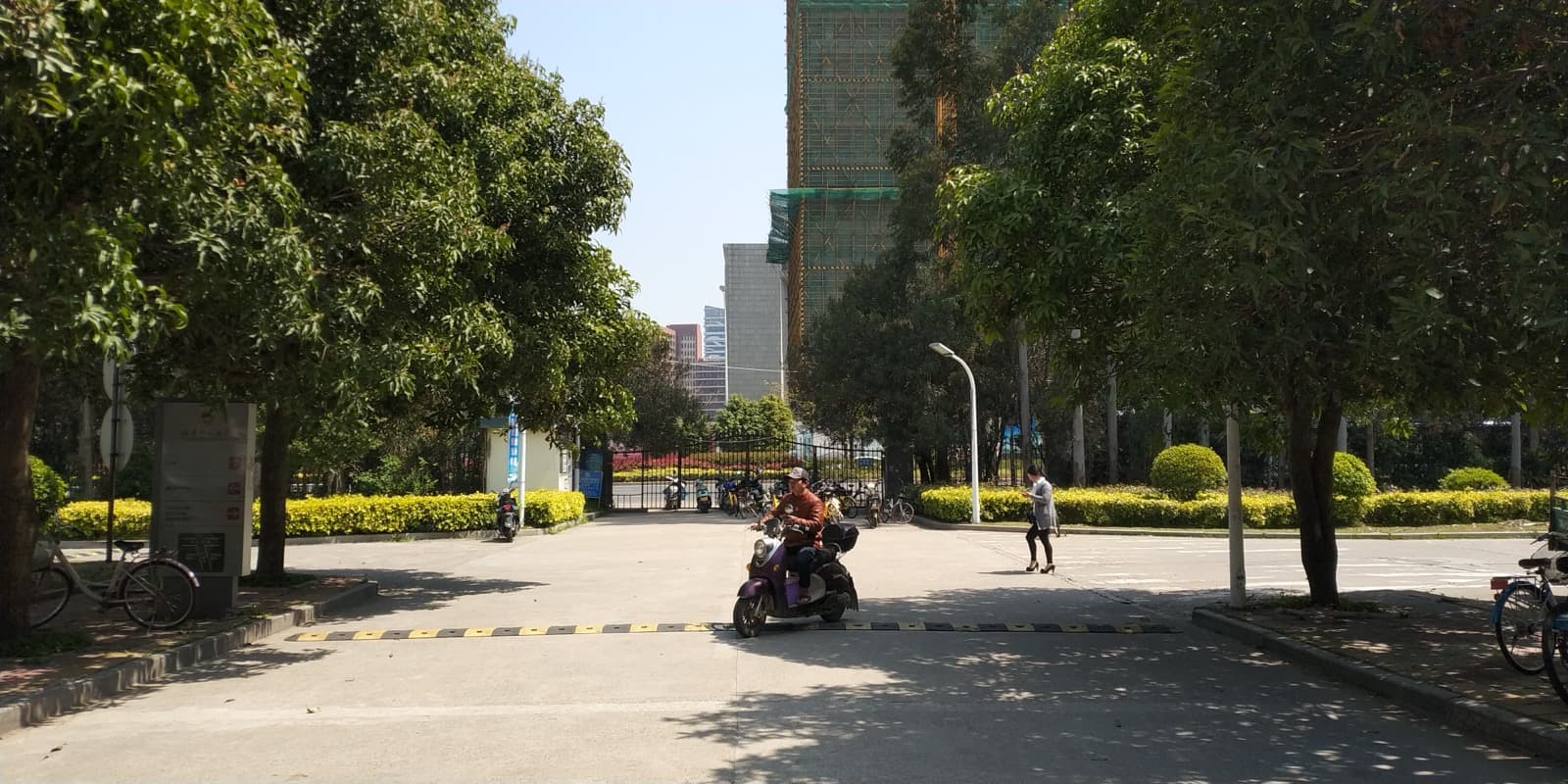
Fuzhou University's main campus, the Qishan Campus, is located in the Minhou County University Town, approximately 20 kilometers southwest of downtown Fuzhou. This spacious, modern campus is nestled among hills and along the Wulong River; students joke that "the university has only spring all year round" thanks to the mild subtropical climate. The grounds are laid out in a circular pattern with the library at the center, surrounded by academic buildings, dormitories, lakes, gardens, and teahouse pavilions—by all accounts, a picturesque setting. Getting around is easy: on foot, by bicycle (including bike-sharing services like Ofo and Hellobike), or by electric scooter, a popular choice among Chinese students. There's also an on-campus shuttle bus. The nearest metro station (Line 2) is a short walk or bike ride from the dormitories.
Infrastructure is solid: 13 student canteens offering regional Chinese cuisines (Sichuan, Cantonese, Fujian, and more), plus Westernized cafés and bakeries. The Bailu Sports Complex houses basketball and volleyball courts, badminton halls, and a swimming pool; two large stadiums with football pitches occupy the north and south ends of campus. Bank branches (ICBC, China Construction Bank), a post office, supermarkets, hair salons, electronics repair shops, bookstores, and souvenir shops are all on-site—everything you need within walking distance. International students live in a dedicated dormitory (typically double rooms with en-suite facilities; approximately 3,500 yuan per year). The university hosts numerous student clubs and organizations, including an international student union, and organizes cultural festivals, sports events, and language exchanges.
Fuzhou itself, the capital of Fujian Province with a population of about 8 million, is a major economic and cultural hub in southeastern China. Strategically positioned across the strait from Taiwan and near Xiamen, it is connected by high-speed rail to Shanghai in a few hours. Fuzhou is famed for its tea (especially jasmine—traditional tea ceremonies are a local specialty), the historic "Three Lanes and Seven Alleys" quarter (Sanfang Qixiang, a Ming-Qing heritage site with traditional architecture), Buddhist temples (notably Xichan Temple), and parks along the Min River. The climate is humid subtropical: summers are hot and humid (July–August can exceed 35 °C), winters mild (rarely below 10 °C), and rainfall heavy in spring and summer. From campus to downtown takes about 40 minutes by metro (Line 2 connects the University Town directly to the city center); Changle International Airport is roughly 90 minutes by airport shuttle; Fuzhou Railway Station about 90 minutes by bus, and South Station (high-speed trains) about two hours. Public transport is affordable, but distances should be considered—the campus is not in the heart of the city. Cost of living in Fuzhou is moderate: students typically spend 1,000–1,500 yuan per month on food and essentials (excluding accommodation, covered by the dormitory). The city is safe and welcoming to foreigners; the university provides dedicated support services for international students.
Competition and entry requirements
Admission to Fuzhou University's undergraduate programs for international students is handled directly by the university (not through China's national gaokao exam), which simplifies the process but demands careful document preparation. Competition is moderate: the university does not rank among the top 10 (where requirements are strictest), but as a "211" and "Double First-Class" institution it attracts well-prepared applicants.
Basic requirements: Age 18–25 as of September 2026, senior high school diploma (for 2026 graduates, a pre-graduation certificate is acceptable), no criminal record, and a valid foreign passport. All undergraduate programs in the 2026–2027 academic year are taught in Chinese. Admission requires an HSK Level 5 certificate with a score of at least 180 (with the exception of programs at Xiamen Academy of Arts and Design, which accept HSK 4, 180+). Graduates of Malaysian Chinese independent secondary schools (recognized by the Chinese embassy) are exempt from providing HSK.
The CSCA test (China Scholastic Competency Assessment): Starting with the 2026 admissions cycle, CSCA transcripts are a mandatory component of the application package for all undergraduate applicants (including at Fuzhou University). The necessity of CSCA, the subjects required, and the test language depend on the target university, program, and admission year; applicants should verify official requirements with the university and CSCA before registering. As of 2026, Fuzhou University requires Professional Chinese and Mathematics; Physics and Chemistry are optional (the university counts them as supplementary, but strong scores may enhance scholarship prospects). The test is offered five times a year (January, March, April, June, and December 2026), in online proctored-at-home format or at test centers; results are typically available within 7–14 days. Cost: 450 yuan for one subject, 700 for two or more. CSCA scores serve as an additional criterion in scholarship allocation. Important: 2026 is a transitional year, and the university uses CSCA results *for reference*—but by 2027 scores may carry greater weight. Always verify specific requirements at the time of application.
Application documents include a completed application form (downloadable from oce.fzu.edu.cn), scanned passport (valid through December 2026), notarized high school diploma and transcript, two letters of recommendation from teachers (in Chinese or English, with contact details), a personal statement (at least 800 words in Chinese or English: brief bio, reasons for studying in China and at Fuzhou University, academic plans), Foreigner Physical Examination Record (valid six months), and Certificate of No Criminal Records. Application deadline: May 30, 2026; admission decisions typically arrive in July. The academic year begins in September.
Scholarships and funding
Fuzhou University is a designated host institution for multiple scholarship programs, significantly easing the financial burden for international students. There are three main levels of scholarships for undergraduates: the Chinese Government Scholarship (CSC), the Fujian Provincial Government Scholarship, and the Fuzhou University Scholarship. The provincial and university scholarships offer identical benefits: coverage of tuition (14,000 yuan per year for undergraduates), accommodation (3,500 yuan per year), medical insurance (800 yuan per year), plus a monthly living stipend. The living stipend is set by the university annually and typically aligns with basic expenses (approximately 1,000+ yuan per month); exact figures are communicated in the official admission notice. Scholarships are awarded for one year; after an annual review (academic performance, conduct), they are renewed for the following year or canceled.
The CSC scholarship is the most prestigious but also the most competitive. To apply, submit documents through the China Scholarship Council's online system (csc.edu.cn) by February 20, 2026, specifying Fuzhou University's agency code (10386) and program category Type B, and simultaneously send hard copies to the university. If an applicant is admitted but does not receive the CSC, the university will offer the provincial or university scholarship (acceptance must be confirmed); alternatively, one may study self-funded.
Self-funded study: Tuition is 14,000 yuan per year, plus accommodation 3,500, insurance 800, and residence permit and medical examination approximately 2,000 yuan (one-time)—totaling roughly 20,000–22,000 yuan (~3,000 USD) for the first year excluding living expenses. Self-funded students must provide financial guarantees: proof of funds in a bank account (minimum equivalent to 30,000 yuan—the annual provincial scholarship amount) and a financial guarantor in China (usually a relative). Also budget for visa costs, airfare, textbooks, and personal expenses.
Scholarships are attainable: the university actively seeks talented international students, especially for engineering and science programs. Key factors: strong high school GPA, compelling motivation, solid recommendations, Chinese proficiency (higher HSK scores help), and now also CSCA results. Creative majors (design, art) may require a portfolio.
How we help you apply
Applying to China is logistically demanding: you must navigate dozens of universities, assess your scholarship prospects, gather and notarize documents (some requiring translation), register for and sit the CSCA with a competitive score, craft a persuasive personal statement in Chinese or English, juggle multiple deadlines (which differ for CSC, provincial, and university scholarships), submit applications online and send hard copies—all with zero margin for error. For many applicants, especially those with limited Chinese and no experience dealing with Chinese universities, this is a daunting challenge.
That is where UNIPROFI steps in. We specialize in advising students applying to Chinese universities and offer several tiers of support—from minimal assistance for independent applicants to full end-to-end management. Self-Guided Admission to China is ideal for those prepared to do most of the work themselves but who need expert assessment of chances, a shortlist of suitable universities, and step-by-step guidance. Guided Admission to China means a consultant walks the entire path with you: helping select programs and craft strategy, reviewing documents, editing personal statements, preparing for possible interviews, and advising on scholarships and CSCA. Turnkey Admission to China means UNIPROFI takes charge of document preparation, liaison with the university, portal registration, translations, and more—you simply provide the raw materials and sit the CSCA. Finally, if you are targeting China's top universities (Tsinghua, Peking, Fudan, Shanghai Jiao Tong, and other top-10 institutions), we offer Admission to China's Top-10 Universities, which includes in-depth strategy, consultations with alumni of elite universities, and maximum odds of success.
We also offer à la carte services: consultation with a Tsinghua University expert, admission strategy for China's top universities, building a strong CV for Chinese universities, motivation letter writing support, matching up to five universities to your profile, grants for studying in China, mock interviews for China's top universities, Chinese student visa support, and CSCA prep (foundation or intensive courses—we know the format, question types, and can significantly boost your score). Fuzhou University is genuinely worth considering: it is a solid research university with global recognition in chemistry and engineering, a comfortable campus, and accessible scholarships. With UNIPROFI, your path there becomes significantly smoother and more confident.
Tell us about yourself — we'll build an admissions strategy for this exact university.
Many students get in through our preparatory Language Year — an intensive year of Chinese at a partner university, followed by a move onto the main program.
What the Language Year isFrom application to admission
Profile review and strategy
We study your academic profile, goals and budget, assess your real chances, and shortlist universities and grants for your specific situation.
Document preparation
We help with translation, notarization, your motivation letter, CV and recommendations — tailored to each university's requirements.
Filing applications and university correspondence
We file your documents, track status, respond promptly to admissions offices, and keep every deadline under control.
Visa, move and your first weeks
We arrange your visa, insurance and medical exam, help with housing and transfer, and stay in touch after you arrive.
How we support admission here
From filing documents on your own to admission at one of China's top-10 universities — pick the level of involvement that fits you, and see exactly what's included in each tier.
If you're not admitted to any of your chosen universities, then under the terms of the agreement we'll refund your payment minus documented expenses, or support a free re-application the following year.
Common questions about admission
Why apply through UNIPROFI specifically?
UNIPROFI is about a well-thought-out application and a strong outcome: we build an application path around your profile, goals and the requirements of your selected universities. You work with mentors who are current students or graduates of these schools, so you get real understanding of the system, campuses and opportunities — not theory. We take on complex cases (including minors and admission without an 11th-grade diploma), build an individual strategy for your profile and goals, and support you through every stage, from documents to your visa.
Do you guarantee admission?
We don't offer "guarantees for the sake of a sale," because no one can directly influence a university's decision. What we do is structure everything to minimize the risk of rejection — matching you to the right universities, building a strong application strategy, and preparing documents carefully. Any refund or re-application arrangement is governed only by the current service agreement and the circumstances of the case.
What are my actual chances of getting in?
We do not state a universal admission probability because the decision belongs to the university. We instead assess your profile, programme requirements and application strategy.
Can I apply on my own — why do I need you?
You can, but most students end up losing time, making mistakes, or settling for weaker universities. We save you months, help you start at a stronger level, and prevent the mistakes that can cost you admission.
Get in touch to get started
Tell us about yourself and what you're specifically interested in — our specialists will help you find the right format.