
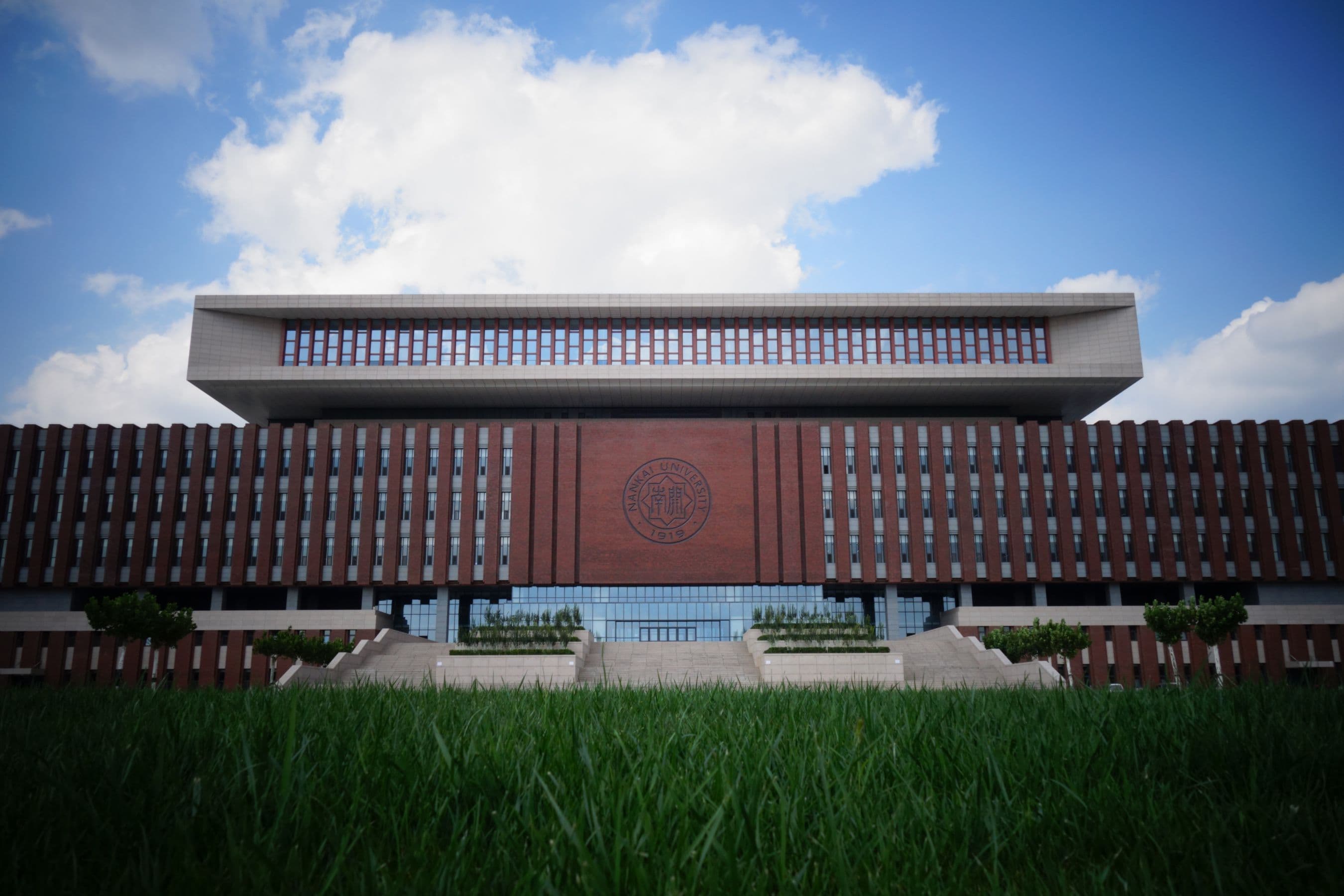
Nankai University
Nankai University
Tell us about your profile and we will answer for this university: your chances, the deadlines and what to prepare.
Shortlist a few and we'll compare them side by side and assess each one.
History and reputation
Nankai University was founded in 1919 in Tianjin by the visionary educators Yan Xiu and Zhang Boling, emerging from the earlier Nankai School established in 1904. From its inception, it adopted the motto "dedication to public service, acquisition of all-round capability, and aspiration for daily progress" — a guiding principle that continues to shape its mission today. Nankai holds a special place in Chinese history as the alma mater of Premier Zhou Enlai, a symbol of the university's deep commitment to serving the nation. During the Second Sino-Japanese War (1937–1945), the Nankai campus was almost entirely destroyed by bombing. In response, Nankai, Peking University, and Tsinghua University joined forces in Kunming to form the legendary Southwest Associated University, widely regarded as one of the brightest chapters in Chinese higher education. After the war, Nankai was rebuilt, relocated to its Balitai campus in Tianjin, and in 1946 transformed from a private institution into a national university.
Today, Nankai is a key member of China's Project 211, Project 985, and Double First-Class initiatives — the country's flagship schemes for building world-class universities. In the 2026 global rankings, Nankai stands at 251–300 in the Times Higher Education World University Rankings, 176th in the Center for World University Rankings (CWUR, placing it in the top 0.9% globally), and 101–150 in the Shanghai Ranking's Academic Ranking of World Universities. Nationally, it ranks approximately 22nd to 24th among Chinese universities — a consistently strong position, though outside the very top tier dominated by Tsinghua, Peking, or Fudan. For prospective international students, this translates into access to serious research infrastructure, distinguished faculty, and broad international recognition, yet with an admissions process that is less intensely competitive than that of the Beijing-based giants. Nankai offers an attractive balance: prestige and academic depth, paired with realistic pathways to admission for well-prepared applicants.
Chinese universities tighten portfolio and motivation-letter requirements every year — we track this university by university, so every application matches what the admissions committee actually expects right now.
Academic strengths
Nankai University has built a reputation across multiple fields, with particularly outstanding strengths in the natural sciences, social sciences, and interdisciplinary research. Chemistry is Nankai's flagship discipline. The university is home to two State Key Laboratories (the State Key Laboratory of Element-Organic Chemistry and the State Key Laboratory of Medicinal Chemical Biology), along with several Ministry of Education Key Laboratories covering functional polymer materials, bioactive materials, and advanced energy materials. Research spans cutting-edge areas such as medicinal chemistry, materials science, and sustainable energy. For international students interested in science and engineering, Nankai's programs in chemistry, chemical biology, and new energy science offer direct pathways into top-tier research environments.
Mathematics and theoretical physics are anchored by the Chern Institute of Mathematics (CIM), founded in 1985 by the renowned geometer Shiing-Shen Chern, who served as the institute's first director. The institute's Theoretical Physics Division was established in 1986 by Nobel laureate Chen-Ning Yang. CIM is dedicated to pure and applied mathematics, combinatorics, computational science, and theoretical physics, and remains one of the leading research institutes in China in these fields. Graduate students and doctoral candidates benefit from an intellectually rigorous environment and direct engagement with leading research groups.
Economics has been a core strength of Nankai since the discipline was established in 1923, with the School of Economics formally founded in 1931. By 1950, the school had trained scores of master's graduates, many of whom became leading economists in China and internationally. Today, the school holds two first-level National Key Disciplines (Theoretical Economics and Applied Economics) and six second-level National Key Disciplines, including Political Economy, World Economy, Finance, Regional Economics, History of Economics, and International Trade. The Institute of Economic and Social Development specializes in regional economics and logistics and is recognized as the only national-level university think tank in this area among Project 985 institutions. For international students, especially at the master's level, programs in International Business, International Affairs and Public Policy, Finance, and International Trade are particularly attractive. Several are offered entirely in English, including the Youth of Excellence Scheme — a selective 1+1 master's program combining a year of coursework in Nankai with a year of work and thesis completion in the student's home country.
Show the full profile
Campus and city life
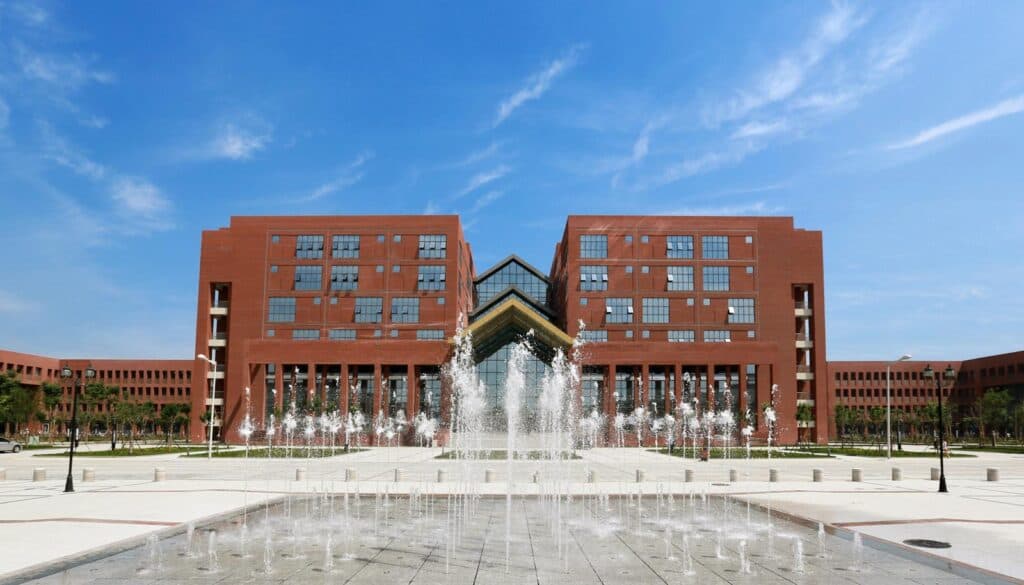
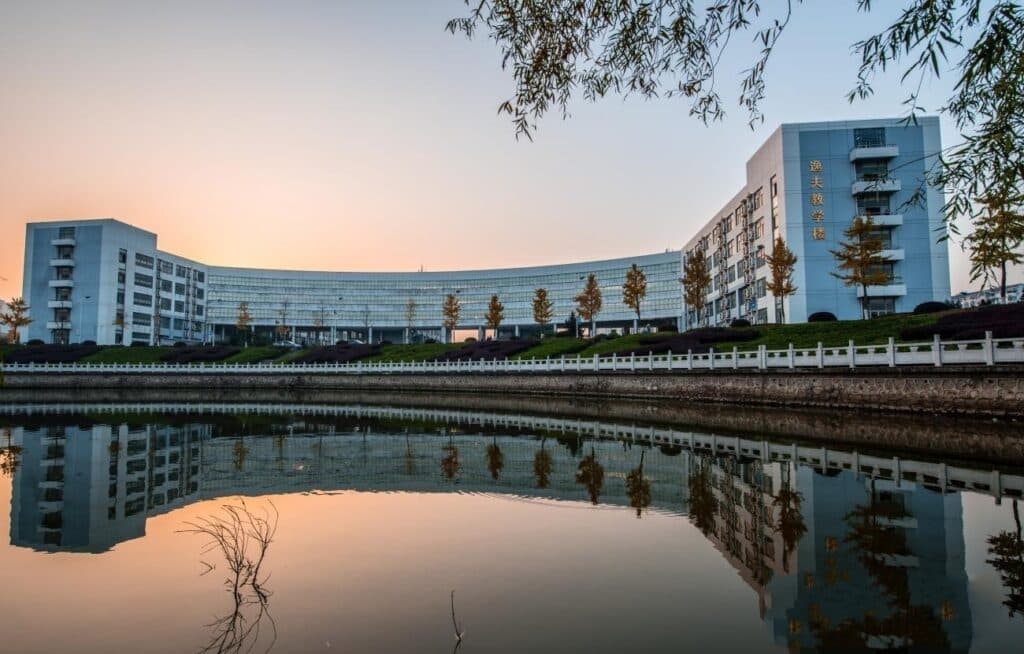
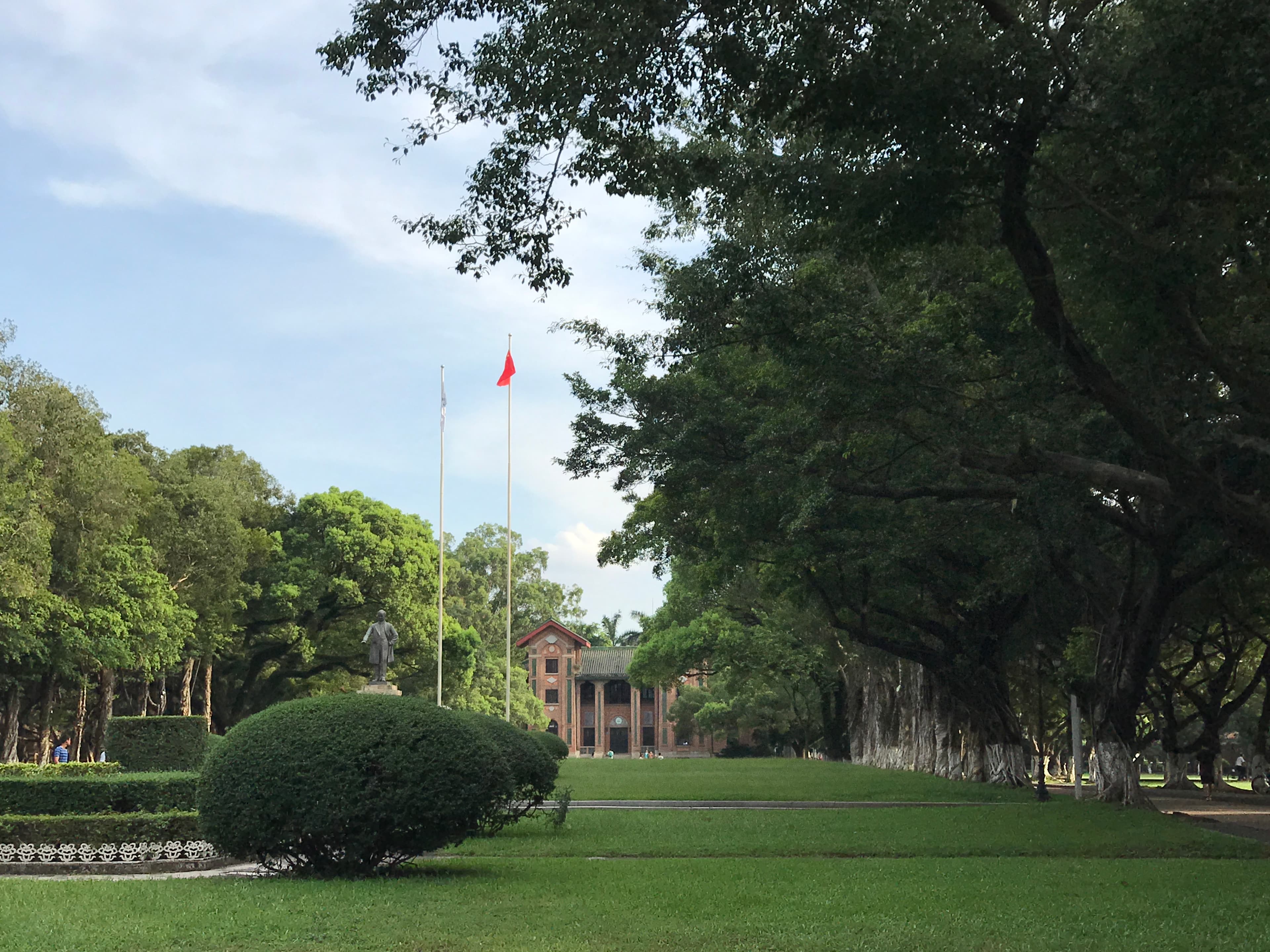
Nankai University is located in Tianjin, China's sixth-largest city with a population of over 15 million and one of the most economically dynamic regions in northern China. The main Balitai Campus is situated in Nankai District, within easy reach of the city's Metro Line 3 (Tianta or Zhoudengjinangguan stations). From Balitai, it takes approximately 40 minutes to reach Tianjin Railway Station and about 90 minutes to Tianjin Binhai International Airport. The newer Jinnan Campus, located in the southeastern part of the city, is home to modern facilities and laboratories. A university shuttle bus connects the two campuses (fare around 5 RMB), making it easy for students to move between locations. Balitai offers tree-lined pathways, historic architecture, and proximity to shops, restaurants, and cafes; Jinnan offers spacious modern buildings and state-of-the-art research spaces.
Tianjin is not Beijing, but it offers distinct advantages. The city boasts a higher GDP per capita than both Beijing and Shanghai and has experienced rapid economic growth in recent years. More than 285 Fortune 500 companies operate in Tianjin, including Samsung, Toyota, LG, Coca-Cola, and Airbus (which runs its only assembly plant outside Europe here). Tianjin is connected to Beijing by high-speed rail — the journey takes just 30 minutes — giving students convenient access to the capital's internship opportunities, cultural events, and international conferences. The city itself offers a vibrant urban lifestyle: over ten large shopping malls (Joy City, Galaxy, Wanda Square), Binjiang Road (the longest retail street in Asia), a wide variety of international restaurants (Western, Indian, Sri Lankan, Japanese, Korean), and a lively nightlife scene centered in downtown districts and student neighborhoods. The climate is continental: hot and humid summers (25–35°C) and cold, dry winters (-10 to 10°C), similar to Beijing. Tianjin's international community is smaller than Shanghai's or Beijing's but growing rapidly, and students will find it easy to connect with peers from around the world.
Accommodation is available in dedicated international student dormitories on both campuses (Yiyuan and Jingyuan buildings on Balitai; Buildings A, C, D, and E on Jinnan). Rooms are single or double occupancy, each equipped with a private bathroom, bed, desk, wardrobe, air conditioning, TV, telephone, and internet access. Hot water is available 24 hours a day, and laundry facilities and regular cleaning services are provided. Accommodation costs range from approximately 1,000 to approximately 3,000 RMB per month depending on room type and campus; prospective students should confirm the current rate with the university's international office before budgeting. Students may also rent off-campus housing, though they must register with the local police station. On-campus dining is plentiful and affordable, with multiple student canteens (including halal options), cafes, and restaurants. A meal at a Western fast-food outlet costs around 40 RMB; campus canteens are cheaper.
Competition and entry requirements
Admission to Nankai University for international students follows a distinct pathway from the gaokao system used for domestic applicants, and it involves document review, eligibility screening, and in some cases an interview. The competitiveness is above average but notably less intense than for China's top-10 universities: Nankai ranks consistently within the top 25 nationally, and well-prepared applicants with strong academic records, appropriate language proficiency, and a clear motivation have realistic chances, particularly if they apply early — between December and March (scholarship applicants via CSC should apply even earlier, as quotas are limited).
Undergraduate applicants must hold a high school diploma or equivalent, be at least 18 years old, and hold a valid ordinary passport from a country other than China. Most programs are taught in Chinese and require HSK Level 4 with a minimum score of 180 (some faculties, such as Chinese Language and Literature, require HSK 5 with a score of 210 or above). A small number of programs are offered in English (such as International Chinese Education, some Business programs, and Biological Sciences), for which applicants must provide IELTS 6.0 (no band below 5.5), TOEFL 88+, or Duolingo 110+. The requirement to take the CSCA (China Scholastic Competency Assessment), the subject combination (Professional Chinese for humanities or sciences, Mathematics mandatory, Physics/Chemistry optional depending on major), and the exam language depend on the specific university, program, and admission year; applicants should verify requirements on both the university's website and the official CSCA website before registering. Nankai participates in the CSCA system for CSC scholarship applicants and certain other programs starting from the 2026 admissions cycle; details are available on the university's admissions pages and in program brochures. Applications are submitted online via the Nankai University International Student Online Service System (nankai.at0086.cn) from December 1 of the previous year through June 30 of the admission year. Required documents include: notarized high school diploma (or a certificate of expected graduation for current students), complete transcripts, personal statement, one recommendation letter from a high school teacher, language proficiency certificate, passport, and certificate of no criminal record. The application fee is around 400 RMB (waived for CSC scholarship recipients). Tuition for undergraduate programs ranges from approximately 20,000 to approximately 35,000 RMB per year (humanities and social sciences at the lower end, natural sciences and engineering higher, and medical programs up to 35,000 RMB); applicants should confirm the exact fee for their chosen program with the international office before making payment.
Master's applicants must hold a bachelor's degree and be under the age of 35; doctoral applicants must hold a master's degree and be under 40. For Chinese-taught programs, HSK 5 with a minimum score of 180 is required (for the School of Chinese Language and Culture and the School of Literature, HSK 6 with a score of 180 or above is required). For English-taught programs, applicants must provide IELTS 6.0, TOEFL 80, or Duolingo 105; native English speakers and those who completed their previous degree entirely in English (with official verification) are exempted. Required documents include: notarized diploma (or certificate of expected graduation), transcripts, personal statement (minimum 800 words for master's, 1,000 words for doctoral applicants, including a research plan), two recommendation letters from professors or associate professors, an acceptance letter from a Nankai supervisor (mandatory for doctoral applicants), passport (valid until at least September of the following year), Foreigner Physical Examination Form (valid for 6 months), certificate of no criminal record, and language proficiency certificate. Applications are submitted online through the same system: for master's programs, from October 20 through May 31 (CSC scholarship applicants must apply by March 20); for doctoral programs, the timeline is similar or earlier (check the relevant faculty's website). Shortlisted applicants are invited to an online interview, and admission decisions are made by an expert panel. Tuition for master's programs ranges from approximately 26,000 to approximately 164,000 RMB per year (most academic programs fall within 26,000–35,000 RMB; select MBA or elite English-taught programs are more expensive); for doctoral programs, tuition ranges from approximately 30,000 to approximately 50,000 RMB per year. These figures change annually, and applicants must verify the current amount on the university's website or in the admission notice before making payment.
Scholarships
Nankai University offers several scholarship programs that can cover tuition, accommodation, and a monthly stipend, making a high-quality education at a leading Chinese university accessible to talented international students from around the world.
The Chinese Government Scholarship (CSC) is the most comprehensive and widely recognized option. It covers: full tuition waiver, free on-campus accommodation (or an accommodation subsidy), a monthly living stipend (undergraduate: 2,500 RMB; master's: 3,000 RMB; doctoral: 3,500 RMB, as of the 2025–2026 academic year; these amounts are set by CSC and may be adjusted), and comprehensive medical insurance. Application process: applicants must submit applications to both the Nankai University system (nankai.at0086.cn) and the CSC online system (studyinchina.csc.edu.cn); Nankai's agency number is 10055. For undergraduate programs, select "Program Type B" in the CSC system; for master's and doctoral programs, select Type B (or Type A for the Youth of Excellence Scheme). Application deadlines for Type B: October 20 to March 20 (for master's and doctoral applicants), and until May 18 (for undergraduate applicants via the Silk Road Program). Quotas are limited, and early application is strongly recommended. Nankai also participates in the Youth of Excellence Scheme — an elite two-year master's program (1+1 model: first year full-time in Nankai, second year working and completing thesis in home country, with final defense at Nankai) in International Business or International Affairs and Public Policy. Applicants must hold a bachelor's degree, have at least three years of work experience, and be under 45 years old. Deadlines: March 10 for Nankai's system, March 31 for the CSC system.
The Tianjin Government Scholarship provides partial funding toward tuition and other expenses for undergraduate and master's students. Coverage and specific conditions vary; applicants should consult Nankai's international office or the official website for the most up-to-date details. The application deadline is typically the end of May. Admission decisions are based on interview performance and overall application quality, and the university and Tianjin scholarship authorities reserve the right to adjust regulations annually.
The Confucius Institute Scholarship supports students studying Chinese language, Chinese culture, or Chinese language education. Details are available on the Confucius Institute headquarters website and on Nankai's international admissions pages. Self-funded students pay full tuition and accommodation costs but may be eligible for partial university scholarships in subsequent years based on academic performance. Medical insurance is mandatory for all international students (around 800 RMB per year); self-funded students must purchase it independently before registration.
How we help you apply
Nankai University offers a compelling combination of historical depth, strong academic programs (especially in chemistry, mathematics, and economics), a convenient location in Tianjin, and a genuinely competitive admissions environment that rewards thoughtful preparation and strategic planning. UNIPROFI has helped hundreds of students from across the post-Soviet region gain admission to China's leading universities, including institutions at Nankai's level, and we understand the specifics of the selection process, language requirements, CSCA preparation, interviews, and scholarship applications.
We offer several service tiers depending on your readiness and goals. If you are confident and prefer to manage the process yourself with structured guidance, our Self-Guided Admission to China plan provides step-by-step instructions, checklists, document templates, a database of universities and programs, and access to a support chat where consultants answer your questions as you prepare. If you need regular feedback and support at key milestones, our Guided Admission to China plan includes document review, motivation letter editing, interview preparation, and strategic advice on program and scholarship selection. For those who prefer to delegate the entire process to professionals, our Turnkey Admission to China plan covers everything from university selection through visa acquisition, including drafting and translating all documents, exam registration, communication with universities, and scholarship applications. If you are targeting Nankai as part of a broader strategy to apply to China's most competitive institutions (or are considering it alongside top-10 universities), our Admission to China's Top-10 Universities plan provides the highest level of support: a personalized strategy, document editing by an expert who graduated from a top Chinese university, in-depth interview preparation, and priority access to consultants.
We also offer standalone services for specific needs. For example, a Consultation with a Tsinghua University expert allows you to discuss your situation with a graduate of one of China's leading universities, gaining insider perspective on admission committees' expectations. Our CSCA prep: foundation course and CSCA prep: intensive course provide structured preparation for the exam, particularly valuable if you are taking the test in Chinese or tackling Mathematics, Physics, or Chemistry in a second language. Our Grants for studying in China service provides help selecting scholarship programs, preparing and submitting CSC, Tianjin Government, and other applications, assessing your chances, and optimizing documents to match selection criteria. We understand that applying to a Chinese university is not simply a matter of filling forms — it is about strategy, timing, subtle phrasing, and understanding what a given university expects from an international candidate. UNIPROFI functions not only as technical support but as an expert partner, making the process transparent, manageable, and successful.
A real admission case
Alexey
Nankai University — Economics
«It was that specificity, not pretty promises like other companies make, that convinced me to go for it»
Read more reviewsTell us about yourself — we'll build an admissions strategy for this exact university.
Many students get in through our preparatory Language Year — an intensive year of Chinese at a partner university, followed by a move onto the main program.
What the Language Year isFrom application to admission
Profile review and strategy
We study your academic profile, goals and budget, assess your real chances, and shortlist universities and grants for your specific situation.
Document preparation
We help with translation, notarization, your motivation letter, CV and recommendations — tailored to each university's requirements.
Filing applications and university correspondence
We file your documents, track status, respond promptly to admissions offices, and keep every deadline under control.
Visa, move and your first weeks
We arrange your visa, insurance and medical exam, help with housing and transfer, and stay in touch after you arrive.
How we support admission here
From filing documents on your own to admission at one of China's top-10 universities — pick the level of involvement that fits you, and see exactly what's included in each tier.
If you're not admitted to any of your chosen universities, then under the terms of the agreement we'll refund your payment minus documented expenses, or support a free re-application the following year.
Common questions about admission
Why apply through UNIPROFI specifically?
UNIPROFI is about a well-thought-out application and a strong outcome: we build an application path around your profile, goals and the requirements of your selected universities. You work with mentors who are current students or graduates of these schools, so you get real understanding of the system, campuses and opportunities — not theory. We take on complex cases (including minors and admission without an 11th-grade diploma), build an individual strategy for your profile and goals, and support you through every stage, from documents to your visa.
Do you guarantee admission?
We don't offer "guarantees for the sake of a sale," because no one can directly influence a university's decision. What we do is structure everything to minimize the risk of rejection — matching you to the right universities, building a strong application strategy, and preparing documents carefully. Any refund or re-application arrangement is governed only by the current service agreement and the circumstances of the case.
What are my actual chances of getting in?
We do not state a universal admission probability because the decision belongs to the university. We instead assess your profile, programme requirements and application strategy.
Can I apply on my own — why do I need you?
You can, but most students end up losing time, making mistakes, or settling for weaker universities. We save you months, help you start at a stronger level, and prevent the mistakes that can cost you admission.
Get in touch to get started
Tell us about yourself and what you're specifically interested in — our specialists will help you find the right format.