
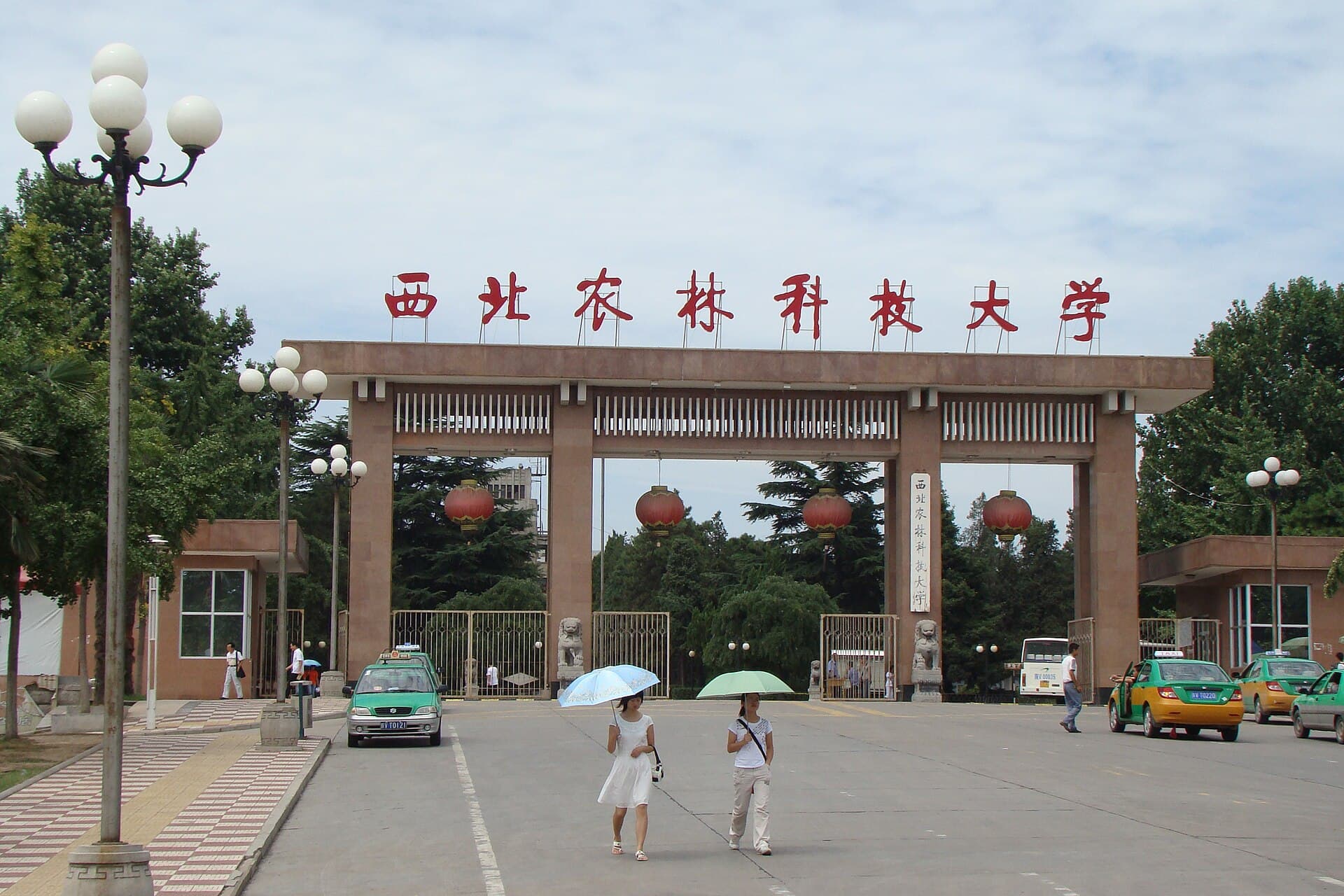
Northwest A&F University
Northwest A&F University
 Yangling
Tell us about your profile and we will answer for this university: your chances, the deadlines and what to prepare.
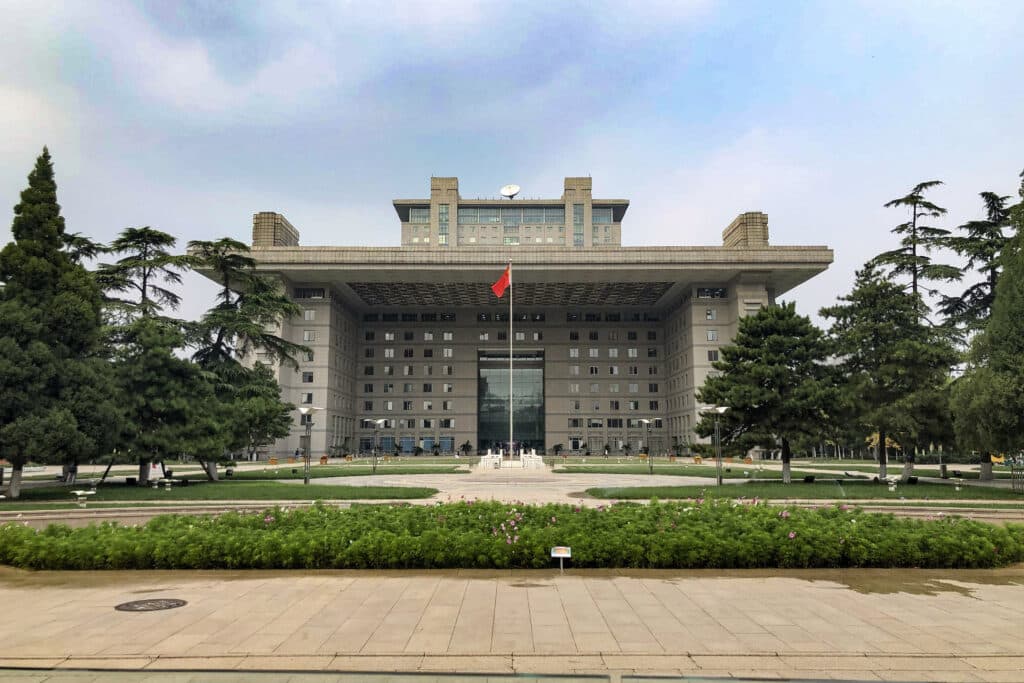
Photo: 山海风 · CC BY-SA 3.0 · Wikimedia Commons
Shortlist a few and we'll compare them side by side and assess each one.
Origins and standing
Northwest A&F University (西北农林科技大学, NWAFU) is located in Yangling, Shaanxi Province, a town often called the birthplace of Chinese agricultural civilization. The university traces its roots to 1934, when it was established as the National Northwest Junior College of Agriculture and Forestry — the earliest institution of higher agricultural and forestry education in China's northwest. For nearly a century, NWAFU has been intimately tied to the mission of revitalising agriculture in the arid and semi-arid regions of the country. In September 1999, as part of China's western development strategy and a comprehensive reform of science and education systems, the central government orchestrated the merger of seven teaching and research institutions: Northwest Agricultural University, Northwest Forestry College, the Institute of Soil and Water Conservation, the Northwest Institute of Water Resources Science, Shaanxi Academy of Agricultural Sciences, Shaanxi Provincial Academy of Forestry, and the Northwest Institute of Botany. The newly formed university became a joint construction project of the Ministry of Education and the Shaanxi Provincial Government, with an explicit mission to support and lead modern agriculture in arid lands.
Today, NWAFU is a Project 985, Project 211, and Double First-Class university — the latter designation placing it among China's elite institutions in targeted disciplines. Two of its disciplines, Plant Protection and Animal Husbandry, are officially listed in the second round of Double First-Class construction. In global rankings for 2025, NWAFU sits at 201–300 in the Academic Ranking of World Universities (ARWU) and 288th in the U.S. News & World Report Best Global Universities. But the university's true strength lies in its subject-specific performance: according to the 2025 Global Ranking of Academic Subjects, NWAFU ranks second in the world in Agricultural Sciences, fourth in Water Resources, sixth in Food Science & Technology, and seventh in Veterinary Sciences. Ten of its disciplines are in the top 1% globally in the Essential Science Indicators (ESI), with Agricultural Science and Plant and Animal Science both in the top 1‰ — an extraordinary concentration of expertise. NWAFU now offers the most comprehensive suite of agricultural, forestry, and aquatic disciplines of any university in China, while also covering agronomy, engineering, economics, management, science, veterinary medicine, law, philosophy, history, and education. Its reputation is particularly strong in Belt and Road countries and regions grappling with dryland agriculture challenges.
Chinese universities tighten portfolio and motivation-letter requirements every year — we track this university by university, so every application matches what the admissions committee actually expects right now.
Academic powerhouses
NWAFU has built its research and teaching around the real-world challenges of arid and semi-arid agriculture. The university has established clear strengths in crop genetics and breeding, plant disease and pest control, soil and water conservation, ecological restoration, efficient water use in arid areas, livestock breeding and health, agricultural biotechnology, and enology (wine science). Its wheat breeding program is world-renowned: the university pioneered research in distant hybridization, chromosome engineering, male sterility, and heterosis utilisation. Wheat variety Bima-1 became the most widely planted variety in China, and Xiaoyan-6 was a leading replacement variety through distant hybridization. The apple variety Qinguan, also bred at NWAFU, is the most commonly planted apple in the country. The direct economic benefit of these achievements alone exceeds 300 billion yuan. Since the 1999 merger, NWAFU has won 44 national science and technology awards, led 91 projects that received first prizes at provincial and ministerial levels, and obtained over 1,667 national invention patents.
The university is structured around 27 colleges, departments, and institutes, plus a graduate school, 14 postdoctoral research stations, 16 first-level disciplines authorised to confer doctoral degrees, 27 first-level disciplines for master's degrees, and 74 undergraduate programmes. It holds seven state key disciplines and two national priority (cultivation) disciplines. Among its flagship research platforms are the State Key Laboratory of Crop Stress Biology for Arid Areas (co-founded), the National Breeding & Agro-biotechnology Center Yangling Division, the National Engineering Laboratory for Efficient Crop Water Use in Arid Areas, four National Field Scientific Observation Research Stations (including Changwu, Qinling, Ansai, and Shenmu), and the China-Central Asia Joint Laboratory for Arid Agriculture under the Belt and Road Initiative. The College of Agronomy is a global leader in wheat research: according to the Library Information Research Center of China Agricultural University, NWAFU led the nation in top-10% JCR wheat papers published in 2014–2015. Its dryland farming research is equally distinguished; the university pioneered stable planting systems in arid areas, autumn-mulching and spring-sowing techniques, and rainwater harvesting cultivation, all of which have been widely adopted across northern China. The College of Animal Science and Technology, whose discipline Animal Husbandry is a Double First-Class discipline, offers programmes in animal genetics, breeding and reproduction, nutrition, aquaculture, and smart animal husbandry.
NWAFU is actively engaged in the construction of "New Agricultural Science": 25 undergraduate majors have been recognised as national first-class programmes, and the Biological Top-notch Personnel Training Base has been selected for the Talent Training Program 2.0. Agronomy has passed national agricultural specialty certification (Grade III), and hydrology, agricultural water conservancy, water conservancy and hydropower engineering, and food science and engineering have all passed engineering education specialty certification. Teaching is supported by 12 national top-quality courses, 20 national first-class undergraduate courses, five national teaching teams, and two "10,000 Talents Plan" nationally outstanding teachers. NWAFU students have won the Gold Award at China's "Internet+" Innovation and Entrepreneurship Competition three times, ranking first among agricultural and forestry universities nationwide. Beyond the campus, NWAFU operates 28 agricultural science and technology experiment demonstration stations and 46 demonstration bases, collaborating with over 500 local governments and leading enterprises; the cumulative direct economic benefits of these achievements are valued at over 80 billion yuan.
Show the full profile
Campus and life in Yangling
NWAFU is located in the Yangling National Agricultural High-tech Industries Demonstration Zone, a specialised town in Shaanxi Province roughly 80 km west of Xi'an, the ancient capital. Yangling is often described as a "natural history museum" and the cradle of Chinese farming culture; it's not a sprawling metropolis but rather a compact research and education cluster where nearly all infrastructure is oriented around agricultural science and industry. For students, this means a calm, safe, and study-focused environment — though with less urban bustle than Beijing or Shanghai. That said, Xi'an — home to the Terracotta Warriors, ancient city walls, and vibrant student life — is just an hour away by high-speed train or expressway, making weekend trips and cultural excursions easy and affordable.
The NWAFU campus itself is spacious and scenic, with tree-lined avenues, experimental fields, and modern laboratory buildings. The library, sports centres, swimming pool, canteringas, and shops are all within walking distance. International students live in the International Student Dormitory, in double rooms; according to 2026 data, dormitory costs are approximately 6,000 yuan per year (around 500 yuan per month), though you should confirm the current rate with the university's international office before booking. Comprehensive medical insurance, mandatory for all international students, costs approximately 800 yuan per year. The climate is continental, with hot summers and cold winters; spring and autumn offer the most pleasant weather for exploring the campus and surrounding countryside. Living costs in Yangling are modest compared to Beijing or Shanghai, yet access to research facilities and academic resources is world-class.
Student life at NWAFU is diverse: there are clubs for a wide range of interests, volunteer groups, sports teams (from basketball to taijiquan), and cultural exchange programmes for international students. The university actively encourages students to participate in international conferences, competitions, and joint research projects with Belt and Road partner universities. Yangling hosts the annual Yangling Agricultural High-Tech Fair, the region's largest showcase of agricultural innovation, where students can network with companies and start-ups and see the latest industry developments firsthand. For those studying in Chinese, the university offers preparatory language courses and ongoing language support; for students in English-medium programmes, elective Chinese courses are available and highly recommended for daily life and future career opportunities in the region.
Admissions competitiveness and requirements
Admissions for international students at NWAFU are managed through the university's online application system (https://nwsuaf.17gz.org/). The non-refundable application fee is 400 yuan. According to official information for 2026, the application deadline for self-funded undergraduate and master's students is May 31, 2026; for the Chinese Government Scholarship Type B (university programme), it is February 28, 2026; for Type A (bilateral programme via embassy), deadlines are set by your home country's dispatching authority, typically from January to early April. Students who are admitted register on campus in late August or early September 2026, as specified in the admission notice.
Undergraduate requirements: applicants must be under 25 years of age, hold a senior high school diploma (graduating students may submit a pre-graduation certificate but must provide the official diploma before matriculation), be in good physical and mental health, have no criminal record, and demonstrate a friendly attitude toward China. Language requirements for Chinese-taught programmes: HSK Level 4 or proof of Chinese instruction in high school (in which case HSK may be waived). For English-taught programmes, non-native English speakers must provide TOEFL, IELTS, or another English proficiency certificate. A critical point: applicants to Chinese-taught undergraduate programmes are required to take the CSCA (China Standard Admission Test for International Students). The necessity of CSCA, the required subjects, and the language of the exam depend on the target university, programme, and admission year; applicants must verify the official requirements with the university and CSCA before registering. For NWAFU, as stated in the university's documents, Chinese-taught applicants must take the Subject-Specific Chinese Test (Humanities Chinese for liberal arts, STEM Chinese for natural sciences and engineering), plus the compulsory subject Mathematics and one elective — Physics or Chemistry — for Science, Engineering, Agriculture, or Medicine majors. Applicants to the Chinese Language major can be exempted from the Subject-Specific Chinese Test if they hold a valid HSK Level 4 certificate. English-taught programmes do not require the Subject-Specific Chinese Test.
Master's requirements: applicants must be under 35 years of age, hold a bachelor's degree, be in good health, have no criminal record, and demonstrate a friendly attitude toward China. Language requirements are similar to undergraduate (HSK 4 for Chinese-taught, IELTS/TOEFL for English-taught), but CSCA is not required for master's programmes. Doctoral requirements: applicants must be under 40 years of age and hold a master's degree. All applicants undergo document review, followed by an online interview (for undergraduates) or a professional interview (for master's and doctoral candidates). Admission is based on a comprehensive assessment of academic performance, language proficiency, and interview results. Competitiveness varies by programme and year, but overall, NWAFU is not an institution with an extremely low entry threshold: strong grades, solid language skills, and a clear motivation tied to agricultural or environmental themes significantly improve your chances.
Tuition and scholarships
As of 2026, approximate annual tuition for self-funded students is around 18,000 yuan per year for undergraduate programmes in Chinese, from approximately 19,600 to 22,000 yuan per year for master's in Chinese (natural sciences and social sciences respectively), from around 23,600 to 26,000 yuan per year for doctoral programmes in Chinese, and approximately 26,000–30,000 yuan per year for master's and doctoral programmes in English. Certain special programmes may have different fees, so before paying, cross-check the official admission notice and confirm the current figure with the university's international office, as rates can change each intake year. Tuition paid by self-funded students is generally non-refundable.
Scholarship opportunities come in several forms. The Chinese Government Scholarship (CSC) is available in two formats. Type A (bilateral programme) is applied for through your home country's embassy or dispatching authority — the university does not accept applications directly; it provides full coverage (tuition, on-campus accommodation, comprehensive medical insurance, and a monthly stipend). Type B (university programme, agency code 10712) is applied for via the CSC system (studyinchina.csc.edu.cn) and the NWAFU system in parallel; the deadline is February 28, 2026. Type B covers tuition, on-campus accommodation, comprehensive medical insurance, and provides a monthly stipend (according to CSC, approximately 3,000 yuan for master's students, approximately 3,500 yuan for doctoral students; for undergraduates, around 2,500 yuan, though these figures may be revised — verify current rates on the CSC website). Type B duration: three years for master's, four years for doctoral. Important: Type B does not cover international airfare, off-campus internships, or work in laboratories of other organisations.
In addition to CSC, NWAFU offers its own scholarship for international students in two categories: full and partial. The full university scholarship includes tuition waiver, free on-campus accommodation, comprehensive medical insurance, and a monthly stipend (approximately 3,500 yuan for doctoral students, around 3,000 yuan for master's, around 2,500 yuan for undergraduates). The first-class partial scholarship waives tuition, provides free accommodation and insurance, but no stipend; the second-class partial scholarship covers 50% of tuition, with the student responsible for the remainder. The application deadline for the university scholarship is May 31, 2026. Competition for scholarships is serious, especially for full coverage; selection is based on academic achievement, research potential, and interview performance. Candidates are advised to apply for multiple scholarships simultaneously to maximise their chances.
How we help you apply
Applying to a Chinese university — particularly one as specialised as NWAFU, with its focus on agricultural themes, CSCA requirements, and a full document package in Chinese or English — can be a maze of deadlines, technical terms, and procedural nuances. UNIPROFI is a China-admissions consultancy that offers several tiers of support, tailored to your level of independence and goals. If you want to manage most of the process yourself but need an expert roadmap and clarity on key requirements, the Self-Guided Admission to China service is a good fit: you'll receive a strategy, CSCA guidance, help matching programmes, and document review. If you need regular support at every stage — from university selection to visa — choose Guided Admission to China: a consultant will walk you through step by step, though you'll handle most of the tasks yourself.
For those who want to fully delegate the process to professionals — from crafting your CV and motivation letter to submitting applications, liaising with universities, and preparing for interviews — there's the Turnkey Admission to China service. And if your goal is not just NWAFU but simultaneous consideration at other top Chinese universities (such as China Agricultural University, Zhejiang University, or Nanjing Agricultural University), the Admission to China's Top-10 Universities package includes an expanded strategy, a consultation with a Tsinghua University expert, mock interviews, and full support for applying to multiple universities at once. UNIPROFI also offers à la carte services: CSCA prep (foundation or intensive course), motivation letter writing support, building a strong CV for Chinese universities, matching up to five universities to your profile, grants for studying in China, and Chinese student visa support.
Experience with NWAFU shows that successful candidates are those who start early (6–9 months before the deadline), clearly articulate how their background aligns with agricultural or environmental themes, prepare competitive documents, and apply for multiple scholarships on time. UNIPROFI helps you build exactly that strategy, taking into account NWAFU's specific strengths (breeding, water resources, soil science, animal husbandry) and giving you a clear action plan so you don't get lost in the process — and don't miss the chance to study at one of China's leading agricultural universities.
Tell us about yourself — we'll build an admissions strategy for this exact university.
Many students get in through our preparatory Language Year — an intensive year of Chinese at a partner university, followed by a move onto the main program.
What the Language Year isFrom application to admission
Profile review and strategy
We study your academic profile, goals and budget, assess your real chances, and shortlist universities and grants for your specific situation.
Document preparation
We help with translation, notarization, your motivation letter, CV and recommendations — tailored to each university's requirements.
Filing applications and university correspondence
We file your documents, track status, respond promptly to admissions offices, and keep every deadline under control.
Visa, move and your first weeks
We arrange your visa, insurance and medical exam, help with housing and transfer, and stay in touch after you arrive.
How we support admission here
From filing documents on your own to admission at one of China's top-10 universities — pick the level of involvement that fits you, and see exactly what's included in each tier.
If you're not admitted to any of your chosen universities, then under the terms of the agreement we'll refund your payment minus documented expenses, or support a free re-application the following year.
Common questions about admission
Why apply through UNIPROFI specifically?
UNIPROFI is about a well-thought-out application and a strong outcome: we build an application path around your profile, goals and the requirements of your selected universities. You work with mentors who are current students or graduates of these schools, so you get real understanding of the system, campuses and opportunities — not theory. We take on complex cases (including minors and admission without an 11th-grade diploma), build an individual strategy for your profile and goals, and support you through every stage, from documents to your visa.
Do you guarantee admission?
We don't offer "guarantees for the sake of a sale," because no one can directly influence a university's decision. What we do is structure everything to minimize the risk of rejection — matching you to the right universities, building a strong application strategy, and preparing documents carefully. Any refund or re-application arrangement is governed only by the current service agreement and the circumstances of the case.
What are my actual chances of getting in?
We do not state a universal admission probability because the decision belongs to the university. We instead assess your profile, programme requirements and application strategy.
Can I apply on my own — why do I need you?
You can, but most students end up losing time, making mistakes, or settling for weaker universities. We save you months, help you start at a stronger level, and prevent the mistakes that can cost you admission.
Get in touch to get started
Tell us about yourself and what you're specifically interested in — our specialists will help you find the right format.