
Qinghai University
Qinghai University
 Xining
Tell us about your profile and we will answer for this university: your chances, the deadlines and what to prepare.
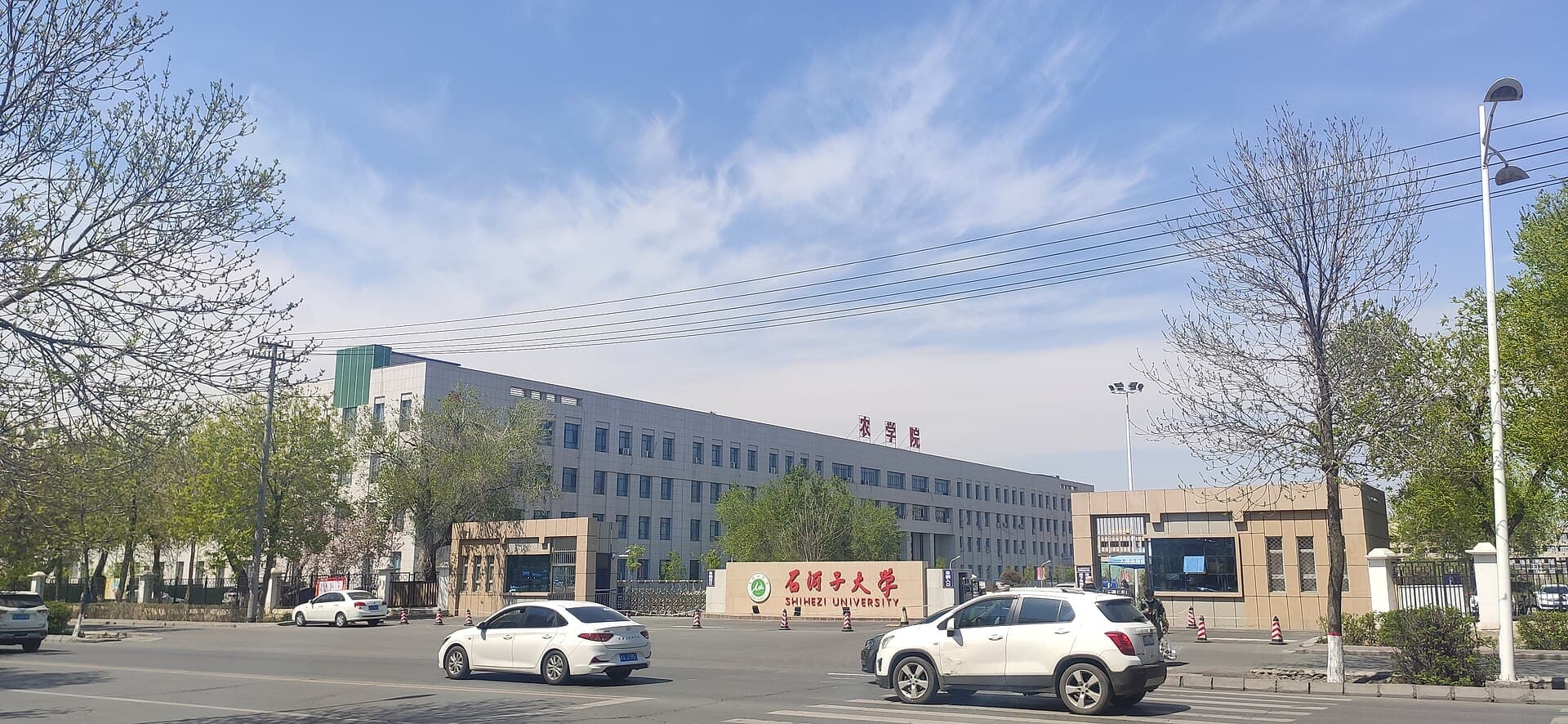
Photo: Jonashtand · CC BY-SA 4.0 · Wikimedia Commons
Shortlist a few and we'll compare them side by side and assess each one.
History and standing
Qinghai University sits in Xining, capital of Qinghai Province, at the eastern edge of the Tibetan Plateau—one of China's most geographically distinctive regions. The university traces its origins to 1958, when it was founded as Qinghai Polytechnic Institute. Over the following decades it absorbed specialised colleges in medicine, agriculture, animal husbandry, and finance, as well as provincial research academies in agronomy and veterinary science. The modern, integrated Qinghai University took shape in 2004, emerging as a comprehensive institution where engineering, agriculture, medicine, and management anchor a broader range of disciplines.
In 2008 the university joined Project 211, a national initiative to strengthen leading Chinese institutions; in 2017 its ecology discipline was admitted to the Double First-Class programme, and in 2022 that designation was renewed for the next cycle. The institution also participates in the province–ministry co-construction scheme (部省合建), under which the central Ministry of Education and the Qinghai provincial government jointly fund development. Notably, since the early 2000s six high-ranking universities—Tsinghua, Northwest A&F, China University of Geosciences (Beijing), East China University of Science and Technology, Shanghai Jiao Tong, and Beijing University of Chemical Technology—have provided paired assistance to Qinghai University, sharing faculty, research platforms, and training; this "1+5" model (one recipient, five donor partners) has visibly lifted the academic level of the institution and remains active in 2026.
At the start of 2026 the university enrolled close to 28,000 full-time students—more than 22,000 undergraduates and about 6,000 postgraduates. The teaching staff numbers over 2,200 (excluding affiliated hospital staff), among them some 900 holding doctoral degrees. The institution offers seven first-level doctoral programmes, 21 first-level master's programmes, 66 undergraduate majors, and one postdoctoral research station; seven of its disciplines rank in the global top 1 per cent of ESI. These figures place Qinghai University not in the first tier of Chinese research universities but firmly in the second—a substantial regional hub with genuine research capacity and recognised strengths in specific niches.
Chinese universities tighten portfolio and motivation-letter requirements every year — we track this university by university, so every application matches what the admissions committee actually expects right now.
Academic strengths
Geography has shaped the university's research profile. Xining lies at 2,260 metres above sea level on the Tibetan Plateau, home to the headwaters of the Yangtze, Yellow, and Mekong rivers and one of the planet's most ecologically fragile zones. The university's flagship research unit is the State Key Laboratory of Sanjiangyuan Ecology and Plateau Agriculture and Animal Husbandry, a province–ministry co-built facility that achieved national status in recent years. The laboratory studies the Three-River-Source (Sanjiangyuan) ecosystems, adaptation of crops and livestock to high-altitude conditions, biodiversity conservation, and sustainable management of alpine grasslands. In 2026 the university successfully launched its own remote-sensing satellite, Sanjiangyuan-1, to monitor ecological changes across the region—a vivid example of applied science at an internationally competitive level.
Equally significant is the High Altitude Medical Research Center, founded in 2001 and led by Professor Ge Rili, recipient of both the Ho Leung Ho Lee Foundation prize and a TWAS award for pioneering work on human adaptation to hypoxia. The centre investigates the genetic mechanisms underlying Tibetan adaptation to low oxygen, chronic mountain sickness, and respiratory and cardiovascular physiology at altitude. The team was the first in the world to sequence the complete genome of the Tibetan antelope and to identify three positively selected genes associated with Tibetan hypoxia tolerance; their findings have appeared in *Science*, *Nature Communications*, and *PNAS*. The centre developed and validated the "Qinghai criteria" for diagnosing chronic mountain sickness, now an internationally recognised diagnostic standard. For international students interested in high-altitude physiology, hypoxia, sports medicine, or adaptation genomics, this is one of a handful of sites worldwide combining field research, clinical data, and laboratory infrastructure at this scale.
Agricultural sciences are also strong: university breeders developed "Qingshu 9," a barley variety that for four consecutive years through 2026 has ranked first in China by area sown—some 747,000 hectares; the team has also released 19 spring rapeseed cultivars in the "Qingza" series, 12 nationally registered and now covering 85 per cent of China's spring rapeseed belt. For students of agronomy and biotechnology, this means access to live breeding programmes, seed-production bases, and field stations.
In salt-lake chemistry, the university takes part in the province–ministry programme to build a large-scale research facility studying the processing of salts from Qinghai Lake and other regional salt lakes—among the world's largest reserves of lithium, potassium, and magnesium. Work in new-energy materials, new light alloys (especially magnesium and aluminium), and renewable energy is also active, supported by provincial key laboratories and corporate partnerships. Tibetan medicine is another local specialism: the university runs a faculty and clinic of Tibetan medicine, a rarity outside the Tibet Autonomous Region itself.
Show the full profile
Campus and city
Xining, with a population of about 2.5 million, is the capital of Qinghai Province, the largest city on the Tibetan Plateau, and a key node on the Qinghai–Tibet Railway. At 2,260 metres elevation, the altitude is immediately noticeable: most newcomers spend the first few days moving slowly, drinking plenty of water, and getting extra sleep while the body acclimatises to thinner air. Adaptation usually takes one to two weeks, though individuals with chronic heart or lung conditions should consult a doctor in advance. The upside: summers are cool and comfortable, with July averaging around 17°C, earning Xining a reputation as a summer retreat; winters are cold and dry (−10 to −15°C), but snowfall is light and the city enjoys more than 2,500 hours of sunshine annually.
The city is multi-ethnic, home to Han Chinese, Hui (Chinese Muslims), Tibetans, Mongols, Salar, and other groups. This shows in the cuisine (abundant halal restaurants, hand-pulled noodles, lamb dishes, Tibetan butter tea), architecture (mosques, Buddhist monasteries including the famous Kumbum Monastery just outside town), and festivals. The pace of life is noticeably slower than in Beijing, Shanghai, or Guangzhou; the city is clean, safe, with low crime and friendly residents. The cost of living is markedly lower than on the east coast: a canteen meal costs 10–15 yuan, off-campus room rental runs 800–1,500 yuan a month, and a bus ride costs 1–2 yuan.
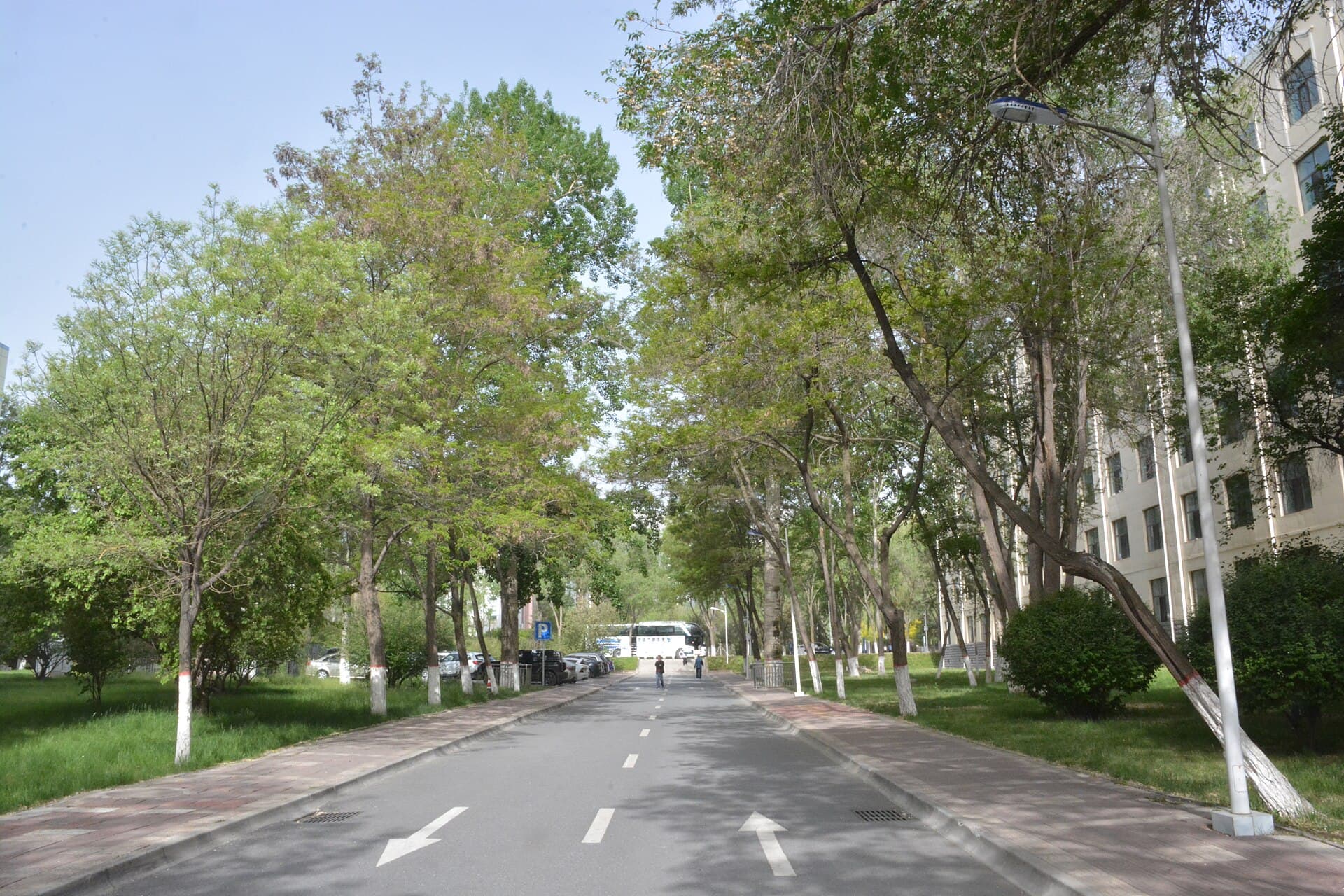
The main campus (No. 251 Ningda Road, Chengbei District) spans over 200 hectares and includes teaching buildings, a library holding 1.9 million volumes plus access to more than 40 international databases, sports complexes, student dormitories, canteens (with both halal and general sections), a medical clinic, and modern research centres. In autumn the ginkgo avenue is especially picturesque, and a small lake on campus is a popular walking spot. The university has implemented a "one-stop student community" integrating administrative services, counselling, events, and support. International students are assigned dormitories, typically two or three to a room, with basic furniture, shower, and Wi-Fi; dormitory fees for international students run approximately 3,000–5,000 yuan per semester (check exact rates with the international office).
Downtown Xining offers shopping malls, cinemas, cafés, and parks along the Huangshui River for jogging and cycling. Qinghai Lake—China's largest saltwater lake, popular for cycling tours and photography—is two to three hours away by bus or train. The famous high-altitude railway runs from Xining to Lhasa, a bucket-list journey for many travellers. Xining is linked to Beijing, Shanghai, Xi'an, and Chengdu by regular flights and high-speed rail, so the city is not isolated, but the rhythm of life is definitely calmer—for some, an advantage; for others, a challenge.
Admission requirements and selectivity for international students
Qinghai University does not rank among China's ten most selective institutions, but nor is it an easy option, especially for strong programmes such as ecology, medicine, or agriculture. The university admits international students at bachelor's, master's, and doctoral levels through both the Chinese Government Scholarship (CSC) channel and self-funded routes.
General requirements (always verify current details on the university's international office website or the CSC portal before applying):
— *Bachelor's*: high-school diploma, age under 25, proficiency in the medium of instruction (for Chinese-taught programmes, HSK 4 or above; for English-taught programmes, IELTS/TOEFL or a university attestation). An important recent change: from the 2026–27 admissions cycle onwards, CSC scholarship applicants to bachelor's programmes are required to take the China Scholastic Competency Assessment (CSCA), a standardised examination covering mathematics (mandatory for all applicants), professional Chinese (mandatory for Chinese-taught programmes, except for English-track programmes and Chinese-language majors), and physics and/or chemistry (required for science, engineering, agriculture, and medicine). Whether CSCA is required, which subjects are tested, and the language of the test depend on the target university, programme, and admission year; you must verify the official requirements of both the university and CSCA (www.csca.cn) before registering. The test is fee-paying (around 450 yuan for one subject, 700 yuan for two or more) and held five times a year (January, March, April, June, December); scores are valid for two years. If your Chinese is not yet HSK 4 level, the university may offer a foundation year, after which you sit an internal exam and proceed to the degree programme; note, however, that Qinghai University itself does not provide pre-degree Chinese instruction—you would need to complete a foundation year at a partner institution or reach HSK 4 before matriculation.
— *Master's*: bachelor's degree, age under 35, language proficiency (for Chinese-taught programmes, HSK 4 on entry and HSK 5 required for graduation; for English-taught programmes, IELTS or equivalent), two recommendation letters from professors, a research plan (minimum 800 words), and ideally a provisional acceptance from a supervisor at the university (not strictly mandatory but strongly improves chances). Applications are submitted online via the CSC system (for scholarship holders) or directly to the university's international office (for self-funded students).
— *Doctorate*: master's degree, age under 40, language proficiency, two recommendation letters, a detailed research proposal (minimum 1,000 words), and a supervisor's provisional acceptance (effectively mandatory at this level). For doctoral applications it is especially important to contact potential supervisors by email in advance, presenting your topic and CV; many successful candidates obtain an intention letter from the professor and attach it to the application.
— *Medical documents*: Foreigner Physical Examination Form (completed in English at an accredited clinic), certificate of no criminal record, passport copy, photographs. All documents not in Chinese or English require notarised translation.
Deadlines in 2026 for the CSC university-route scholarship: broadly March to mid-April. Embassy-route programmes may differ and often open earlier (December–February), varying by country. Self-funded applications may be accepted more flexibly, but spring submission for autumn entry is advisable. Confirm current dates on the university website and at campuschina.org.
University code for the CSC system: 10743.
Scholarships and costs
The Chinese Government Scholarship (CSC) is the main funding route for most international students. Qinghai University participates in the university-route channel, meaning it allocates its own quota of places. A full scholarship covers:
— exemption from tuition fees;
— free on-campus accommodation (or, if you live off-campus by arrangement with the university, a housing allowance);
— a monthly living stipend (CNY 2,500 for undergraduates, CNY 3,000 for master's students and general scholars, CNY 3,500 for doctoral students and senior scholars);
— comprehensive medical insurance (CNY 800 per year for programmes of six months or longer, CNY 400 for shorter programmes).
These sums are sufficient for a modest student life in Xining if you spend sensibly; if you wish to travel often or buy imported goods, you will need an additional budget.
Self-funded students pay tuition of approximately CNY 15,000–20,000 per year (the exact amount depends on major and year; technical and medical programmes tend to cost more); accommodation runs around CNY 3,000–5,000 per semester. This is notably cheaper than in capital-city universities but still requires budget planning.
The university may also offer internal scholarships for outstanding international students or students from particular regions under special cooperation agreements (for example, scholarships within the Lancang–Mekong Universities Alliance); inquire with the international office for details.
How we help you apply
Applying to a Chinese university—even a regional one with more flexible entry than the top ten—demands precise navigation of procedures, language requirements, deadlines, and documentation. UNIPROFI specialises in guiding applicants to Chinese universities and understands the specifics of institutions like Qinghai: how to frame a CSC application through the university channel, how to write a convincing research proposal, how to identify and approach a supervisor, what to watch for in the medical examination and notarisation of documents, how to prepare for CSCA (if required for your programme), and how to apply for an X-category study visa once you receive an admission notice.
We offer several levels of support, depending on your confidence and need for assistance. Our service packages include Self-Guided Admission to China, Guided Admission to China, Turnkey Admission to China, and Admission to China's Top-10 Universities—the latter for applicants targeting institutions such as Tsinghua, Peking, or Fudan but useful also if you are applying simultaneously to both highly selective and more accessible universities for safety.
In addition to comprehensive packages, we offer targeted single services: Consultation with a Tsinghua University expert, Admission strategy for China's top universities, Building a strong CV for Chinese universities, Motivation letter writing support, Matching up to 5 universities to your profile, Grants for studying in China (audit of scholarship opportunities), Mock interview for China's top universities, Chinese student visa support, and—especially relevant for 2026–27 bachelor's applicants and beyond—CSCA prep: foundation course and CSCA prep: intensive course.
Qinghai University is a choice for those who want quality education in a unique geographical and cultural setting, without paying capital-city premiums, and who are ready for life at altitude. If you are drawn to ecology, high-altitude biology, agriculture, Tibetan medicine, or engineering fields focused on renewable energy and materials, this institution deserves serious attention. UNIPROFI will guide you from initial idea to first day of class, handling every detail of documents, language, and procedures, so you can focus on preparing for your new academic life.
Tell us about yourself — we'll build an admissions strategy for this exact university.
Many students get in through our preparatory Language Year — an intensive year of Chinese at a partner university, followed by a move onto the main program.
What the Language Year isFrom application to admission
Profile review and strategy
We study your academic profile, goals and budget, assess your real chances, and shortlist universities and grants for your specific situation.
Document preparation
We help with translation, notarization, your motivation letter, CV and recommendations — tailored to each university's requirements.
Filing applications and university correspondence
We file your documents, track status, respond promptly to admissions offices, and keep every deadline under control.
Visa, move and your first weeks
We arrange your visa, insurance and medical exam, help with housing and transfer, and stay in touch after you arrive.
How we support admission here
From filing documents on your own to admission at one of China's top-10 universities — pick the level of involvement that fits you, and see exactly what's included in each tier.
If you're not admitted to any of your chosen universities, then under the terms of the agreement we'll refund your payment minus documented expenses, or support a free re-application the following year.
Common questions about admission
Why apply through UNIPROFI specifically?
UNIPROFI is about a well-thought-out application and a strong outcome: we build an application path around your profile, goals and the requirements of your selected universities. You work with mentors who are current students or graduates of these schools, so you get real understanding of the system, campuses and opportunities — not theory. We take on complex cases (including minors and admission without an 11th-grade diploma), build an individual strategy for your profile and goals, and support you through every stage, from documents to your visa.
Do you guarantee admission?
We don't offer "guarantees for the sake of a sale," because no one can directly influence a university's decision. What we do is structure everything to minimize the risk of rejection — matching you to the right universities, building a strong application strategy, and preparing documents carefully. Any refund or re-application arrangement is governed only by the current service agreement and the circumstances of the case.
What are my actual chances of getting in?
We do not state a universal admission probability because the decision belongs to the university. We instead assess your profile, programme requirements and application strategy.
Can I apply on my own — why do I need you?
You can, but most students end up losing time, making mistakes, or settling for weaker universities. We save you months, help you start at a stronger level, and prevent the mistakes that can cost you admission.
Get in touch to get started
Tell us about yourself and what you're specifically interested in — our specialists will help you find the right format.