
New Admission Requirements for China 2026/2027: CSCA, Apostille, and HSK 3.0
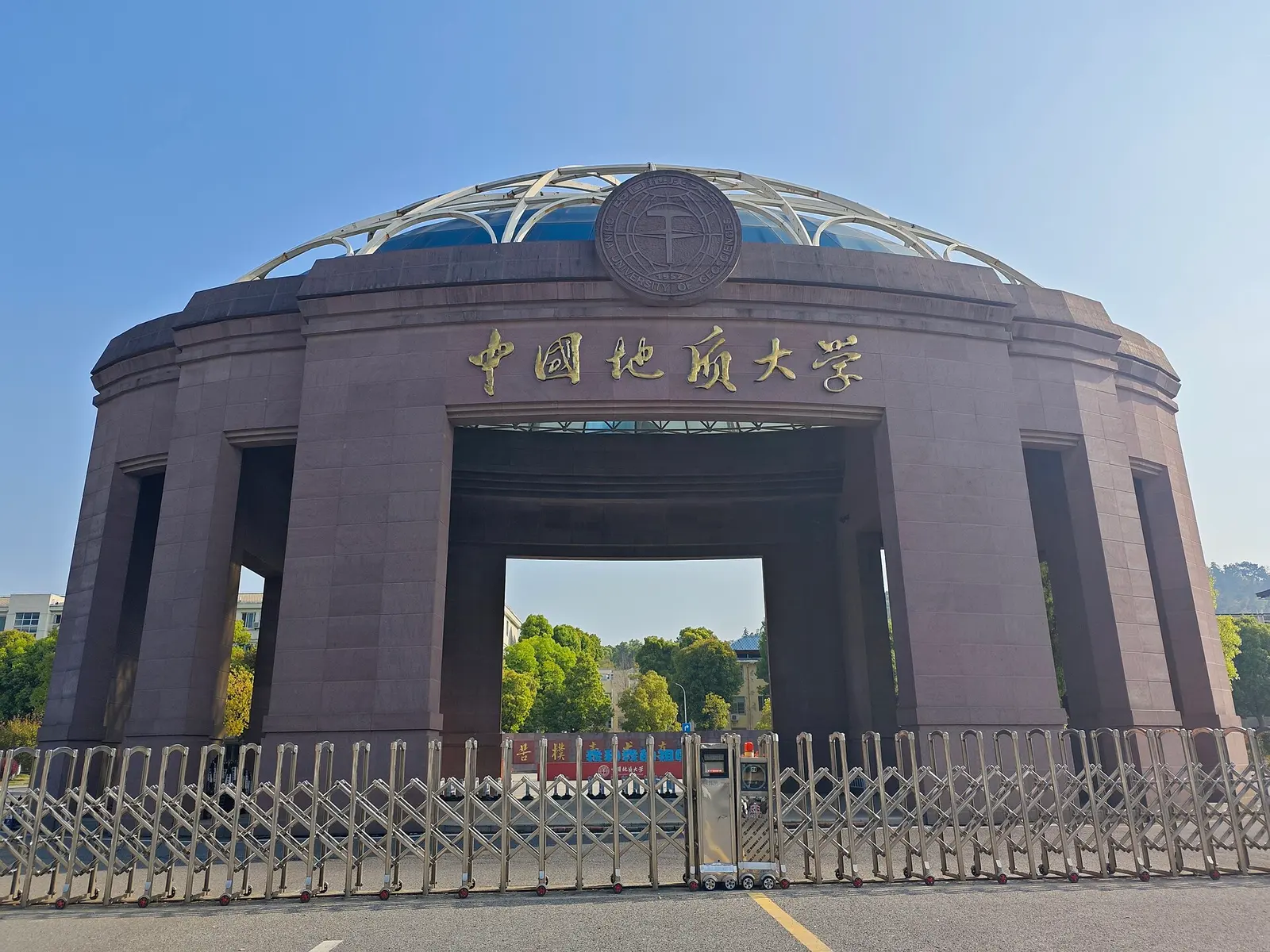
Photo: Liuxingy · CC BY-SA 4.0 · Wikimedia Commons
Mandatory CSCA Exam: Who Started and Where the Requirement Is Heading
In December 2025, China's Ministry of Education launched the China Scholastic Competency Assessment (CSCA) — a centralized entrance exam for international undergraduate applicants. The first test session took place on December 21, 2025; starting with the 2026/2027 intake, CSCA became a compulsory component of applications to 306 Chinese universities, including all institutions distributing China Scholarship Council (CSC) scholarships.
The necessity of CSCA, the list of required subjects, and the exam language depend on the target university, programme, and admission year; applicants must verify them against official university requirements and the current schedule on www.csca.cn before registering. Nevertheless, the general framework is defined: mathematics is mandatory for all majors (including humanities); "Professional Chinese" is required for applicants to Chinese-taught programmes (exemptions apply to those submitting HSK 4 or above, or those enrolled in fully English-taught programmes); physics and chemistry are optional, with requirements set by the university for science, engineering, medicine, and agriculture majors. Mathematics, physics, and chemistry are available in both English and Chinese; "Professional Chinese" is divided into humanities and STEM versions, both administered in Chinese.
By 2028, CSCA is planned to become mandatory for all international undergraduate applicants in the country — the rollout is currently phased. Exam format: all subjects consist of multiple-choice questions only; mathematics, physics, and chemistry contain 48 questions each over 60 minutes, "Professional Chinese" contains 80 questions over 90 minutes, and each subject is scored on a 100-point scale. In 2026, CSCA is held five times — in January, March, April, June, and December — in three formats: remotely with online proctoring from home, computer-based test at a test centre, or paper-based test at a centre (the first offline centres opened in Vietnam and Thailand in December 2025, with the network expanding). Cost: one subject is 450 yuan (~64 USD), two or more subjects in a single session cost 700 yuan. Results are published in the personal account on www.csca.cn within 7 working days after online or computer-based tests and within 14 working days after paper-based tests.
Universities set their own minimum score thresholds; no universal passing score exists yet. Important: CSCA applies only to undergraduate admission; master's and doctoral applicants follow entrance requirements specific to each university and are not required to take CSCA.
Apostille Instead of Consular Legalization: How China Simplified Document Processing
On November 7, 2023, China officially joined the Hague Convention of 1961 Abolishing the Requirement of Legalisation for Foreign Public Documents (Apostille Convention). This changed the procedure for confirming the authenticity of diplomas, certificates, and transcripts for admission: instead of two-stage consular legalization (notary → foreign ministry of the issuing country → Chinese consulate), documents from convention member countries require only a single apostille affixed by the competent authority of the issuing country.
It is important to understand the limits of apostille: it certifies the authenticity of the signature and seal on the document, but does not replace translation. Chinese universities typically accept documents in Chinese or English; documents in other languages must be accompanied by a notarized translation into Chinese or English. An apostille can be affixed to the original diploma, to a notarized copy, or to a notarized translation — depending on the specific university's requirements. Leading universities (for example, Peking University, Tsinghua University) state in their instructions for international students: "if the document is not in Chinese or English, you must provide the original and a notarized translation into Chinese or English". Some programmes allow ordinary translations at the application stage, but at the final registration stage before enrolment, they will require an apostilled original or a notarized copy with apostille.
Apostille should not be confused with degree authentication by the Chinese Service Center for Scholarly Exchange (CSCSE). CSCSE authentication is a procedure for recognizing a foreign degree in China for employment or further study; it is not required for submitting documents to undergraduate or master's programmes as a foreign applicant and is requested after completing overseas education when applying for jobs in China or enrolling in a Chinese university with a foreign degree. Apostille, on the other hand, confirms the authenticity of the document for the university at the admission stage.
HSK 3.0 from July 2026: Nine Bands Instead of Six and New Requirements
On July 1, 2026, the new Hanyu Shuiping Kaoshi (HSK 3.0) system — the official Chinese language proficiency exam — took effect worldwide. Instead of the previous six levels (HSK 1–6), a nine-band structure was introduced: elementary stage (bands 1–3), intermediate stage (bands 4–6), and advanced stage (bands 7–9). Bands 7–9 have existed since March 2022 and are administered as a single integrated exam; bands 1–6 transitioned to the new standard from July 2026 after a pilot launch on January 31, 2026, at 44 test centres worldwide.
Key changes to consider when preparing:
- Vocabulary volume has increased. HSK 1 now requires 300 words instead of 150 in the old format; HSK 3 requires 1,000 words instead of 600; HSK 6 requires 5,400 words instead of 5,000. The total vocabulary pool through the end of the advanced stage (band 9) is approximately 11,000 words.
- Characters are divided into two lists: for recognition and for handwriting. For example, at band 6, you need to recognize 1,940 characters but be able to handwrite 700. Starting from band 3, the exam includes writing tasks requiring independent character reproduction.
- The speaking component is integrated into the main exam from band 3. Previously, the oral test (HSKK) was a separate optional module; now, starting from HSK 3, registration for the written test automatically includes registration for the oral test.
- Translation has appeared in the advanced stage. Bands 7–9 test written and oral translation skills alongside listening, reading, writing, and speaking — an entirely new component that did not exist in HSK 2.0.
How New Requirements Affect Document Submission: A Practical Timeline
Consider a typical trajectory for an applicant preparing for undergraduate admission in September 2027 (the next full cycle after all changes are implemented).
Autumn–winter 2026: University selection and requirement verification. The applicant compiles a list of target universities, verifies each university's requirements for language (HSK for Chinese-taught programmes or IELTS/TOEFL for English-taught ones), required CSCA subjects, previous years' passing scores (if published), and whether interviews are required. Checks whether the university is among the 306 requiring CSCA and which specific subjects are needed for the chosen major.
December 2026 or January 2027: Taking CSCA. CSCA registration opens one month before the test session; the applicant selects a session (December, January, March, or April — depending on university deadlines), registers for the required subjects, pays the fee, and takes the exam. If the result is unsatisfactory, retaking is possible in the next session before application deadlines close.
January–March 2027: Preparing documents with apostille. Obtains a notarized translation of the secondary school certificate (if not in English or Chinese), affixes an apostille through the competent authority of their country. If the programme requires an HSK 3.0 certificate and the applicant has not yet taken it, registers for the nearest HSK session — the certificate is valid for two years from the exam date, but some universities set shorter validity periods, so a recent certificate is always safer.
February–April 2027: Submitting applications. Through the university portal or a national platform (for example, www.campuschina.org for CSC scholarship recipients), uploads scanned copies: secondary certificate with apostille and translation, transcript with apostille and translation, CSCA certificate (downloaded from the CSCA personal account), HSK 3.0 or IELTS/TOEFL certificate, motivation letter, recommendation letters (for master's programmes and scholarships), medical examination form Foreigner Physical Examination Form (if planning to stay more than 180 days), certificate of no criminal record (mandatory for CSC scholarships, not always required for self-funded study). Deadlines vary: CSC scholarship through the embassy channel (Type A) typically closes in early to mid-February; direct university applications (Type B) close between January and April; self-funded programmes may accept documents until May–June.
July–August 2027: Receiving admission and X1 visa. The university publishes results; successful candidates download the Admission Notice and Form JW201 or JW202 from the system. With these documents, they apply to the Chinese visa centre for the X1 student visa (for programmes exceeding 180 days). The X1 visa is an entry visa; upon arrival in China, within 30 days, applicants must register with the local entry–exit administration of the public security bureau and obtain a residence permit for the duration of study.
Transition Period and Special Cases: What Remains Flexible
Despite centralization of requirements, the system retains zones of flexibility. Universities have the right to set their own minimum CSCA scores or completely exempt certain categories of applicants (for example, holders of international SAT or ACT certificates with high results — such exceptions are being discussed at Shanghai Jiao Tong University but not officially confirmed yet). Some programmes in the transitional year 2026 recommended but did not require CSCA for the spring intake; from autumn 2026, the requirement became mandatory across all 306 universities.
HSK 2.0 certificates (old format) retain legal validity and are not automatically converted to HSK 3.0 bands. If an applicant took HSK 4 under the old system in 2025, this certificate is accepted by universities on par with the new one, as long as it has not expired (usually two years, but the final decision rests with the receiving university). If preparing to take the test now, check with the test centre which format is used; from July 2026, HSK 3.0 became the standard, but during the transition period, individual centres may have offered both options.
Apostille applies only to documents from countries that have joined the Hague Convention; for others (including some CIS countries), the previous consular legalization scheme remains: notary → foreign ministry of the country → consular section of the Chinese embassy. The list of convention member countries is available on the Hague Conference on Private International Law website; before starting the procedure, check your country's status.
CSC Scholarships 2026/2027: Where CSCA Is Required
CSCA depends on the university, not on the scholarship. From the 2026/2027 intake it is taken by everyone applying for a bachelor's at one of 306 designated universities, with or without a CSC scholarship: the scholarship goes to students the university admits, and such a university does not admit bachelor's applicants without CSCA. Official sources set no other rule linking CSCA to the scholarship, so check the requirements university by university. Master's and PhD applicants are not affected.
The embassy-channel scholarship deadline usually falls in early February; university deadlines (Type B) range from January to April depending on the institution. Anyone applying for a bachelor's at one of the 306 universities sits CSCA in advance: the first session was held on 21 December 2025. Scholarship results are published in July–August; recipients receive the Admission Notice and the JW201 form through the CSC system.
HSK requirements for scholarship recipients remain the same with adjustments for HSK 3.0: for undergraduate programmes taught in Chinese, HSK 4 or above is recommended (the specific level depends on the university); for master's and doctoral programmes taught in Chinese, HSK 4 is the minimum; for English-taught programmes, IELTS, TOEFL, or equivalent as required by the university. Applicants who completed their previous level of education in China with instruction in Chinese may be exempt from providing an HSK certificate — the receiving university decides.
The New Admission Path, Without Mistakes
The new 2026/2027 requirements have significantly complicated the admission procedure: you need not only to choose the correct set of CSCA subjects for each programme but also to synchronize exam dates, document apostille, translation preparation, and application submission to multiple universities with different deadlines. A mistake at any stage — a missed CSCA subject, incorrectly processed apostille, or outdated HSK certificate — can cost an entire year.
UNIPROFI specializes in admission to Chinese universities and tracks all current requirement changes in real time. Our experts help compile an accurate document list for specific universities on your shortlist, suggest optimal CSCA and HSK test dates, verify package completeness before submission, and provide support at every stage — from programme selection to visa receipt.
If you are applying to one of the 306 universities requiring CSCA or competing for a CSC scholarship, the Turnkey Admission to China plan covers the entire process: breakdown of CSCA requirements for each selected university, assistance with exam registration, preparation and verification of all documents (including coordination of apostille and notarized translations), online application completion, communication with universities, and support until visa receipt. This is especially valuable in 2026/2027 when the rules have just settled and each university interprets the framework requirements in its own way.

Write to us
Tell us where you'd like to study and what you're interested in. We'll suggest where to start and how we can work together.