
Fully funded scholarships abroad: what "fully funded" does not cover
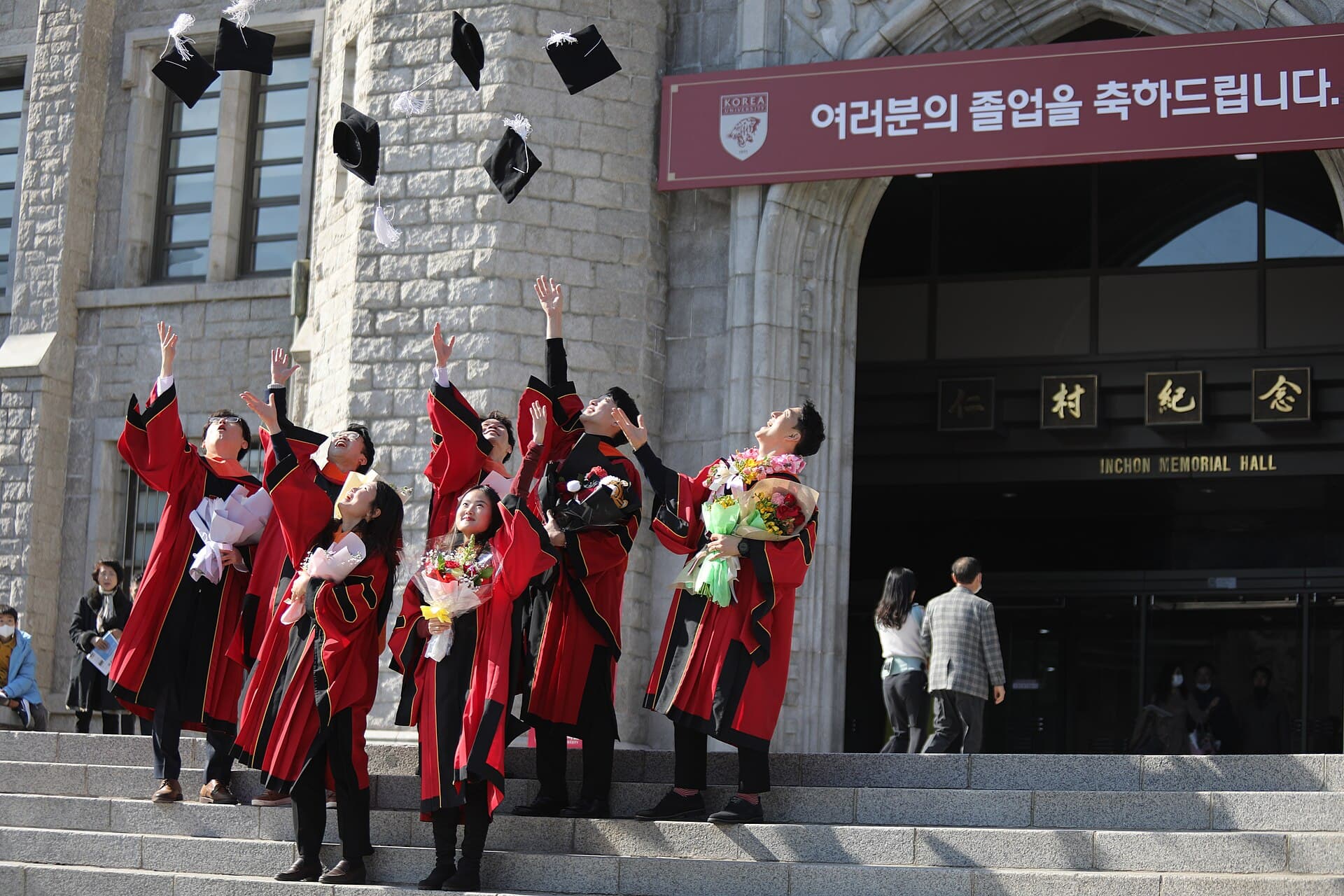
Photo: KUBS (Korea University Business School) · CC0 · Wikimedia Commons
"Fully funded" describes the money, not the timeline
Full government scholarships exist, and they really are full: tuition, a monthly stipend, housing, medical insurance, often airfare. That is not marketing, it is true.
What is not true is the omission. Almost every such programme carries a condition that does not change the amount but moves your calendar by a year. And because scholarship descriptions talk about coverage rather than duration, applicants usually discover it after applying.
Below are three major programmes read from their own rules, each with a condition of its own.
Korea, GKS: the language year is not an option but part of the programme
The Global Korea Scholarship covers the degree in full: tuition, a monthly allowance, airfare, a settlement grant and medical insurance.
The undergraduate structure runs like this: one year of Korean language, then four to six years of the degree itself. The language year is not chosen and not waived at will — it is built in.
The second thing worth knowing early is the scale of the selection. Quotas are allocated by country and they are counted in single figures: the announcement for the Philippines, for instance, lists one place on the general GKS track and one on the R-GKS track. There are two routes — through an embassy or through a university — with different rules on choosing institutions.
The practical conclusion: GKS is not a scholarship to try for on the side. It is a campaign of its own, planned at least a year ahead.
Türkiye Bursları: a Turkish year is compulsory even on an English-taught degree
The Turkish government scholarship covers tuition, a monthly stipend, accommodation, medical insurance, airfare and a language course, and it places the scholar at a university itself.
And here is the condition that almost no summary carries. A year of Turkish preparation is compulsory for every scholarship holder, whatever the language of the programme. Students placed on degrees taught in English, Arabic or French complete the one-year Turkish preparatory education all the same.
The volume is specified: 960 hours of Turkish and 140 hours of academic Turkish, both mandatory, with C1 expected by the end of the course at the universities' TÖMER centres.
There is exactly one exemption: a C1 certificate from the Yunus Emre Institute or a university Turkish language centre. For everyone else the year is added to the length of the degree.
So an English-taught degree on a Turkish scholarship still runs a year longer than the same degree would if self-funded.
Hungary, Stipendium Hungaricum: you cannot apply on your own
The Hungarian programme covers tuition, a monthly stipend, a housing contribution and medical insurance. But here the barrier stands before any preparation does.
The programme runs through bilateral educational cooperation agreements, and candidates are put forward by a sending partner in your own country. The programme's own answer is unambiguous: only nominated applicants can proceed with their applications. Nominations are collected by the end of February.
Two consequences follow. First, applying independently is not possible at all, however strong the file. Second, and more important: if there is no valid agreement between your country and Hungary, there is no application to make — which is precisely how the programme explains why some countries cannot take part.
So checking Hungary starts not with grade requirements but with one question: is there an agreement, and who is the sending partner in your country?
China: a separate conversation
Chinese government and university scholarships work differently and deserve their own piece — we have one: grants and scholarships for study in China.
That is also where to look at examination requirements: the rules for undergraduate applicants changed from the 2026/2027 intake, and the same warning applies to them as to everything in this article — check against a specific university.
Let's work out which scholarships you actually qualify for
We'll read your profile against specific programmes, check the quota for your country, and count how many years the whole route takes including the language year.
What they have in common
Set the three conditions side by side and they are the same payment in different currencies.
- Korea takes a year in language, and builds it into the programme openly.
- Türkiye takes a year in language even when the programme has no need of it.
- Hungary takes not a year but the right to apply: without a nomination there is no application.
How to choose without losing a year
Comparing scholarships on what they cover is useless — all three cover almost everything. The comparison that matters is on three other things: how many years the whole route takes, whether you can apply at all, and what the real quota is for your country.
The same logic holds outside scholarships: the piece on studying abroad for free shows that a zero price is almost always paid in language, time or category. Scholarships differ only in paying you money — they take the time just the same.
And finally: all of this changes from intake to intake. The figures and rules here come from official sources as of publication, but before applying they have to be checked against the programme's current rules rather than against articles, this one included.
The countries in this piece
 Hungary

Get in touch to get started
Tell us about yourself and what you're specifically interested in — our specialists will help you find the right format.