
Studying abroad for free: where it is true, and what "free" is actually paid for with
Photo: Guywelch2000 · CC BY 4.0 · Wikimedia Commons
One word, five different meanings
The phrase "study abroad for free" implies there is a list of countries you can go to without paying. Such countries do exist. The trouble is that "free" means something different in each of them, and the difference is not cosmetic — it decides whether the option suits you at all.
Below are five countries and five different mechanisms. In each case what matters is not the price but who exactly, and on what condition, pays nothing.
Germany: free for everyone — but the gate is not money
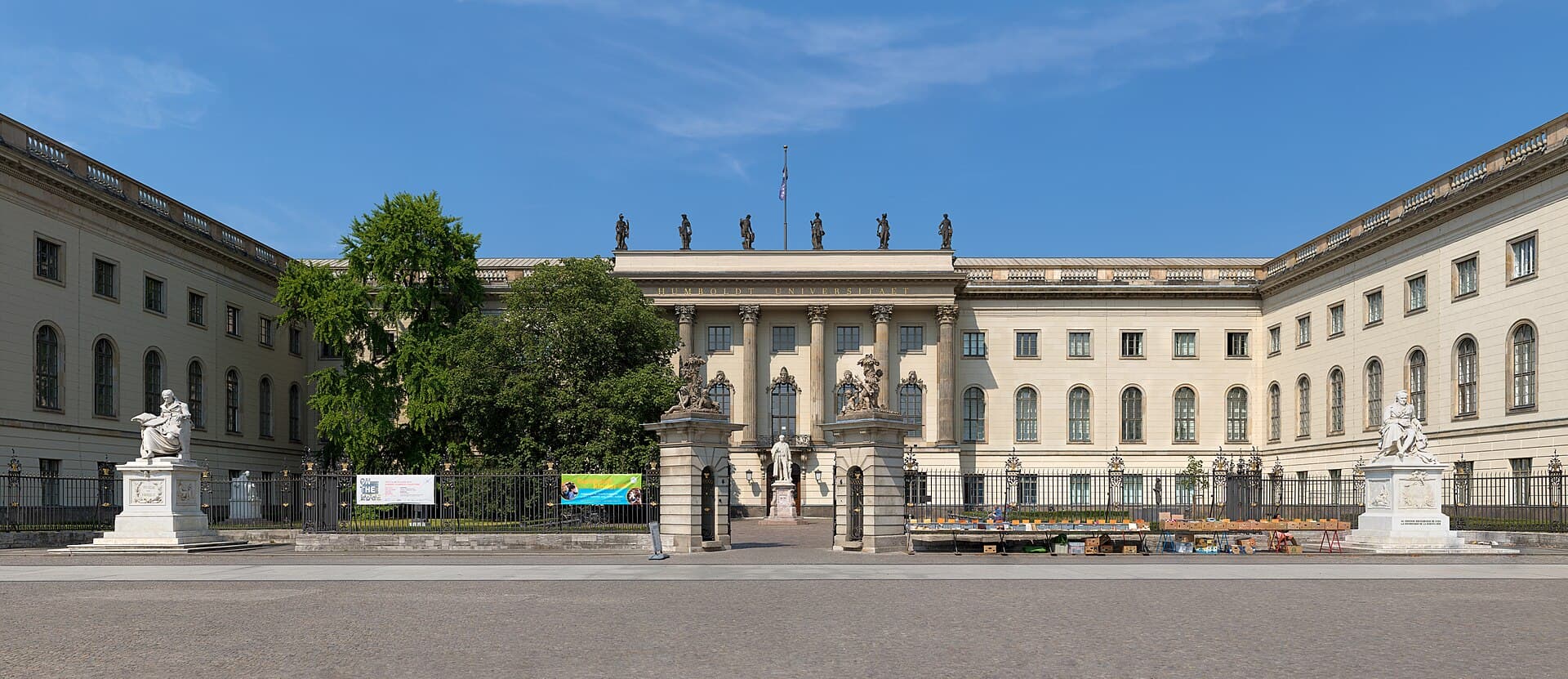
Germany is the rare case where free means literally free, regardless of citizenship or the language of the programme: public universities in most federal states charge no tuition. A semester contribution is payable everywhere on top, but it funds the student body and a transport pass, not teaching.
Which is exactly why Germany is the worst country to start a conversation about price. The barrier here is admission, not finance: a Russian school certificate does not by itself grant the right to enrol at a German university — it opens the way to a Studienkolleg. The rejection does not come from the finance office.
What you do have to prove with money is not tuition but your ability to support yourself: €11,904 for the year in 2026. Both mechanisms are worked through in the separate piece on admission to Germany.
Czechia: free — but in Czech
In Czechia, higher education at public universities is free for everyone, international students included, on one condition: the programme must be taught in Czech. A fee appears only if a student exceeds the standard duration of study by more than a year.
Programmes in English and other languages are fee-paying, and the range is wide — from token sums to tens of thousands of euros a year; English-taught bachelor's and master's degrees at public universities are typically a few thousand euros a year.
So the real price of Czech "free" is a year of Czech preparatory courses, sometimes two. It is not paid in money but in time.
And one warning without which any discussion of Czechia would be dishonest: a Russian citizen currently cannot, in practice, obtain a Czech study visa. For citizens of other countries the destination works normally.
Poland: free, but by list
Poland works differently again: here free depends neither on language nor on income but on which category you fall into.
Full-time study in Polish at public institutions is free for Polish citizens, for citizens of the EU and EEA, and for holders of the Karta Polaka or a confirmed decision of Polish origin.
Every other foreigner pays, and by Polish standards the sums are moderate: on average around €2,000 a year for bachelor's and master's study and around €3,000 a year for postgraduate programmes. Holders of scholarships from NAWA, the Polish national agency for academic exchange, are exempt separately.
So the honest answer to "is Poland free?" is: yes, if you hold a Karta Polaka or EU citizenship; otherwise inexpensive, but not free.
Italy: not free but income-scaled — and dependent on a form filed on time
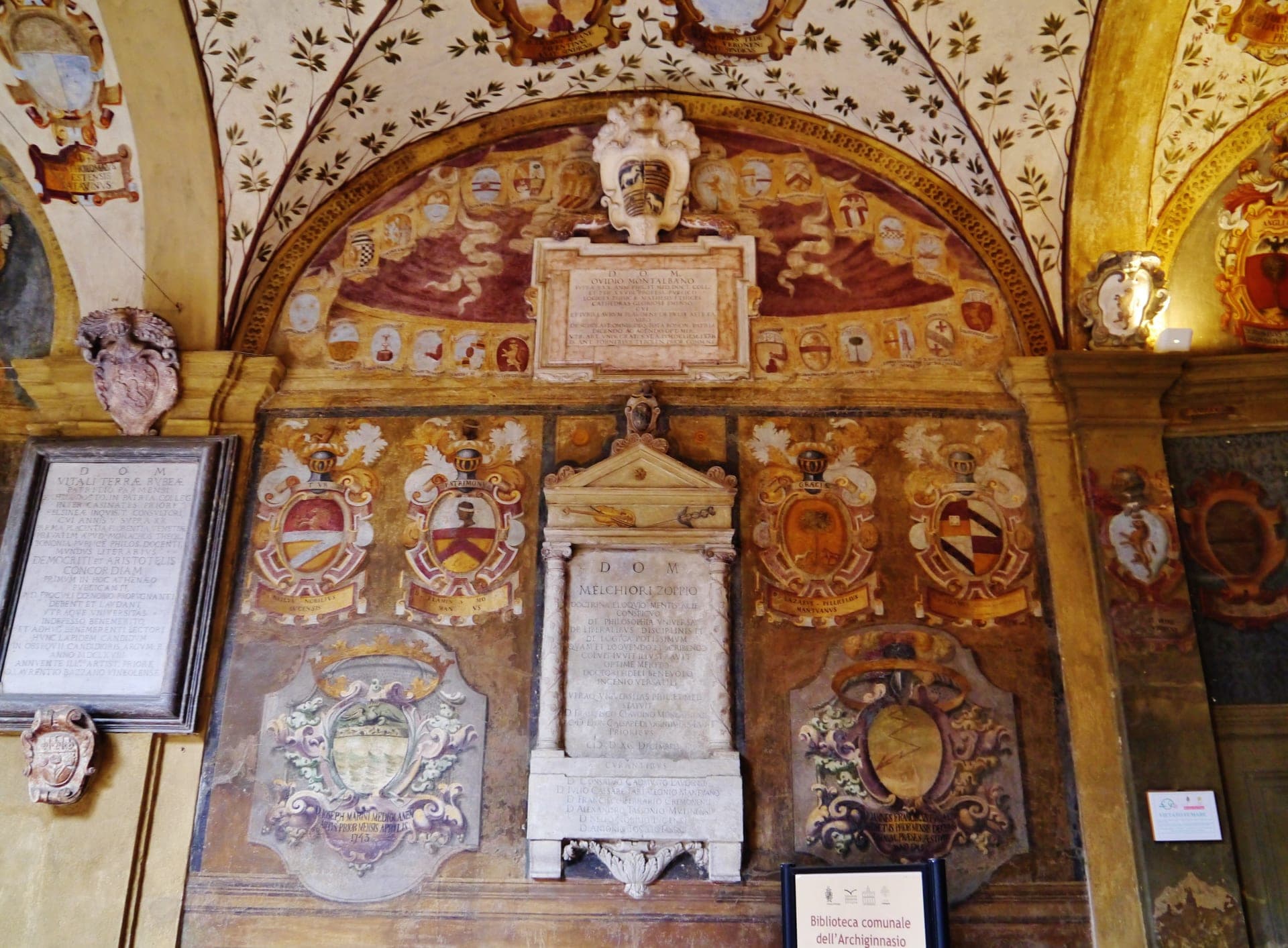
Italy is the most misunderstood case, because the price is not fixed at all. Fees at a public university are set by household income.
Ministerial decree no. 1014 of 03.08.2021 introduced the no tax area: with an ISEE below €22,000 the fee falls to zero, and many universities extend partial reductions above that threshold as well.
But the relief is not granted automatically. It has to be claimed by filing an ISEE parificato — the Italian income calculation assembled from foreign documents. Without it the university places the student in the top fee band. With no ill intent; simply by default.
So in Italy "free" is paid for neither in language nor in time but in precision: a correctly assembled set of documents, filed before the deadline. The order the documents go in is a separate piece.
France: the country that stopped being cheap
France appeared for years in every "study almost free" list, and many articles still repeat it. That is out of date.
For the 2026/2027 academic year, students who are not citizens of the EU, the EEA or Switzerland pay differentiated fees: €2,902 a year at bachelor's level and €3,950 a year at master's level.
Exemptions exist, but their share is capped and the cap is falling on a schedule: decree no. 2026-385 of 19 May 2026 sets the ceiling for individual exemptions granted by institutions at 30% for 2026/2027, 25% for 2027/2028 and 20% from 2028.
The practical consequence for anyone planning several years ahead: the later the intake, the smaller the chance of landing inside the exemption quota. That belongs in the budget from the start.
Let's cost the whole entry, not a line from a price list
We'll compare your options on total cost and on timing: language, a preparatory year, proof of funding, and the visa reality for your citizenship.
What "free" is actually paid for with
Put the five cases side by side and a pattern appears: a zero price is almost never free. It is paid for out of one of four resources.
- Language. Czechia: free in Czech means a year or two of preparation first. The same logic governs most countries that have a "local" free track.
- Time spent qualifying. Germany: money is not the issue, but a Studienkolleg or a year at a home university stands between the certificate and the campus.
- Belonging to a category. Poland: a Karta Polaka or EU citizenship — or an ordinary, if moderate, fee.
- Precision with documents. Italy: one unfiled ISEE moves a student from the zero band to the top one.
How to count so you do not lose a year
Comparing countries on the tuition line is meaningless: that line describes different things in each. What has to be costed is the full price of entry — language, a preparatory year, proof of funding, the visa reality for your citizenship — and the date on which you actually start first year.
Run that calculation and the cheapest country on paper usually is not the cheapest in total, and the fastest route is rarely the one assumed at the start. The same arithmetic with different variables applies outside Europe too: in the piece on Japan the whole fork turns on where the entrance exam can physically be sat.
And the last thing to check against a specific university rather than general articles, this one included: the rules differ not only between countries but between states, regions and individual institutions.
 Poland
 Italy
Italy Germany
 France
Get in touch to get started
Tell us about yourself and what you're specifically interested in — our specialists will help you find the right format.