
Studying in Germany after school: why your certificate is not enough, and what to do about it
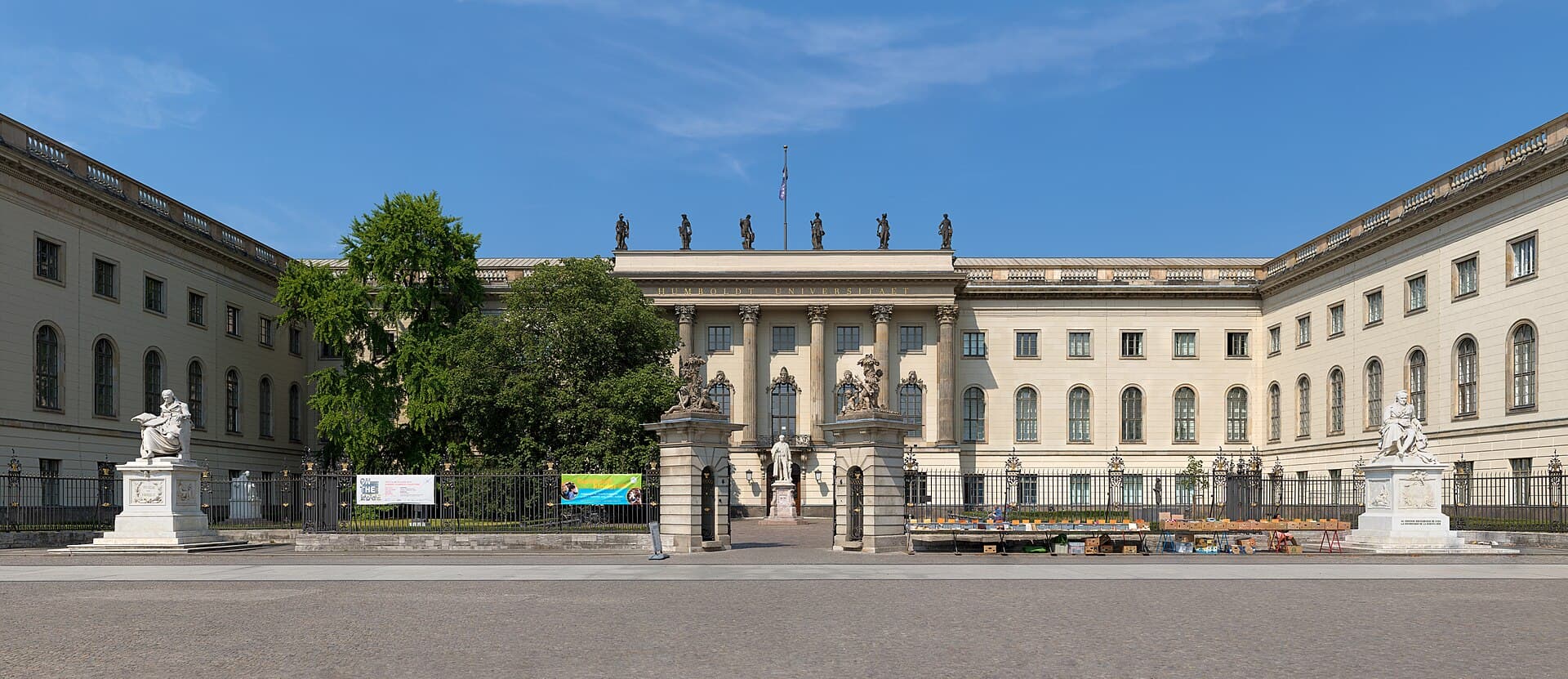
Photo: Christian Wolf ( www.c-w-design.de ) · CC BY-SA 3.0 de · Wikimedia Commons
"Free" is true, and it answers the wrong question
One fact about Germany sticks: public universities in most federal states charge no tuition. It is true, and it is why the country draws one of the largest application flows in Europe.
The difficulty is that price is not the barrier things actually stop at. A rejection comes from the admissions office, not from accounting, and the reason is almost always the same: the school certificate does not grant the right to enrol. Free tuition changes nothing at that moment — it begins after admission, not before it.
So the sensible place to start with Germany is not money but a single question: what does the German side count as your entitlement to higher education?
A school certificate and a Hochschulzugangsberechtigung are not the same thing
Germany has a concept called Hochschulzugangsberechtigung (HZB) — the entitlement to enter higher education. A German school leaver gets it with the Abitur. An international applicant gets it only if their document is recognised as equivalent.
That is not decided by a university at a glance, nor by a consulate, but by the anabin database maintained by the Secretariat of the Standing Conference of the Ministers of Education (KMK). For every country and every document type it records what that document grants.
The record for Russia is unambiguous. An "Attestat o srednem obshchem obrazovanii" issued from 2015 onwards grants access to a Studienkolleg and to the Feststellungsprüfung exam, across all focus courses. On its own it does not grant direct university access.
This is not a quibble or a regional quirk. It is the foundation everything else rests on: until the document grants an HZB, there is nothing to apply to a university with.
Direct access exists, but it is tied to your field
The second line of that same record matters more than the first. The certificate together with evidence of at least one successfully completed year of study at a recognised institution grants direct access to a German university, with no Studienkolleg.
That access carries a restriction that is easy to miss: it is subject-restricted. A year on an engineering programme opens engineering programmes — not any programme. Someone who spent a year studying economics and then decided on medicine in Germany finds the year does not count the way they expected.
Which leads to a conclusion few people draw in time: choosing a first-year subject at home is already choosing what will be available in Germany. It is worth taking that fork deliberately rather than in hindsight.
Studienkolleg: length, courses, cost
A Studienkolleg is a preparatory year attached to a university that brings an international applicant up to the German admission standard. It runs for two semesters; strong students may be allowed to complete it in one.
The course is not chosen freely but according to the intended degree, and that choice determines what opens up afterwards.
It ends with the Feststellungsprüfung. Passing it opens access to study throughout Germany, not only at the university the Studienkolleg was attached to.
At public Studienkollegs the teaching is free of charge — only the semester fee applies. Private ones charge, and that is a separate budget line worth seeing early.
- T — mathematics, natural sciences and engineering
- M — medicine, biology, pharmacy
- W — business, economics and social sciences
- G — humanities and German studies
- S — language programmes
- TI, WW, GD, SW — courses at universities of applied sciences (Fachhochschule): engineering, economics, creative and social fields
€11,904 — and the myth of the compulsory blocked account
Proof of funding is pegged to the maximum BAföG rates. For 2026 that is €11,904 for the year — €992 a month. You cannot withdraw more than the monthly figure: the cap exists precisely so the money does not run out in the first months.
Then comes the part agency articles tend to leave out. A blocked account is not the only way to prove funding. The Federal Foreign Office lists others as well: the income and assets of parents, a Verpflichtungserklärung — a formal undertaking by someone with sufficient income or assets — and an annually renewable bank guarantee from a German bank.
The difference is practical, not paperwork. Someone with a relative in Germany willing to sign an undertaking may not need a blocked account at all — yet spends a year saving the sum because they read that "no Sperrkonto, no visa".
Which route fits depends on your situation and on the requirements of the particular consulate. But knowing there is more than one is worth having before you start saving.
Let's check your case before you start collecting documents
We'll look up the anabin record for your certificate, match a Studienkolleg course to your subject, and work out which form of financial proof fits you.
Where this usually breaks
Almost every difficult case we work through comes down to four mistakes. None of them is about ability or motivation — all of them are about sequence.
- Checking "the rules for Russia" in general rather than the specific document type in anabin — the record differs, including by the year the certificate was issued.
- Picking a Studienkolleg course that does not match the intended degree: the course determines which programmes open after the Feststellungsprüfung.
- Treating a year at a home university as a universal pass, and learning about the subject restriction only after applying.
- Preparing a blocked account and nothing else, without considering the other recognised forms of proof.
What this means for your plan
Germany is not a country where a motivation letter decides the outcome. Here it is decided by structure: what anabin records about your document, which Studienkolleg course leads to your subject, and in what form your funding is proven.
The good news is that none of these depends on luck — every one can be checked in advance. The bad news is that it has to be checked against a specific university and a specific document type, not against general articles. This one included.
 Germany
 Russia
Get in touch to get started
Tell us about yourself and what you're specifically interested in — our specialists will help you find the right format.