

Harbin Institute of Technology
Harbin Institute of Technology
Tell us about your profile and we will answer for this university: your chances, the deadlines and what to prepare.
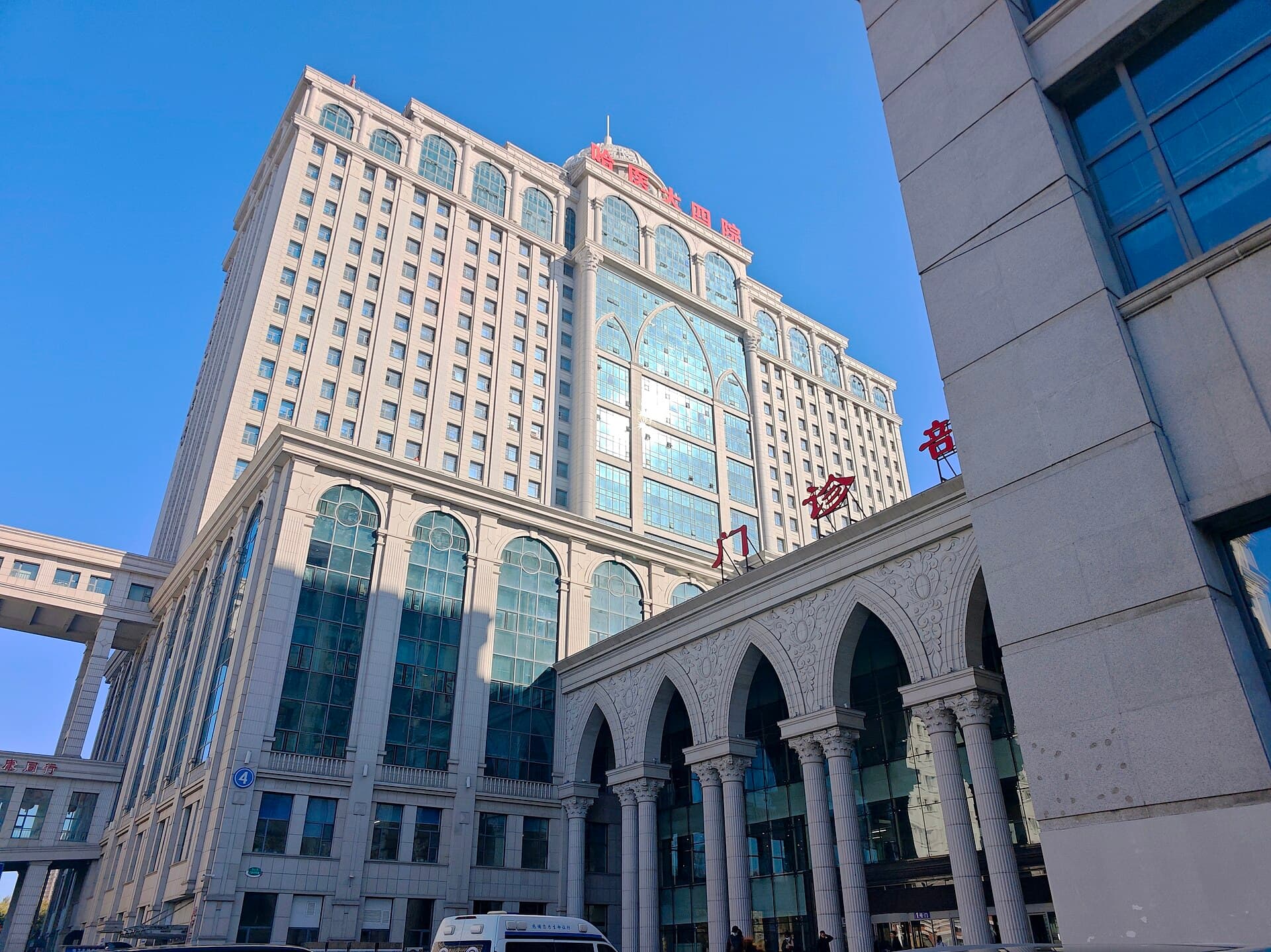
Photo: Jonashtand · CC BY-SA 4.0 · Wikimedia Commons
Shortlist a few and we'll compare them side by side and assess each one.
History and reputation
Harbin Institute of Technology (HIT; Chinese: 哈尔滨工业大学, Hāěrbīn Gōngyè Dàxué) stands as one of China's most storied technical universities and a core member of the elite C9 League, the Chinese equivalent of the Ivy League for engineering and science. Founded in 1920 as the engineering school of the Chinese Eastern Railway, HIT developed deep ties with the Soviet Union during the 1950s, which shaped its rigorous, research-intensive model and its enduring strength in aerospace, materials science, and mechanical engineering. Today, the university is a strategic national asset, deeply embedded in China's space programme and a cradle of innovation in robotics, advanced manufacturing, and environmental engineering.
In the 2026 global rankings, HIT places 131st overall in the Times Higher Education World University Rankings and 42nd globally for engineering, ranks 147th in CWUR, and sits at 128th in the U.S. News Best Global Universities list. Within China, it consistently ranks in the top ten for engineering disciplines: its programmes in instrumentation science, mechanics, and control science are ranked number one nationally, and its specialties in materials science, computer science, and environmental engineering are all top-ten contenders. Eleven of HIT's research fields are in the top 1% globally according to the Essential Science Indicators (ESI), with materials science and computer science in the top 0.1% and engineering in the top 0.01%. HIT is not merely an academic institution—it is a mission-critical partner to China's space endeavours, having launched China's first university-developed satellite, contributed key subsystems to the Chang'e lunar missions and the Zhurong Mars rover, and pioneered innovations ranging as space robotic arms to on-orbit laser communication.
Chinese universities tighten portfolio and motivation-letter requirements every year — we track this university by university, so every application matches what the admissions committee actually expects right now.
Academic strengths
HIT's reputation rests on its engineering programmes, five of which—mechanics, control science and engineering, aerospace science and technology, materials science, and environmental engineering—are rated A+ in China's national subject assessments, placing them in the top 2% of all universities nationwide. The university comprises more than 20 schools and faculties, among which the School of Astronautics (founded in 1987, China's first dedicated aerospace school), the School of Robotics, the School of Electrical Engineering and Automation, the School of Materials Science and Engineering, the School of Mechatronics Engineering, the School of Instrumentation Science and Engineering, and the School of Chemistry and Chemical Engineering are especially prominent.
HIT operates five national key laboratories (including those focused on robotics, composite materials, and laser communications), 12 state-level research centres, and a landmark national large-scale scientific facility—the Space Environment Ground Simulation Facility—the first of its kind in Northeast China and a global leader in testing spacecraft under simulated space conditions. Among its faculty and alumni are ten members of the Chinese Academy of Sciences and the Chinese Academy of Engineering, numerous National Science and Technology Award laureates, and leaders of major national projects. Recent breakthroughs include the development of space manipulator arms for the Tiangong space station (completing over 70 in-orbit missions), landing and navigation systems for lunar and Martian missions, microsatellites, the world's first controllable shape-memory polymer solar array deployed in orbit, and pioneering work on variable-configuration suspension systems for Mars rovers that set new international standards for terrain adaptability.
Show the full profile
Campus and city life: winter extremes, warm community
Harbin, the capital of Heilongjiang province in China's far northeast, sits some 1,500 km from Beijing and is known for bitterly cold winters—temperatures routinely dip to –20°C to –30°C from December through February. The city compensates with its internationally renowned Harbin International Ice and Snow Sculpture Festival (January–February), a legacy of Russian architecture along Zhongyang Street, and a vibrant blend of Chinese and Russian cultural influences. Despite the harsh climate, Harbin is an important industrial and scientific hub with well-developed infrastructure, a metro system, abundant student-friendly cafés and co-working spaces, and a cost of living significantly lower than Beijing or Shanghai.
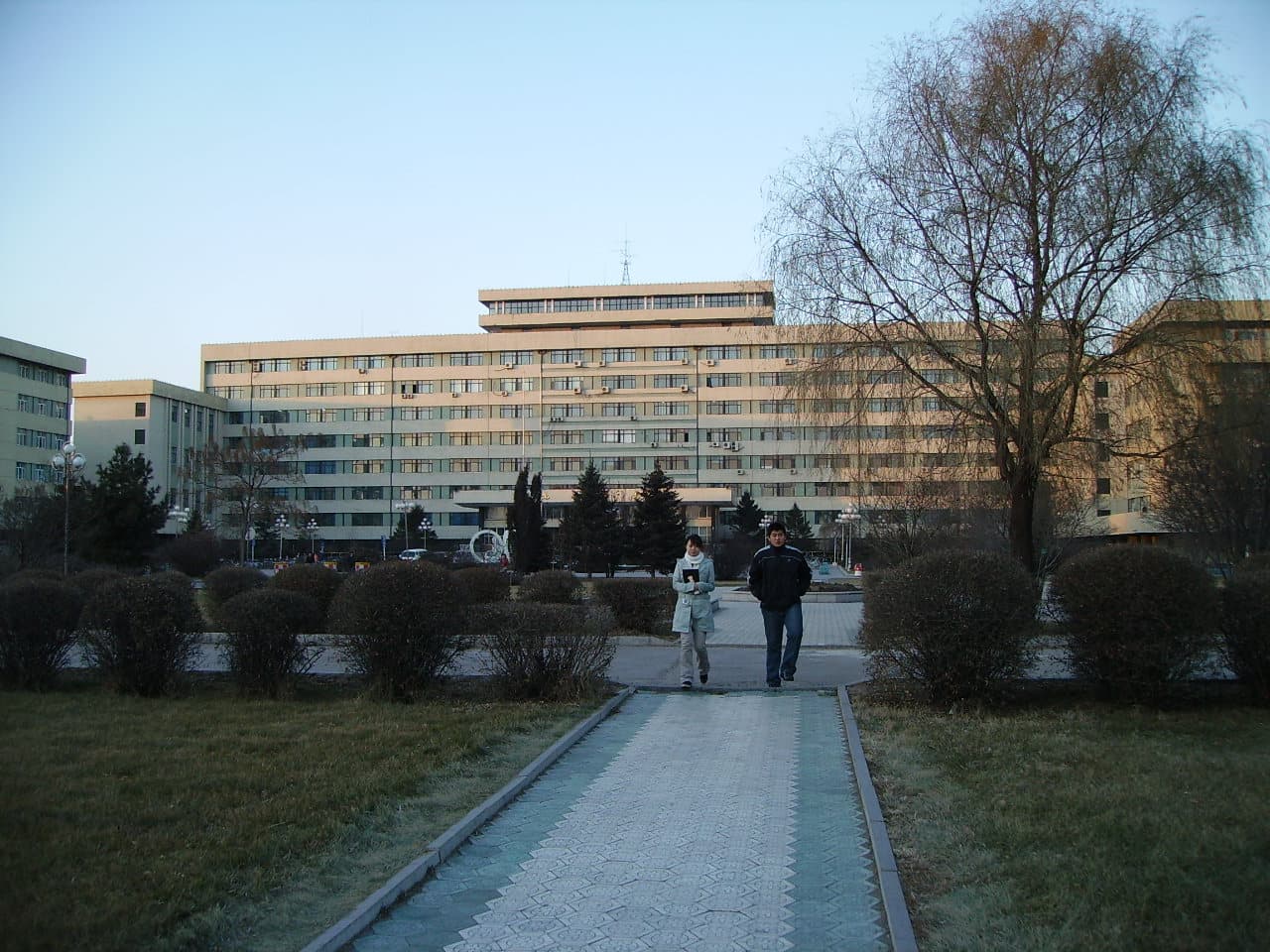
HIT operates three campuses: the main campus in Harbin's Nangang District, a coastal campus in Weihai (Shandong province), and a high-tech campus in Shenzhen (Guangdong province). The Harbin main campus is expansive, featuring state-of-the-art research facilities, student dormitories, sports complexes, and extensive green spaces. International students live in on-campus dormitories (around CNY 800–1,000 per month per bed, excluding utilities and internet), where student clubs, language exchanges, and cultural events foster a close-knit community. Harbin's historical Russian connection is still palpable—Russian restaurants, architectural landmarks, and a smattering of older residents who recall basic Russian phrases all contribute to a unique atmosphere that resonates with students from Russia and the former Soviet republics.
Competition and entry requirements
Admission to HIT's undergraduate programmes for September 2026 requires completion of high school, an age limit of 30 (25 for HIT Scholarship applicants), and mandatory participation in the China Scholastic Competency Assessment (CSCA). The requirement for CSCA, the specific subjects tested, and the exam language depend on the target university, programme, and admission year; applicants must verify the official requirements from the university and CSCA before registering. For HIT: applicants to Chinese-taught programmes must take the subject-specific Professional Chinese (liberal arts or science track), Mathematics, and at least one science subject (Physics or Chemistry); applicants to English-taught programmes must take Mathematics and one science subject but are exempt from Professional Chinese.
Language proficiency requirements are rigorous: for Chinese-taught programmes, HSK Level 4 with a minimum score of 210 (valid for two years) or an official certificate from the previous institution confirming full instruction in Chinese; for English-taught programmes, IELTS Academic 6.0 (no band below 5.5) or TOEFL iBT 80, or equivalent proof of full English-medium instruction. Applications for September 2026 are accepted year-round, with final deadlines of July 15, 2026, for self-funded applicants and the same date for HIT Scholarship applicants (application window: October 1, 2025–July 15, 2026); for Chinese Government Scholarship (Type B, university-allocated quota), the deadline is February 20, 2026. The application package includes high school diploma, transcript, CSCA score report, language certificate, physical examination form, non-criminal record certificate, CV, passport copy, proof of financial capacity (minimum CNY 20,000 for undergraduates), and application fee payment confirmation: CNY 400 for self-funded applicants, CNY 600 for scholarship applicants. Given HIT's prestige and the competitive applicant pool, strong grades in mathematics, physics, and language proficiency are critical.
For master's programmes, CSCA is not required; applicants must hold a bachelor's degree, be under 35 (30 for HIT Scholarship applicants), meet the same language requirements, and submit a study plan of at least 1,500 words and two recommendation letters from professors. The application deadline for September 2026 is May 31, 2026. Doctoral applicants follow similar requirements, with an age cap of 40 (35 for scholarship recipients).
Scholarships: government support and internal awards
HIT participates in the Chinese Government Scholarship (CGS) programme and offers its own HIT International Students Scholarship. The CGS covers 100% tuition, on-campus dormitory accommodation, comprehensive medical insurance (CNY 800/year), and a monthly stipend (CNY 3,000 for master's students, CNY 3,500 for doctoral students; disbursed after arrival). There are two application routes: Type A (bilateral government agreements, apply via your country's Chinese embassy, deadlines set by the embassy) and Type B (university-allocated quota, apply directly to HIT by February 20, 2026, for September 2026 intake). For Type B, applicants must first register in the CSC system (studyinchina.csc.edu.cn), entering HIT's institution code 10213 and programme category Type B, then upload the generated application form and all supporting documents to HIT's system.
The HIT Scholarship offers four tiers: Elite (100% tuition waiver), First (50% waiver), Second (30% waiver), and Third (20% waiver). Applications are open from October 1, 2025, to May 31, 2026 (July 15, 2026, for undergraduates). Competition is intense, with preference given to applicants demonstrating outstanding academic performance, achievements in olympiads or research competitions, and extracurricular distinction. Students may not hold two scholarships concurrently. Tuition for self-funded students: undergraduate CNY 20,000/year (Chinese-taught), CNY 26,000 (English-taught); master's CNY 28,000 (Chinese-taught), CNY 34,000 (English-taught); doctoral CNY 36,000 (Chinese-taught), CNY 42,000 (English-taught). Mandatory health insurance is CNY 800 per year.
How we help you apply
Applying to HIT is a multi-layered process: selecting the right programme among dozens of options, registering for and sitting the CSCA on time, compiling and notarising documents in Chinese or English, crafting a study plan tailored to the university's template, navigating multiple scholarship channels with staggered deadlines, and understanding the admissions priorities of a top-tier technical university. UNIPROFI specialises in exactly these cases.
We offer a full suite of services, from initial consultation to visa support. Through the Admission to China's Top-10 Universities package, you receive a strategic session with an expert who graduated from Tsinghua University, a detailed assessment of your candidacy for HIT and alternative top-tier institutions, guidance on crafting your study plan and CV with attention to the nuances of engineering programmes, full support in submitting applications across multiple scholarship channels, preparation for potential interviews, and ongoing assistance until enrolment. For those pursuing a more independent route but seeking expert validation, standalone services are available: Consultation with a Tsinghua University expert, Admission strategy for China's top universities, Matching up to 5 universities to your profile, and CSCA prep: foundation course or intensive course. We understand how admissions committees at China's engineering flagships evaluate candidates, what language resonates in study plans, and how to maximise your scholarship prospects—and we make that pathway clear and navigable for you.
A real admission case

Sergey
Harbin Institute of Technology
«They untangled everything I'd messed up on the CSC portal in two days»
Read more reviewsTell us about yourself — we'll build an admissions strategy for this exact university.
Many students get in through our preparatory Language Year — an intensive year of Chinese at a partner university, followed by a move onto the main program.
What the Language Year isFrom application to admission
Profile review and strategy
We study your academic profile, goals and budget, assess your real chances, and shortlist universities and grants for your specific situation.
Document preparation
We help with translation, notarization, your motivation letter, CV and recommendations — tailored to each university's requirements.
Filing applications and university correspondence
We file your documents, track status, respond promptly to admissions offices, and keep every deadline under control.
Visa, move and your first weeks
We arrange your visa, insurance and medical exam, help with housing and transfer, and stay in touch after you arrive.
How we support admission here
From filing documents on your own to admission at one of China's top-10 universities — pick the level of involvement that fits you, and see exactly what's included in each tier.
If you're not admitted to any of your chosen universities, then under the terms of the agreement we'll refund your payment minus documented expenses, or support a free re-application the following year.
Common questions about admission
Why apply through UNIPROFI specifically?
UNIPROFI is about a well-thought-out application and a strong outcome: we build an application path around your profile, goals and the requirements of your selected universities. You work with mentors who are current students or graduates of these schools, so you get real understanding of the system, campuses and opportunities — not theory. We take on complex cases (including minors and admission without an 11th-grade diploma), build an individual strategy for your profile and goals, and support you through every stage, from documents to your visa.
Do you guarantee admission?
We don't offer "guarantees for the sake of a sale," because no one can directly influence a university's decision. What we do is structure everything to minimize the risk of rejection — matching you to the right universities, building a strong application strategy, and preparing documents carefully. Any refund or re-application arrangement is governed only by the current service agreement and the circumstances of the case.
What are my actual chances of getting in?
We do not state a universal admission probability because the decision belongs to the university. We instead assess your profile, programme requirements and application strategy.
Can I apply on my own — why do I need you?
You can, but most students end up losing time, making mistakes, or settling for weaker universities. We save you months, help you start at a stronger level, and prevent the mistakes that can cost you admission.
Get in touch to get started
Tell us about yourself and what you're specifically interested in — our specialists will help you find the right format.