
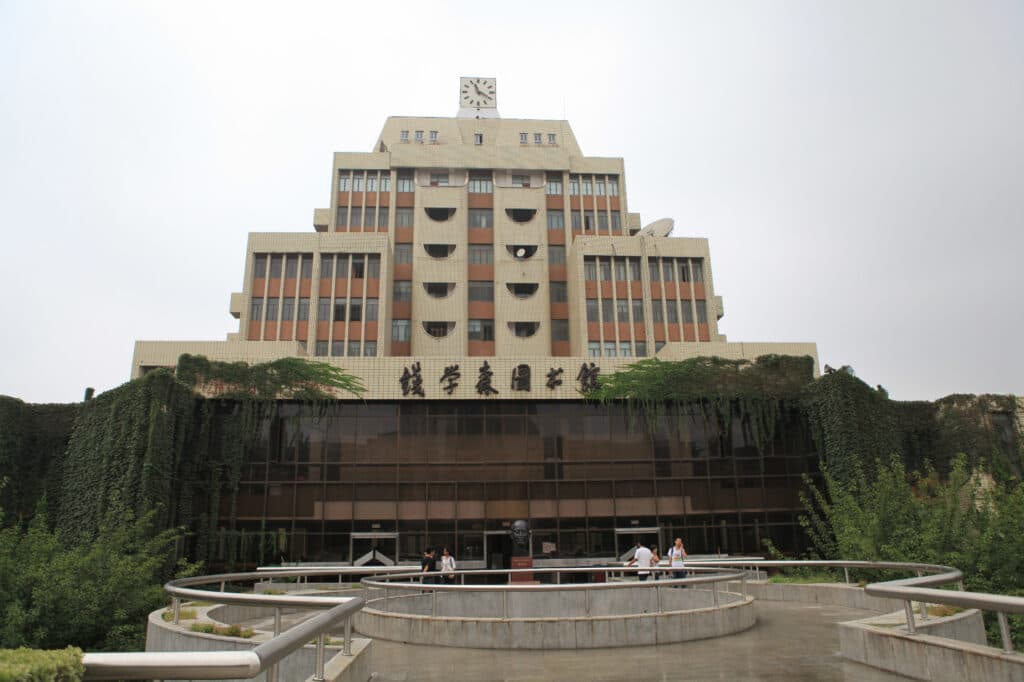
Xi'an Jiaotong University
Xi'an Jiaotong University
Tell us about your profile and we will answer for this university: your chances, the deadlines and what to prepare.
Shortlist a few and we'll compare them side by side and assess each one.
History and reputation
Xi'an Jiaotong University (西安交通大学, XJTU) traces its lineage to 1896, when the Nanyang Public School was founded in Shanghai under imperial edict. Renamed Jiaotong University in 1921, it became a premier institution for engineering and management talent. In 1956, responding to a national strategy to industrialize China's interior, the majority of faculty, students, and facilities relocated to Xi'an, a migration known as the "Westward Movement" (交大西迁). In 1959 the two campuses formally split: Xi'an Jiaotong University was born in the west, while the Shanghai branch evolved into today's Shanghai Jiao Tong University. The migration story remains central to XJTU's identity—a narrative of scientific dedication and national service that still shapes campus culture.
Today XJTU stands as the sole C9 League member in western China—the C9 is a coalition of the nine most elite research universities on the mainland, often compared to the Ivy League. The university participates in every major national initiative: Project 211, Project 985, and the Double First-Class Construction (Class A, reaffirmed in both 2017 and 2022). In the 2026 Academic Ranking of World Universities (ARWU, Shanghai Ranking), XJTU placed 79th globally and consistently ranks between 10th and 15th domestically across major Chinese league tables. According to Essential Science Indicators (ESI, January 2026), 19 XJTU disciplines sit in the global top 1 %, six in the top 0.1 %, and engineering ranks in the top 0.01 %—seventh in the world. These are not abstract metrics; they reflect real citation impact and research output, which matters if you plan a career in science or technology.
Chinese universities tighten portfolio and motivation-letter requirements every year — we track this university by university, so every application matches what the admissions committee actually expects right now.
Academic strengths
XJTU is a comprehensive research university spanning 11 disciplinary categories—science, engineering, medicine, economics, management, humanities, law, philosophy, art, education, and interdisciplinary studies—but it is historically and structurally an engineering powerhouse. The university operates 36 schools, departments, and centers, 11 undergraduate residential colleges, three directly affiliated hospitals, 34 postdoctoral stations, 45 first-level doctoral programs, and 45 first-level master's programs. Eight disciplines are on the national Double First-Class list: mechanics; mechanical engineering; materials science and engineering; power engineering and engineering thermophysics; electrical engineering; control science and engineering; management science and engineering; and business administration. In Shanghai Ranking's Global Ranking of Academic Subjects 2025, XJTU achieved striking results: energy science & engineering ranked 3rd globally, mechanical engineering and instruments science & technology 5th, metallurgical engineering 8th, chemical engineering and nanoscience & nanotechnology 12th, materials science & engineering 15th, and electrical & electronic engineering 20th.
The core research infrastructure resides in the Western China Science and Technology Innovation Harbour (iHarbour), a next-generation campus integrating eight major platforms, 30 research institutes, and over 400 research bases and think tanks across science, engineering, medicine, and humanities. XJTU hosts 265 provincial-level-or-above research bases, including 11 national key laboratories, 10 national engineering (technology) research centers, three national industry-education integration platforms, and one major national science infrastructure. Landmark achievements since relocation include China's first institute of engineering thermophysics, the first majors in steam turbines, automobile manufacturing, refrigeration, and energy storage, the first large-scale general-purpose computer, the first domestically developed digital processing chip, and international recognition for the Unified Strength Theory of Double Shear. Since moving west, the university has generated over 30,000 research outcomes, 252 of which won the three major national science and technology awards and produced trillions of RMB in economic benefit.
For students, this translates into real project immersion, not passive coursework. Undergraduate education follows a "general education + broad specialization" model with integrated bachelor-master-doctoral pathways, a newly launched Artificial Intelligence Pilot Program, and the "Million Outstanding Engineers" training scheme. Sixty-one majors are national-level first-class undergraduate programs, the university has received 100 national teaching achievement awards, and 166 courses are designated as national first-class. Medical education is rapidly expanding through cross-disciplinary integration of engineering, basic science, and clinical practice, supported by three directly affiliated hospitals.
Show the full profile
Campus and life in Xi'an
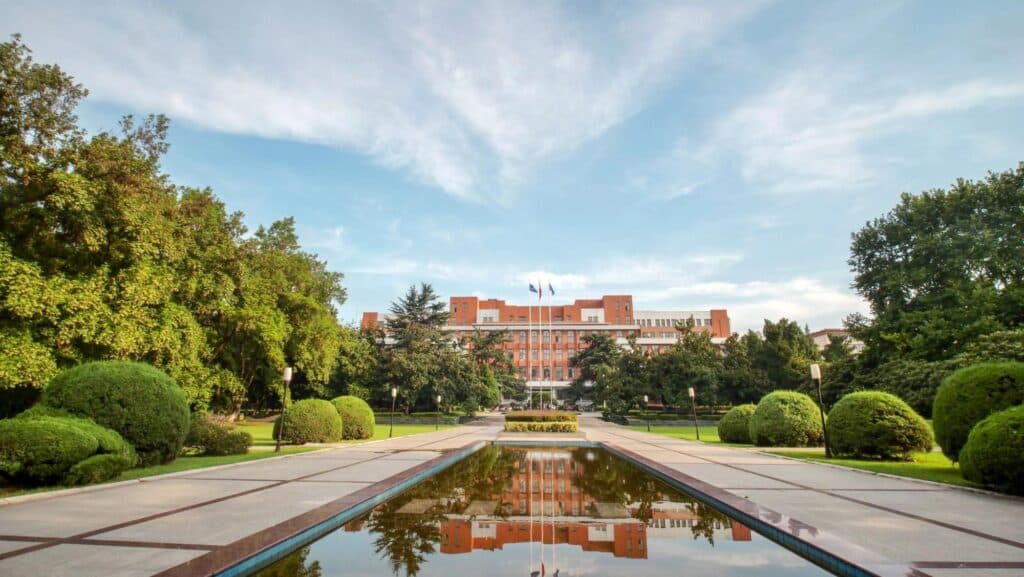
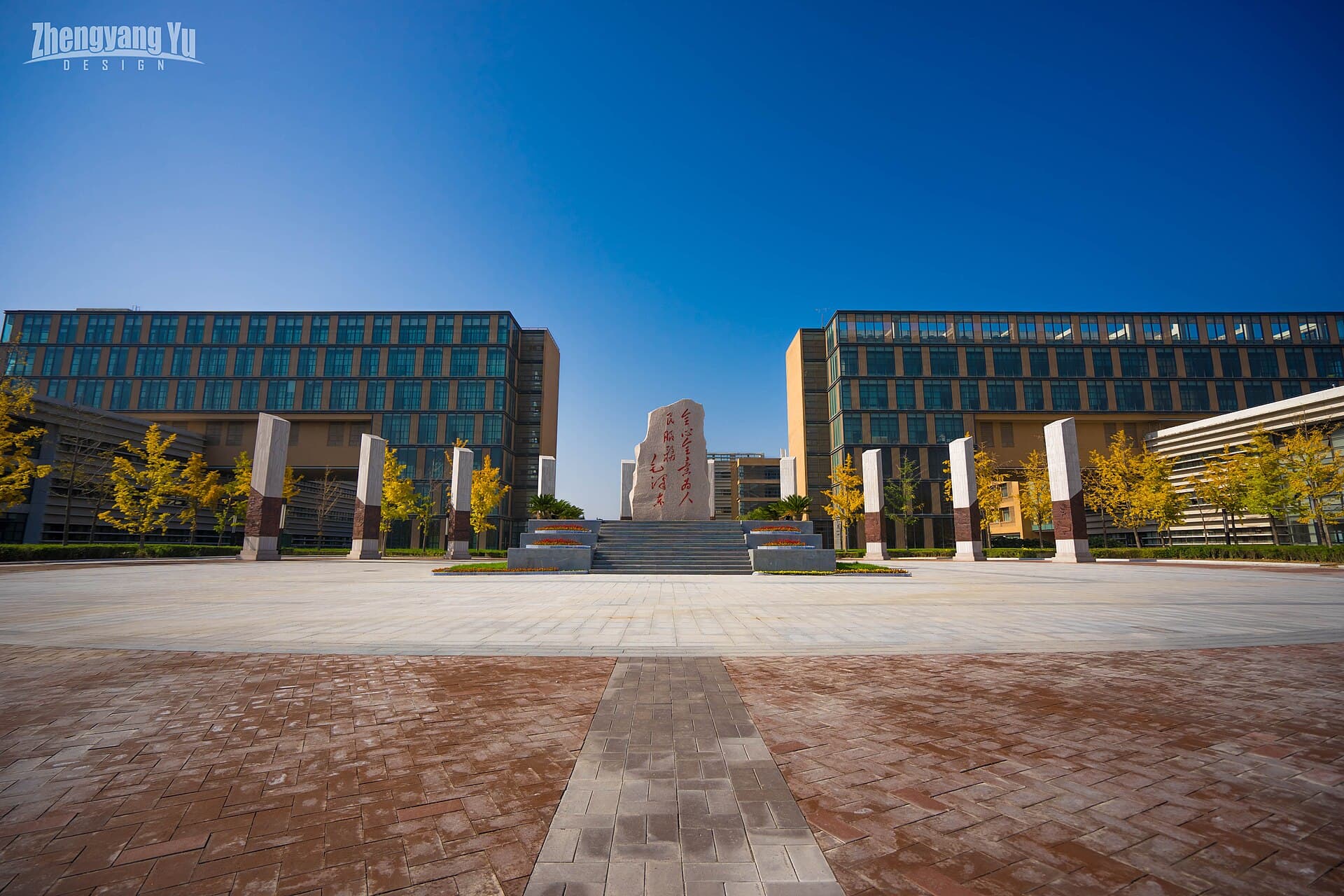
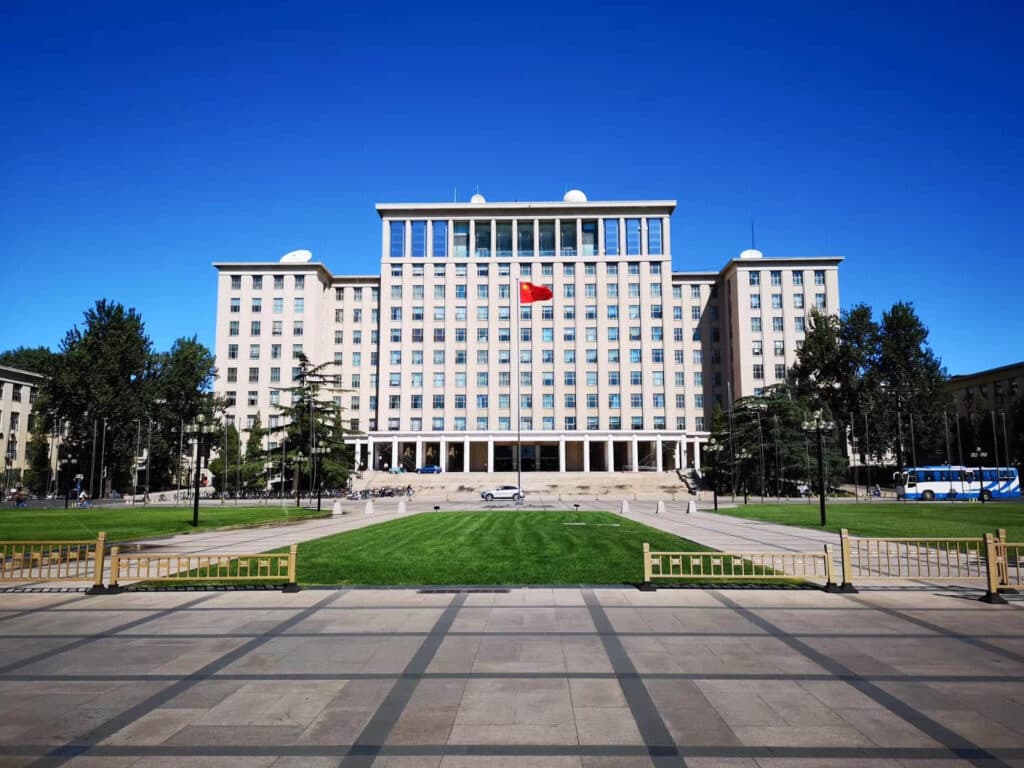
XJTU operates four campuses—Xingqing, Yanta, Qujiang, and the Innovation Harbour (iHarbour)—covering approximately 5,000 mu (around 333 hectares). The iHarbour, completed in recent years, embodies the 21st-century university paradigm: Building 7, designed entirely by XJTU's School of Human Settlements and Civil Engineering, won the 2023 WFEO H.J. Sabbagh Prize for Excellence in Engineering Construction, featuring dual-layer solar photovoltaic-electrothermal systems, passive energy-saving strategies, and intelligent internal flow control. This campus houses cutting-edge interdisciplinary labs working on brain-computer rehabilitation interfaces, millimeter-wave and terahertz microsystems, 3D bioprinting of human tissue, and medicine-engineering integration.
Xi'an is one of China's oldest cities, former capital of 13 dynasties and the eastern terminus of the ancient Silk Road. Today it is a modern metropolis of over 13 million, blending cultural heritage—Tang and Ming city walls, the Terracotta Army, the Muslim Quarter—with a high-tech industrial base in aerospace, semiconductors, and energy. For students, this means a significantly lower cost of living than Beijing or Shanghai; monthly expenses for housing, food, and daily life typically range from 2,000 to 4,000 RMB. The city's role as a logistics and innovation hub is visible: in the first half of 2025 alone, 3,055 China-Europe Railway Express trains departed Xi'an International Port carrying 3.45 million tons of cargo, up 34.8 % year-on-year. Campus life is rich: XJTU supports 149 student societies and a robust calendar of scientific and cultural activities; students regularly win international competitions including the SAE Aero Design Competition, VEX Robotics World Championship, and international mathematical modeling challenges.
Competition and entry requirements
XJTU admits international students through direct application to the School of International Education, bypassing China's gaokao. As of 2026, total enrollment stands at 65,559 students, including 4,484 international students from 128 countries; in 2024 the university passed recertification of higher-education quality for international students at the highest A+ level. For the 2026 intake, the application window runs from November 2025 through June 30, 2026, with enrollment in early September 2026.
General eligibility: applicants must be no older than 25 (those under 18 require a guardian's power of attorney), hold a valid foreign passport, possess a high-school diploma or equivalent (graduating seniors provide a pre-graduation certificate, with the final document due no later than enrollment), meet language requirements, and comply with relevant Ministry of Education policies. For Chinese-taught programs, HSK Level 4 or above is required; if proficiency falls short, applicants may enroll in a preparatory year and advance to the undergraduate program only after reaching Level 4 of the International Chinese Proficiency Standard (《国际汉语能力标准》四级) and submitting valid CSCA results—failure to meet this standard disqualifies advancement. For English-taught programs, IELTS 6.0, TOEFL 80, Duolingo 110, or equivalent is accepted; native Chinese or English speakers may be exempt upon verification. Tuition varies by program: for Chinese-taught tracks, science and engineering cost 22,000 RMB/year, economics/management/humanities 20,000, and arts 40,000; for English-taught tracks, MBBS (medicine) is 180,000 and engineering programs 40,000 RMB/year. Accommodation across the three campuses (Xingqing, Yanta, iHarbour) costs 8,000–19,000 RMB/year; campus assignment is made by the university. The application fee is 500 RMB for self-funded applicants and 800 RMB for scholarship applicants (non-refundable).
Whether CSCA (来华留学本科入学学业水平测试, China Scholastic Competency Assessment) is required, which subjects, and in which language depends on the target university, program, and admission year; verify officially before registering. Starting with the 2026 academic year, many universities participating in the Chinese Government Scholarship require applicants to submit valid CSCA results; XJTU specifies that all undergraduate applicants must take the test and include the transcript in their materials. The exam covers: Professional Chinese (文科中文 or 理科中文, depending on major category; not required for fully English-taught programs), Mathematics (mandatory for all), and Physics and Chemistry (optional, depending on major). Tests are available in Chinese and English; applicants choose the language aligned with their program's language of instruction. The exam is offered five times per year (January, March, April, June, December); registration and payment occur on the official website www.csca.cn; fees are 450 RMB for a single subject, 700 for two or more. Format options include online home-based testing, computer-based testing at an authorized center, or paper-based testing. XJTU conducts admissions through document review, CSCA scores, and interviews; after submitting your application, monitor the system and your registered email for interview invitations, pre-admission notifications, tuition-payment instructions, and final admission decisions.
Scholarships and financial support for international students
XJTU offers multiple scholarship channels at different administrative levels. The Chinese Government Scholarship (中国政府奖学金) is administered by the China Scholarship Council (www.csc.edu.cn); applicants apply through their home country's official student dispatch agency and list "Xi'an Jiaotong University" as their first choice. The International Chinese Language Teachers Scholarship (国际中文教师奖学金) is managed by the Center for Language Education and Cooperation of China's Ministry of Education (www.chinese.cn); applications are submitted via its dedicated platform.
The XJTU International Undergraduate Freshman Scholarship (西安交通大学本科国际学生新生奖学金) is awarded to academically excellent students admitted to non-medical undergraduate programs. Tiers include: Special Prize (100 % tuition waiver), First Prize (75 %), Second Prize (50 %), Third Prize (25 %), and Outstanding Prize (10 %). The scholarship applies to the first year; renewal for subsequent years depends on academic performance and comprehensive assessment. The Xi'an City "Belt and Road" International Student Scholarship (西安市"一带一路"外国留学生奖学金) is available to nationals of Belt and Road Initiative countries; stipends are 15,000 RMB/year for undergraduates, 20,000 for master's students, and 25,000 for doctoral candidates (paid over 10 months). The Shaanxi Province Sanqin Scholarship and the XJTU International Student Recognition Award (陕西省三秦奖学金、西安交通大学国际学生表彰奖励) are one-time awards for full-time, self-funded degree students; announcements are issued after enrollment. Note that two scholarships may be awarded concurrently (for instance, a university tuition waiver plus a city living stipend).
How we help you apply
Gaining admission to a C9 League institution demands more than strong grades—it requires strategic positioning. XJTU expects notarized, translated documents in Chinese or English, CSCA results with the correct subject combination and language, a 600+ word study plan, and successful interview performance. Missteps in CSCA subject selection, language-certificate mismatch, or an incorrectly completed "Foreigner's Physical Examination Record" (valid six months, with photograph and doctor's seal across the photo edge) can derail an application at the final stage.
UNIPROFI guides applicants from program selection and CSCA registration through final submission. The Admission to China's Top-10 Universities service is designed specifically for elite universities like XJTU and includes: personalized positioning strategy; CV and motivation-letter development emphasizing research and project achievements (particularly important for XJTU's engineering and interdisciplinary programs); consultation with a Tsinghua University expert on application tactics and interview preparation; preparation of a full set of notarized and translated documents; support with CSCA registration and submission through the XJTU system; interview coaching with common-question breakdowns and mock sessions; and guidance on parallel applications to multiple scholarship channels (government, university, municipal). If your profile is already strong and you need targeted help, stand-alone services are available: Admission strategy for China's top universities, Building a strong CV for Chinese universities, Motivation letter writing support, CSCA prep: foundation course, and CSCA prep: intensive course. For applicants seeking comprehensive support without navigating Chinese bureaucracy and academic nuances alone, Admission to China's Top-10 Universities maximizes your chances of both admission and scholarship funding at one of the world's leading technical universities.
Tell us about yourself — we'll build an admissions strategy for this exact university.
Many students get in through our preparatory Language Year — an intensive year of Chinese at a partner university, followed by a move onto the main program.
What the Language Year isFrom application to admission
Profile review and strategy
We study your academic profile, goals and budget, assess your real chances, and shortlist universities and grants for your specific situation.
Document preparation
We help with translation, notarization, your motivation letter, CV and recommendations — tailored to each university's requirements.
Filing applications and university correspondence
We file your documents, track status, respond promptly to admissions offices, and keep every deadline under control.
Visa, move and your first weeks
We arrange your visa, insurance and medical exam, help with housing and transfer, and stay in touch after you arrive.
How we support admission here
From filing documents on your own to admission at one of China's top-10 universities — pick the level of involvement that fits you, and see exactly what's included in each tier.
If you're not admitted to any of your chosen universities, then under the terms of the agreement we'll refund your payment minus documented expenses, or support a free re-application the following year.
Common questions about admission
Why apply through UNIPROFI specifically?
UNIPROFI is about a well-thought-out application and a strong outcome: we build an application path around your profile, goals and the requirements of your selected universities. You work with mentors who are current students or graduates of these schools, so you get real understanding of the system, campuses and opportunities — not theory. We take on complex cases (including minors and admission without an 11th-grade diploma), build an individual strategy for your profile and goals, and support you through every stage, from documents to your visa.
Do you guarantee admission?
We don't offer "guarantees for the sake of a sale," because no one can directly influence a university's decision. What we do is structure everything to minimize the risk of rejection — matching you to the right universities, building a strong application strategy, and preparing documents carefully. Any refund or re-application arrangement is governed only by the current service agreement and the circumstances of the case.
What are my actual chances of getting in?
We do not state a universal admission probability because the decision belongs to the university. We instead assess your profile, programme requirements and application strategy.
Can I apply on my own — why do I need you?
You can, but most students end up losing time, making mistakes, or settling for weaker universities. We save you months, help you start at a stronger level, and prevent the mistakes that can cost you admission.
Get in touch to get started
Tell us about yourself and what you're specifically interested in — our specialists will help you find the right format.