
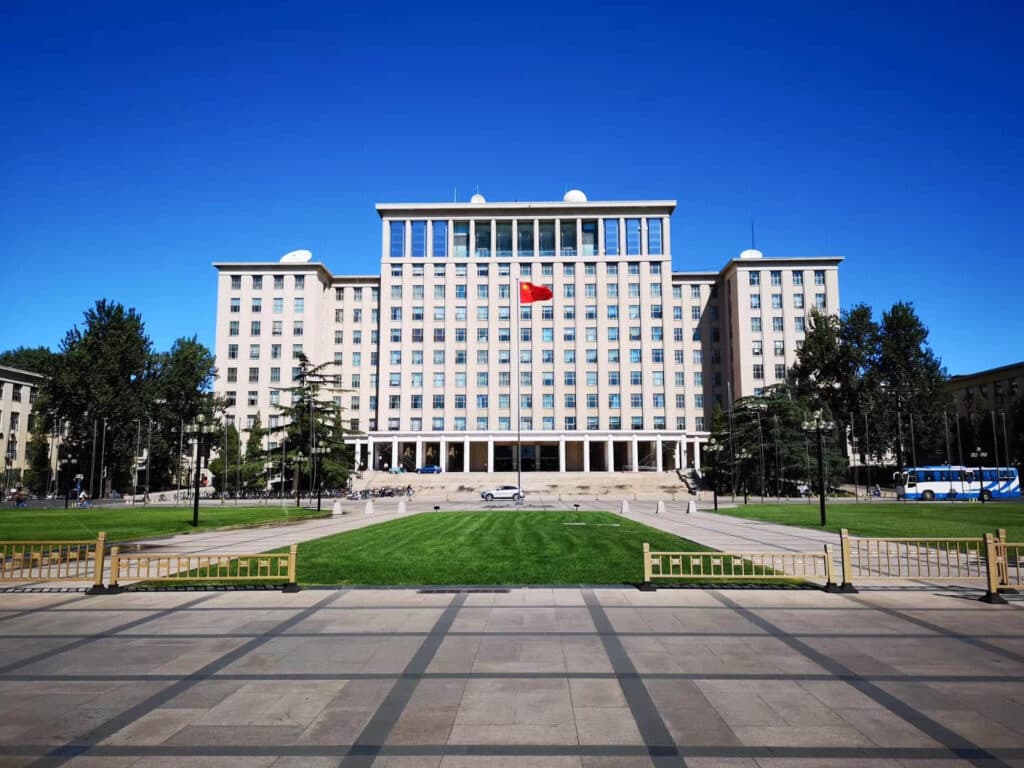
Tsinghua University
Tsinghua University
Tell us about your profile and we will answer for this university: your chances, the deadlines and what to prepare.
Shortlist a few and we'll compare them side by side and assess each one.
History and global standing
Tsinghua University was founded in 1911 in Beijing and over the past 115 years has transformed from a preparatory school for students heading abroad into one of the world's leading research universities. Today, Tsinghua consistently ranks first in China's national league tables and sits firmly in the global top 20: in 2026 it stands at 12th in the Times Higher Education World University Rankings, 17th in the QS World University Rankings, and 18th in the Academic Ranking of World Universities (Shanghai Ranking). These accolades reflect not only the scale of the university's research infrastructure but its status as a magnet for talent from every continent.
Tsinghua's academic reputation is especially strong in engineering and the natural sciences: according to the 2025 Shanghai Ranking, the university holds the global number-one spot in seven subject areas, including Mechanical Engineering, Electrical & Electronic Engineering, Chemical Engineering, Materials Science & Engineering, Nanoscience & Nanotechnology, Energy Science & Engineering, and Environmental Science & Engineering. These achievements are underpinned by world-class research infrastructure — Tsinghua hosts dozens of state key laboratories and interdisciplinary research centres, among them the Institute for Advanced Study, the Tsinghua-Berkeley Shenzhen Institute, and the renowned School of Economics and Management, co-founded by Nobel laureate Chen Ning Yang. A Tsinghua degree is highly valued by employers both in China and internationally: alumni regularly occupy leadership positions in global tech companies, research institutes, and government agencies.
Chinese universities tighten portfolio and motivation-letter requirements every year — we track this university by university, so every application matches what the admissions committee actually expects right now.
Academic strengths and programme structure
Tsinghua offers more than 80 undergraduate programmes and over 300 master's and doctoral programmes spanning the natural sciences, engineering, humanities and social sciences, medicine, management, and the arts. For international students, the English-taught master's programmes are particularly attractive, covering fields such as Global MBA, Global MPA, Environmental Science and Engineering, International Construction and Project Management, and engineering specialisations in sustainable energy and urban systems. These programmes are designed to address global challenges and give students access to cutting-edge laboratories, real-world industry projects, and the chance to work with professors whose research regularly appears in Nature, Science, and other top-tier journals.
At the undergraduate level, most programmes are taught in Chinese with bilingual materials, though Tsinghua also offers a handful of fully English-taught tracks for international applicants, notably in computer science, automation, mathematics, and physics. All undergraduate programmes are built around a general education model, with students selecting their major in the second or third year. Students are grouped into residential "colleges" (Weixian College, Xiuzhong College, Ziqiang College, among others), which serve as academic homes, providing mentorship, extracurricular projects, and pathways into research groups.
Master's and doctoral programmes at Tsinghua are characterised by deep integration with research teams: incoming students are often embedded immediately in live projects funded by government grants or industry partners. Master's programmes typically run two to three years, doctoral programmes four to five. Tuition fees for international students in 2026 vary by discipline: for most master's and doctoral programmes in engineering, natural sciences, and medicine, the fee is 40,000 RMB per year (approximately USD 5,500); for humanities and social sciences, 32,000 RMB per year; for undergraduate programmes in engineering and natural sciences, 30,000 RMB per year. Specialised MBA and design programmes carry higher fees. The application fee is 800 RMB.
Show the full profile
Campus life and the Beijing experience
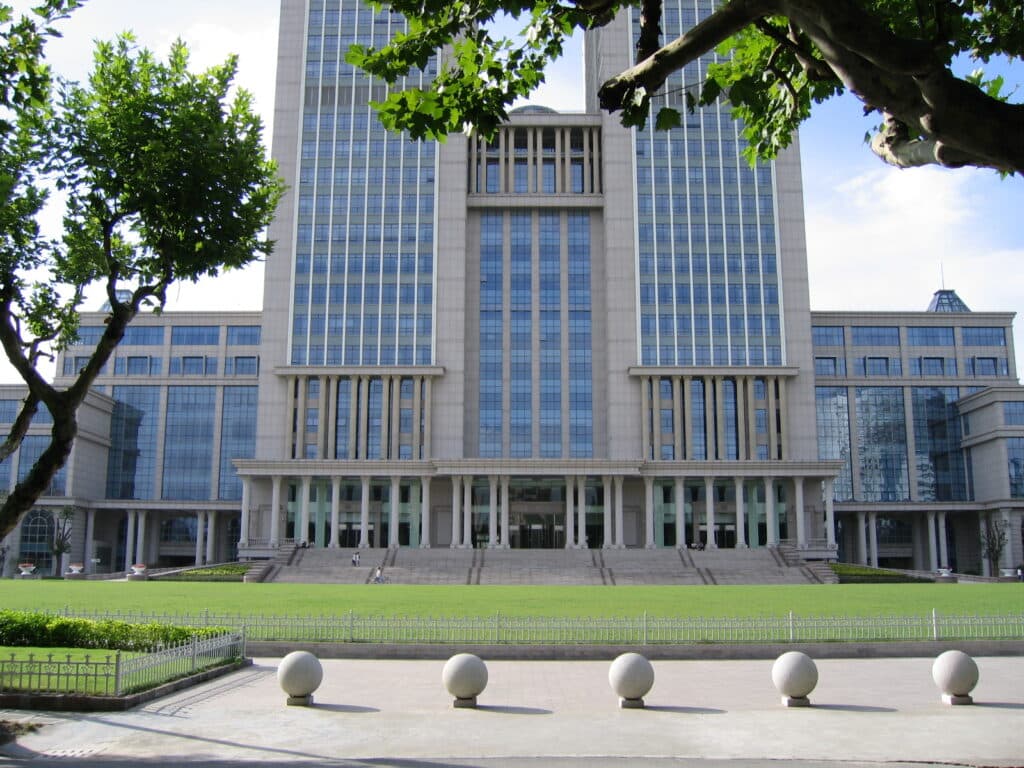
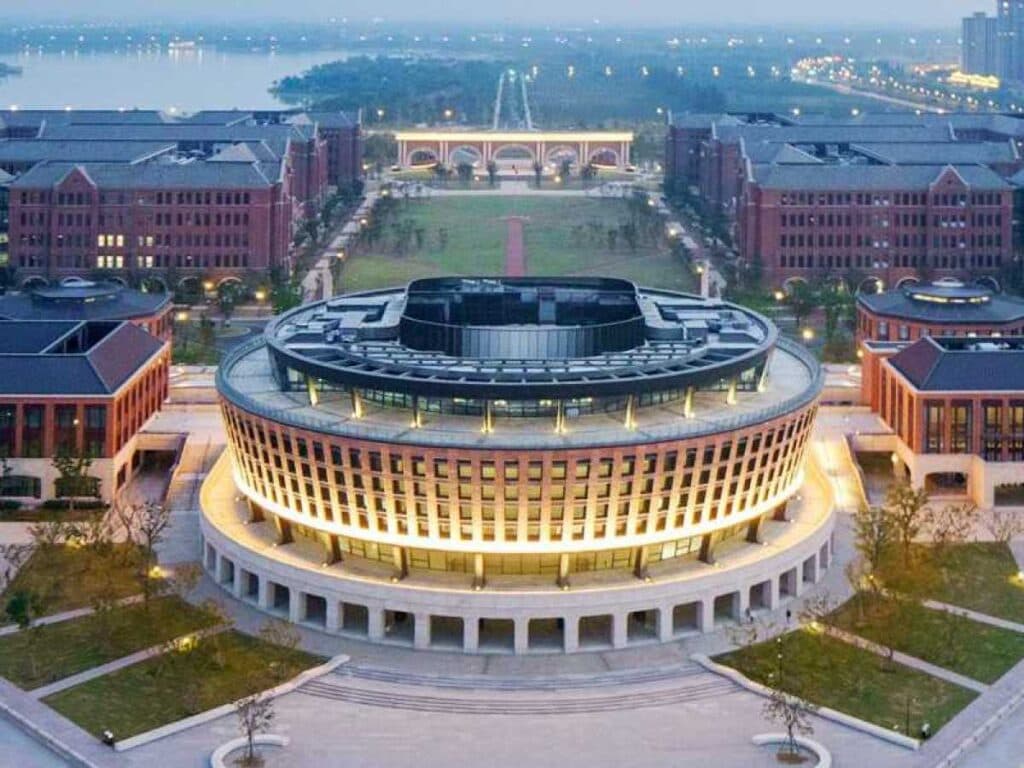
Tsinghua's main campus is located in Beijing's Haidian District, in the north-west of the city, an area traditionally known as the capital's university cluster (neighbouring Peking University and dozens of other institutions). The campus covers more than 400 hectares and is a unique blend of early-twentieth-century architecture, modern teaching buildings, and green spaces: there is a lake, tree-lined avenues, Olympic-standard sports complexes, and multiple libraries, including the main university library, which holds over five million volumes. The campus is equipped with all the infrastructure needed for daily life — canteens (where meals cost 15–30 RMB per day), gyms, medical centres, shops, and ATMs; students live in on-campus dormitories (double rooms cost around 40 RMB per day, triple rooms 30 RMB).
Beijing as a city offers students access to extraordinary cultural heritage — from the Forbidden City and the Great Wall to contemporary art galleries and tech hubs such as Zhongguancun, often dubbed "China's Silicon Valley." The city is well connected by metro (Lines 13 and 4 run near the Tsinghua campus), making it easy to travel to internships, events, and excursions. Beijing has a continental climate, with hot summers and cold winters, which is worth bearing in mind when preparing to relocate. For international students, the university organises orientation programmes, including Chinese-language courses, cultural excursions, and a buddy-mentor system pairing newcomers with Chinese students.
In addition to the main Beijing campus, Tsinghua operates the Tsinghua Shenzhen International Graduate School (SIGS), which offers master's and doctoral programmes in engineering, business, and interdisciplinary technologies. The Shenzhen campus is particularly attractive for those seeking proximity to industrial partners in electronics, biotech, and fintech. Living costs and campus facilities in Shenzhen differ from Beijing, so when selecting a programme it is worth checking which campus hosts it.
Competition and admission requirements
Admission to Tsinghua is among the most competitive in China. For domestic applicants, gaokao scores typically fall within the top 0.1 per cent nationwide; for international students, the university uses a Comprehensive Evaluation system that considers high-school and university grades, standardised test results (SAT, ACT, A-Level, AP, IB, and others), language certificates, recommendation letters, a personal statement, a portfolio (for creative disciplines), and — in some cases — results from an interview or test administered by the university itself.
For the 2026 intake, Tsinghua does not require applicants to submit CSCA (China Scholastic Competency Assessment) scores for undergraduate programmes: this is confirmed on the university's official FAQ page. Nonetheless, if an applicant has taken the CSCA and achieved high scores, it is recommended to include them, especially in mathematics and physics. Regarding other Chinese universities, the requirement for CSCA, the list of subjects, and the exam language depend on the target university, programme, and admission year; applicants should verify official university and CSCA requirements before registering. For Chinese-English Taught programmes, applicants need HSK Level 5 or higher (with scores above 60 in each section: listening, reading, writing); HSK Level 4 is also acceptable, provided the student reaches Level 5 within the first academic year, failing which enrolment will be terminated. For fully English-taught programmes, HSK is not required, but a high level of English (TOEFL, IELTS, or equivalent) is necessary for non-native speakers.
Application deadlines for undergraduate entry in September 2026 are divided into several rounds: the first round (including design and fine-arts programmes) runs from 30 September to 28 November 2025 (results in January 2026); the second round from 29 November 2025 to 28 February 2026 (results in early May 2026); English-taught programmes accept applications from 30 September 2025 to 28 February 2026. For master's and doctoral programmes, deadlines are set by individual departments; key deadlines typically fall in December–January before the academic year begins. A crucial point: Tsinghua often organises an integrative test for shortlisted candidates, so submitting an application is only the first step — it may be followed by an in-person or online interview or examination session.
Scholarships and funding
Tsinghua actively attracts talented international students through a range of scholarships, the most significant of which are Chinese Government Scholarships (CGS), administered by the China Scholarship Council (CSC). A full CGS covers tuition, accommodation (or a housing subsidy), a monthly living stipend, and comprehensive medical insurance; partial scholarships include one or several of these components. For master's and doctoral students, scholarship duration is typically one to three years for master's and four to five years for doctoral candidates. Competition for CGS through Tsinghua is extremely fierce: the university selects candidates who have already received preliminary approval from a department, then nominates them to the CSC for final review.
To be considered for CGS Type B (programmes coordinated by the university), applicants must first apply to a master's or doctoral programme through Tsinghua's system (https://yzbm.tsinghua.edu.cn/intlLogin), secure preliminary admission from a department, then complete the CSC online application and submit all required documents (diploma, transcripts, recommendation letters, language certificates). For Chinese-taught programmes, HSK Level 4 or above is required; those who previously studied in Chinese and earned a degree in China may substitute the HSK with a certificate from their previous institution. Age limits are 35 for master's applicants and 40 for doctoral applicants. A key detail: the university recommends submitting admission applications by mid-December 2025 to meet CGS Type B programme deadlines.
Beyond CGS, Tsinghua offers its own university scholarships for international postgraduate students — mainly partial grants covering tuition (tuition scholarships). Competition for these is also intense, and decisions are made by departments based on academic achievements, recommendations, and research potential. It is important to understand that scholarships are not automatically guaranteed upon admission: students who receive CGS or university grants undergo strict annual review (Annual Review), which assesses academic performance, attendance, conduct, and research progress; unsatisfactory results may lead to suspension or termination of the scholarship.
How we help you apply
Admission to top-tier universities like Tsinghua demands not only outstanding academic results but also a strategically crafted application, meticulously prepared documents, and a deep understanding of selection criteria. UNIPROFI specialises in supporting Russian and Russian-speaking applicants to China's leading universities and knows the process inside out. We offer the Admission to China's Top-10 Universities package, which includes developing a personalised admission strategy, matching programmes to your profile, preparing a complete document set (including CV, motivation letters, and recommendations), submitting applications through the university system, assistance with scholarship forms, and interview or test preparation for candidates shortlisted by Tsinghua. For those seeking insights from a Tsinghua graduate or staff member, we arrange a Consultation with a Tsinghua University expert, where you will gain insider understanding of selection criteria, strengths and weaknesses of your application, and concrete recommendations to enhance your competitiveness.
If you are just beginning to plan your application and want to assess whether Tsinghua is the right fit, we recommend starting with our Admission strategy for China's top universities or Matching up to 5 universities to your profile services: our experts will analyse your grades, language certificates, extracurricular achievements, and academic interests, then propose a realistic roadmap — from selecting target programmes to deadlines and scholarship strategies. For those applying to Chinese-taught programmes who need HSK 5 or higher, we provide language preparation; for those wishing to take the CSCA (even though Tsinghua does not require it, but you want to strengthen your application), we offer CSCA prep: foundation course and CSCA prep: intensive course. We also assist with Chinese student visa support and advise on Grants for studying in China. Our years of experience and direct contacts with admissions committees at Chinese universities enable us not only to prepare formally correct application packages but to structure your application so it stands out among hundreds of other candidates and convincingly demonstrates your potential to become part of Tsinghua's academic community.
A real admission case
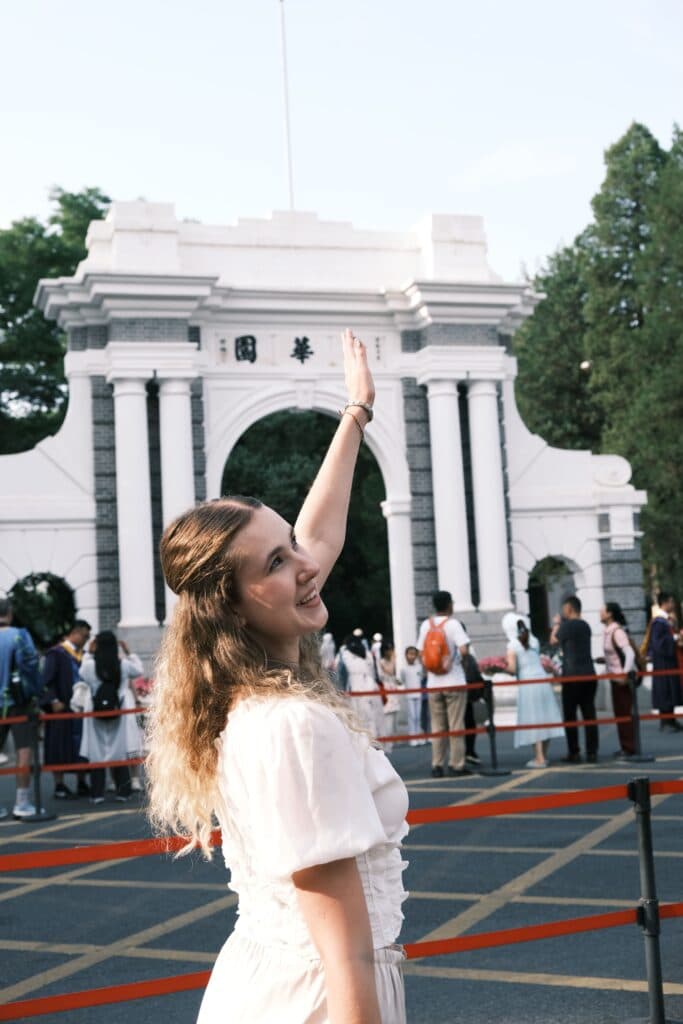
Anastasia
Tsinghua University
«Without their support I'd have definitely gotten lost in that sea of information»
Read more reviewsTell us about yourself — we'll build an admissions strategy for this exact university.
Many students get in through our preparatory Language Year — an intensive year of Chinese at a partner university, followed by a move onto the main program.
What the Language Year isFrom application to admission
Profile review and strategy
We study your academic profile, goals and budget, assess your real chances, and shortlist universities and grants for your specific situation.
Document preparation
We help with translation, notarization, your motivation letter, CV and recommendations — tailored to each university's requirements.
Filing applications and university correspondence
We file your documents, track status, respond promptly to admissions offices, and keep every deadline under control.
Visa, move and your first weeks
We arrange your visa, insurance and medical exam, help with housing and transfer, and stay in touch after you arrive.
How we support admission here
From filing documents on your own to admission at one of China's top-10 universities — pick the level of involvement that fits you, and see exactly what's included in each tier.
If you're not admitted to any of your chosen universities, then under the terms of the agreement we'll refund your payment minus documented expenses, or support a free re-application the following year.
Common questions about admission
Why apply through UNIPROFI specifically?
UNIPROFI is about a well-thought-out application and a strong outcome: we build an application path around your profile, goals and the requirements of your selected universities. You work with mentors who are current students or graduates of these schools, so you get real understanding of the system, campuses and opportunities — not theory. We take on complex cases (including minors and admission without an 11th-grade diploma), build an individual strategy for your profile and goals, and support you through every stage, from documents to your visa.
Do you guarantee admission?
We don't offer "guarantees for the sake of a sale," because no one can directly influence a university's decision. What we do is structure everything to minimize the risk of rejection — matching you to the right universities, building a strong application strategy, and preparing documents carefully. Any refund or re-application arrangement is governed only by the current service agreement and the circumstances of the case.
What are my actual chances of getting in?
We do not state a universal admission probability because the decision belongs to the university. We instead assess your profile, programme requirements and application strategy.
Can I apply on my own — why do I need you?
You can, but most students end up losing time, making mistakes, or settling for weaker universities. We save you months, help you start at a stronger level, and prevent the mistakes that can cost you admission.
Get in touch to get started
Tell us about yourself and what you're specifically interested in — our specialists will help you find the right format.