
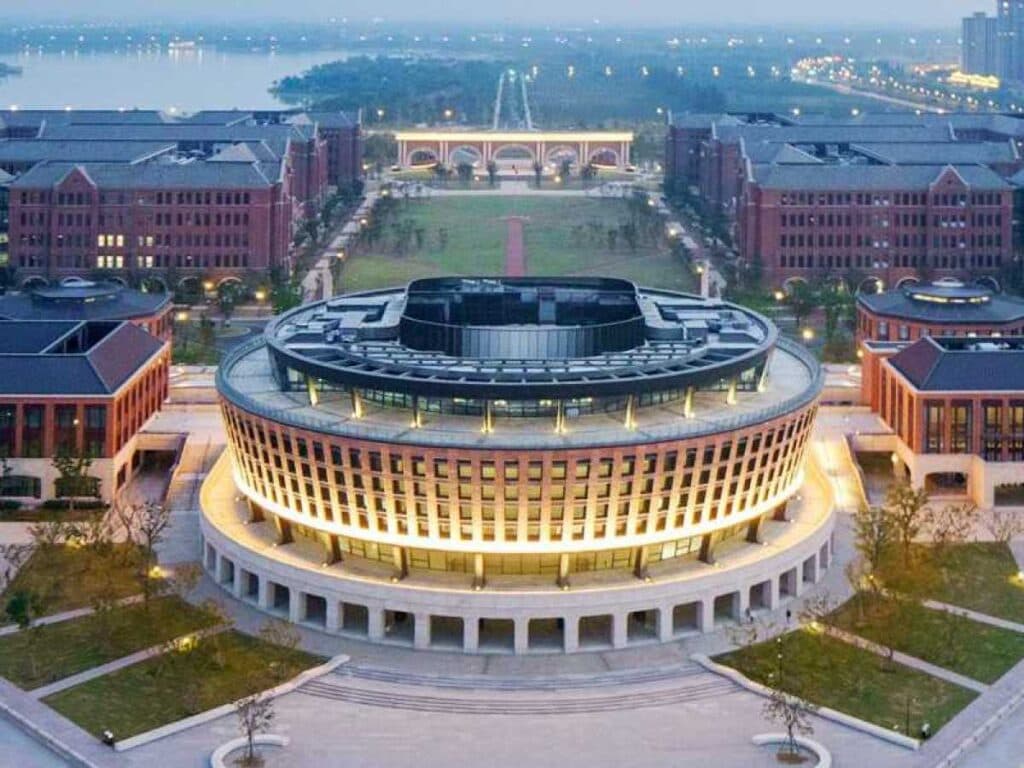
Zhejiang University
Zhejiang University
Tell us about your profile and we will answer for this university: your chances, the deadlines and what to prepare.
Shortlist a few and we'll compare them side by side and assess each one.
History and reputation
Zhejiang University (浙江大学, ZJU) is one of China's oldest and most prestigious institutions, tracing its roots to the Qiushi Academy (求是书院) founded in 1897 as one of the first modern higher-education establishments in the country. Over more than 125 years, the university has evolved from a provincial institute to a global research hub, enduring dramatic reorganizations, wartime evacuation to Guizhou under the legendary president Chu Kochen during the Second Sino-Japanese War, and sweeping Soviet-model restructuring in the 1950s. In 1998, ZJU regained comprehensive university status after merging with Zhejiang Medical University, Hangzhou University, and Zhejiang Agricultural University — former departments split off during the Mao era.
Today, Zhejiang University ranks 39th in the Times Higher Education World University Rankings 2026, 35th in US News Best Global Universities 2026–2027, and 24th in the Academic Ranking of World Universities (ARWU 2025) — third in China. The university topped the Nature Index 2026 Research Leaders rankings, placing first globally among academic institutions for scientific publication output, and first in the CWTS Leiden Ranking 2025 for the number of publications. ZJU is a member of China's elite C9 League and participates in the national 985 and Double First-Class initiatives. The university's reputation rests not on marketing but on genuine research productivity: 15 of ZJU's disciplines rank in the top 1% globally in the Essential Science Indicators (ESI), and four rank in the top 100 worldwide.
Chinese universities tighten portfolio and motivation-letter requirements every year — we track this university by university, so every application matches what the admissions committee actually expects right now.
Academic strengths and research institutes
The university comprises seven faculties, 36 schools, and numerous interdisciplinary institutes, with 3,500 full-time faculty members and around 45,000 students at all levels. ZJU's genuine academic strengths lie in natural sciences, engineering, computer science, biomedicine, and materials science. The university has built dozens of university-level research platforms — the Institute of Watson Genome Studies, the Zhejiang-California International Nanosystems Institute, the Robotics Institute, the Institute for Sustainable Energy, the Institute of Integrated Circuit and Primary Software, the Institute of Translational Medicine — alongside 186 school-level laboratories. The university invests actively in frontier fields: manned spaceflight, large aircraft assembly, clean energy, marine technology, industrial control systems, and global public health initiatives related to infectious disease prevention and treatment.
Particularly impressive is ZJU's collaboration with the University of Edinburgh: the Zhejiang University – University of Edinburgh Institute (ZJE) on the International Campus offers dual-degree undergraduate programs in Biomedical Sciences and Bioinformatics, fully taught in English, with faculty from Harvard, Oxford, and Cambridge. In spring 2026, ZJU launched the Institute for Global Development (IGD) under the patronage of the Ministry of Commerce and the Ministry of Education, aimed at training future leaders from developing countries and conducting research on the digital economy and sustainable development — the first cohort of graduate students enrolled in September 2026. Also strong are programs in applied economics, public administration, optical sciences, materials science, chemistry, life sciences, and agricultural technology. This is not a universally strong university across all fields — humanities and social sciences lag noticeably — but in its areas of strength, ZJU offers access to real laboratories from the second semester onward and opportunities for undergraduates to publish in Nature group journals.
Show the full profile
Campus and life in Hangzhou
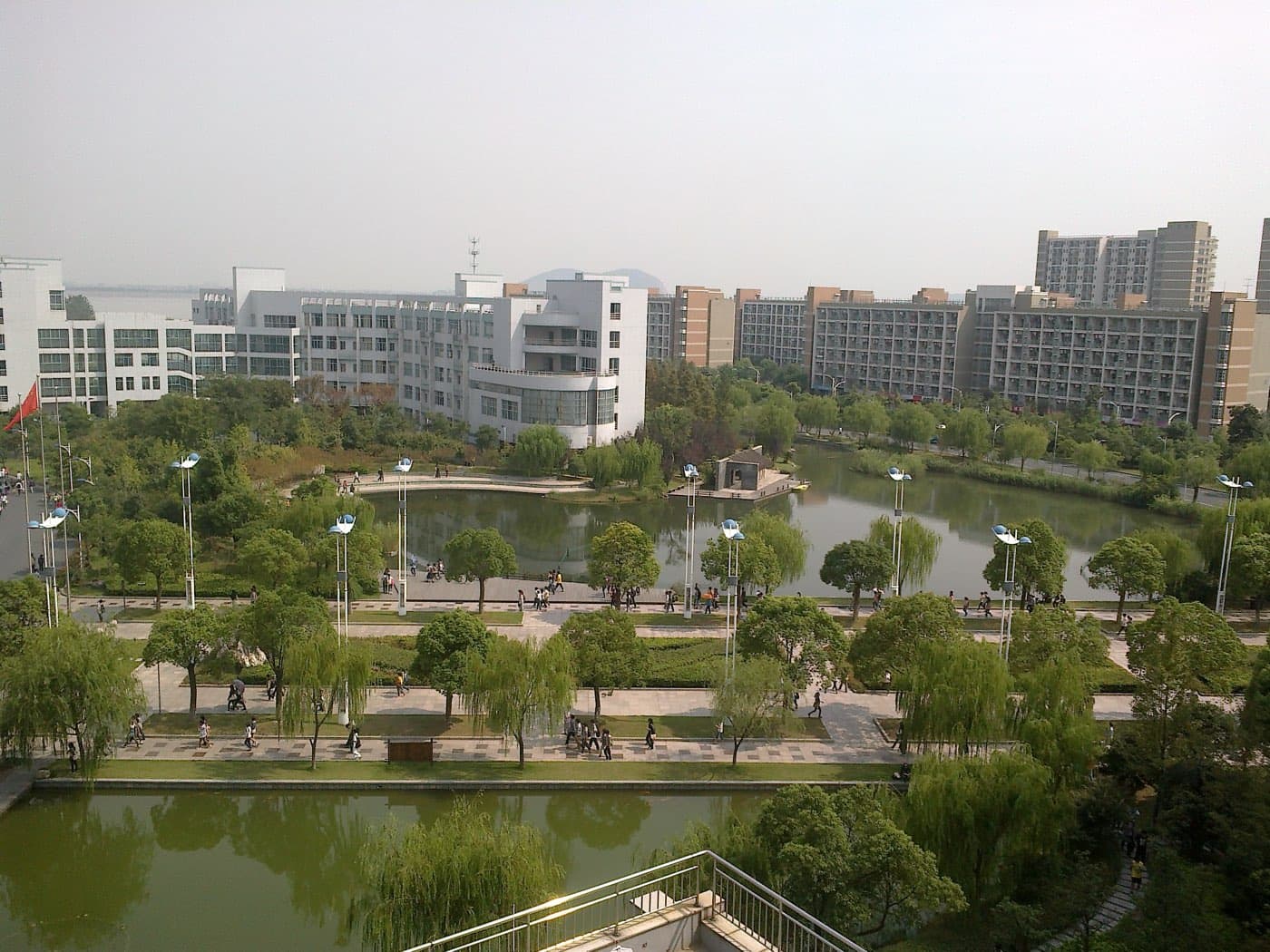
The university is located in Hangzhou, one of China's most picturesque and livable cities, the capital of Zhejiang Province. Hangzhou is not Beijing with its brutal winters or Shanghai with its suffocating humidity; the climate is humid subtropical, with comfortable autumns, manageable summers, and winters that rarely drop below freezing. West Lake (a UNESCO World Heritage site) is literally on the doorstep: the main Yuquan campus is a 15-minute walk from the western shore of the lake, surrounded by hills with Longjing tea plantations, Lingyin Temple, and pavilions and causeways — a genuine opportunity to decompress from academic intensity. The cost of living runs 30 to 40 percent below Shanghai or Beijing; campus canteen meals cost 15–25 yuan, off-campus room rental runs 800–1,500 yuan per month (though international dormitories charge more: single rooms 800–1,200 yuan, double rooms 500–800 yuan).
ZJU operates several campuses: Yuquan (engineering), Xixi (medicine), Huajiachi (humanities), Zhijiang (social sciences), and the International Campus in Haining (joint programs). The International Campus, launched in 2016, follows the residential college model of Cambridge and Harvard: students live alongside faculty, formal high-table dinners feature Nobel laureates, and facilities include gyms, an indoor pool, tennis courts, badminton halls, and dance studios. Shuttle buses run between campuses (by reservation), and the Hangzhou–Haining intercity railway stops directly at the International Campus. Practical friction tracks the baseline Chinese experience: dormitory curfews at 11pm, the Great Firewall blocks Google, YouTube, Instagram, and WhatsApp (VPN use is universal but adds daily inconvenience), and Mandarin is genuinely required for full integration — English-medium programs exist, but social life, internships, and Hangzhou's broader ecosystem operate primarily in Chinese, with HSK 5 a realistic minimum for non-English tracks.
Competition and entry requirements
Admission to ZJU for international students proceeds through the university's online system (iczu.zju.edu.cn), separately for undergraduate, master's, and doctoral programs. Core selection criteria for undergraduates (2026/2027 intake): age under 25, high school diploma, language certificate (for Chinese-taught programs, typically HSK level 5 or above; for English-taught programs, TOEFL or IELTS if English is not native), and — the key innovation — a valid China Scholastic Competency Assessment (CSCA) score. Starting with the 2026/2027 intake, all undergraduate applicants must provide a valid CSCA report. The first CSCA exam was held on December 21, 2025, with registration opening in November; from 2026 onward, the test is administered five times per year (January, March, April, June, December) via the official website www.csca.cn. Whether CSCA is required, which subjects must be taken, and the exam language depend on the target university, program, and admission year; applicants should verify these officially with the university and CSCA before registering.
Application documents include: passport copy (valid until March 2027), high school diploma and full transcript (with relative ranking or percentile if available), CSCA results, international test scores (SAT, IB, A-Level, etc., if applicable), language test certificate, personal statement (around 800 words), two recommendation letters from high school teachers, competition certificates (if any), and the ZJU applicant commitment form with handwritten signature. For master's and doctoral programs, additional requirements include bachelor's (or master's) degree, academic transcript, expanded personal statement with research plan (at least 1,500 words), and two letters from professors. Application deadlines for undergraduates: December 1, 2025, to February 28, 2026 (some programs extend to May 31, 2026); for self-funded master's and doctoral applicants, February 28, 2026; for Chinese Government Scholarship (Type B) recipients, December 31, 2025. The university conducts a preliminary document review, then invites successful candidates for video interviews with the academic school; final decisions rest on high school grades, language proficiency, research potential, and interview performance. The application fee is 800 yuan (non-refundable), results and admission offers are distributed in June–July 2026, online pre-registration occurs in late August, and on-campus registration in early September 2026.
Scholarships
ZJU offers a wide range of scholarships for international students, both through the Chinese government and through its own university and provincial programs. The Chinese Government Scholarship (CGS) is available in several formats: Type A (bilateral program via the student's home-country embassy), Type B (CGS university program managed by the China Scholarship Council and directly by ZJU), and the Youth of Excellence Scheme (YES China) for talented professionals with work experience. Type B scholarships for master's and doctoral students cover full tuition waiver, free on-campus accommodation or accommodation allowance, monthly stipend (typically 3,000–3,500 yuan for master's students, 3,500 yuan for doctoral students), and comprehensive medical insurance; the Type B deadline is December 31, 2025, with results announced in late July or early August 2026. For doctoral programs, the "China Studies Program" Ph.D. Fellowship (for humanities and social sciences) is also available, along with several ZJU scholarships: Zhejiang Government Scholarship, International Campus scholarships (ZJE Hai Scholarship), ZJU International School of Medicine Scholarship, College of Optical Science and Engineering Scholarship, and the China-ASEAN Oceanic Scholarship. Coverage varies — full or partial tuition, accommodation allowance, stipend; specific amounts and selection criteria should be verified on the university's official scholarship pages.
For undergraduates, Chinese Government Scholarship Type A and Type B are also available (see iczu.zju.edu.cn for requirements and deadlines), plus several university scholarships. An important note: CGS recipients must additionally provide a Foreigner Physical Examination Form (valid for 6 months) and a non-criminal record certificate (valid for 6 months), completed in Chinese or English. The Type B application process is two-stage: first, fill out the application on the CSC website (www.campuschina.org, agency number for ZJU is 10335), then upload all materials to the ZJU system; the application fee for scholarship applicants is the same 800 yuan. Competition is high — ZJU recommends a shortlist of candidates to the China Scholarship Council, which conducts the final review; around 60% of ZJU master's graduates continue to further studies. It's worth emphasizing: scholarships are awarded competitively, not automatically, based on academic performance, language proficiency, research potential, and interview results.
How we help you apply
Gaining admission to a top Chinese university like ZJU requires more than good grades — it demands strategic planning: choosing the right program (ZJU excels in engineering, biomedicine, and computer science, but not in all humanities fields), competent preparation for the newly mandatory CSCA exam (whose format and requirements are still crystallizing), a compelling personal statement that convinces a specific academic school of your research potential, and confident performance in video interviews. UNIPROFI consultants accompany applicants at every stage: helping compile a realistic program list aligned with your profile and career goals, developing an Admission strategy for China's top universities, conducting Mock interview for China's top universities to rehearse typical questions and arguments, providing Motivation letter writing support and Building a strong CV for Chinese universities, clarifying the intricacies of scholarship programs (Grants for studying in China), assisting with CSCA prep through foundation and intensive courses, and guiding the visa process (Chinese student visa support). For those seeking insider perspectives, a Consultation with a Tsinghua University expert is available.
UNIPROFI offers several service packages depending on the level of support. The Self-Guided Admission to China package suits those ready to drive the process themselves but needing expert verification and answers to key questions. Guided Admission to China includes step-by-step assistance at every stage — from program selection to document submission and interview preparation. The Turnkey Admission to China package removes all organizational burden: consultants handle the entire process from first consultation to visa receipt. For applicants targeting China's top-10 universities specifically (including ZJU), the specialized Admission to China's Top-10 Universities package provides deeper preparation and individualized strategy for the most competitive programs. UNIPROFI consultants work with the real admission requirements of ZJU and up-to-date data from recent application cycles — not outdated information scraped from the internet — and understand that successful admission to a university of Zhejiang's caliber requires not merely formal compliance with criteria, but a persuasive narrative demonstrating why you would be a valuable student for a specific program.
A real admission case

Sofia
Zhejiang University — scholarship
«With the right support, it turns out to be a manageable path, without the horror I'd imagined»
Read more reviewsTell us about yourself — we'll build an admissions strategy for this exact university.
Many students get in through our preparatory Language Year — an intensive year of Chinese at a partner university, followed by a move onto the main program.
What the Language Year isFrom application to admission
Profile review and strategy
We study your academic profile, goals and budget, assess your real chances, and shortlist universities and grants for your specific situation.
Document preparation
We help with translation, notarization, your motivation letter, CV and recommendations — tailored to each university's requirements.
Filing applications and university correspondence
We file your documents, track status, respond promptly to admissions offices, and keep every deadline under control.
Visa, move and your first weeks
We arrange your visa, insurance and medical exam, help with housing and transfer, and stay in touch after you arrive.
How we support admission here
From filing documents on your own to admission at one of China's top-10 universities — pick the level of involvement that fits you, and see exactly what's included in each tier.
If you're not admitted to any of your chosen universities, then under the terms of the agreement we'll refund your payment minus documented expenses, or support a free re-application the following year.
Common questions about admission
Why apply through UNIPROFI specifically?
UNIPROFI is about a well-thought-out application and a strong outcome: we build an application path around your profile, goals and the requirements of your selected universities. You work with mentors who are current students or graduates of these schools, so you get real understanding of the system, campuses and opportunities — not theory. We take on complex cases (including minors and admission without an 11th-grade diploma), build an individual strategy for your profile and goals, and support you through every stage, from documents to your visa.
Do you guarantee admission?
We don't offer "guarantees for the sake of a sale," because no one can directly influence a university's decision. What we do is structure everything to minimize the risk of rejection — matching you to the right universities, building a strong application strategy, and preparing documents carefully. Any refund or re-application arrangement is governed only by the current service agreement and the circumstances of the case.
What are my actual chances of getting in?
We do not state a universal admission probability because the decision belongs to the university. We instead assess your profile, programme requirements and application strategy.
Can I apply on my own — why do I need you?
You can, but most students end up losing time, making mistakes, or settling for weaker universities. We save you months, help you start at a stronger level, and prevent the mistakes that can cost you admission.
Get in touch to get started
Tell us about yourself and what you're specifically interested in — our specialists will help you find the right format.