
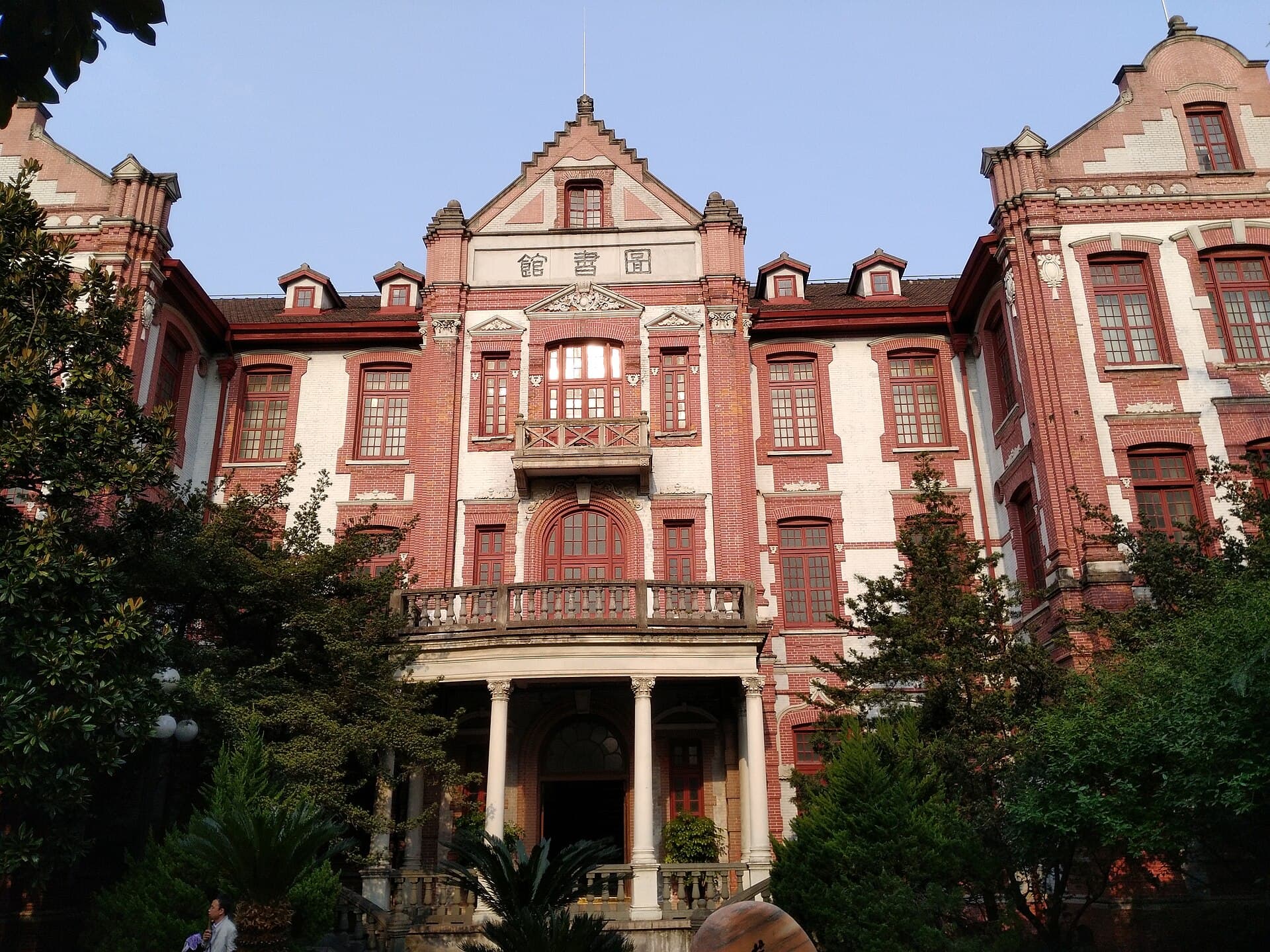
Shanghai Jiao Tong University
Shanghai Jiao Tong University
Tell us about your profile and we will answer for this university: your chances, the deadlines and what to prepare.
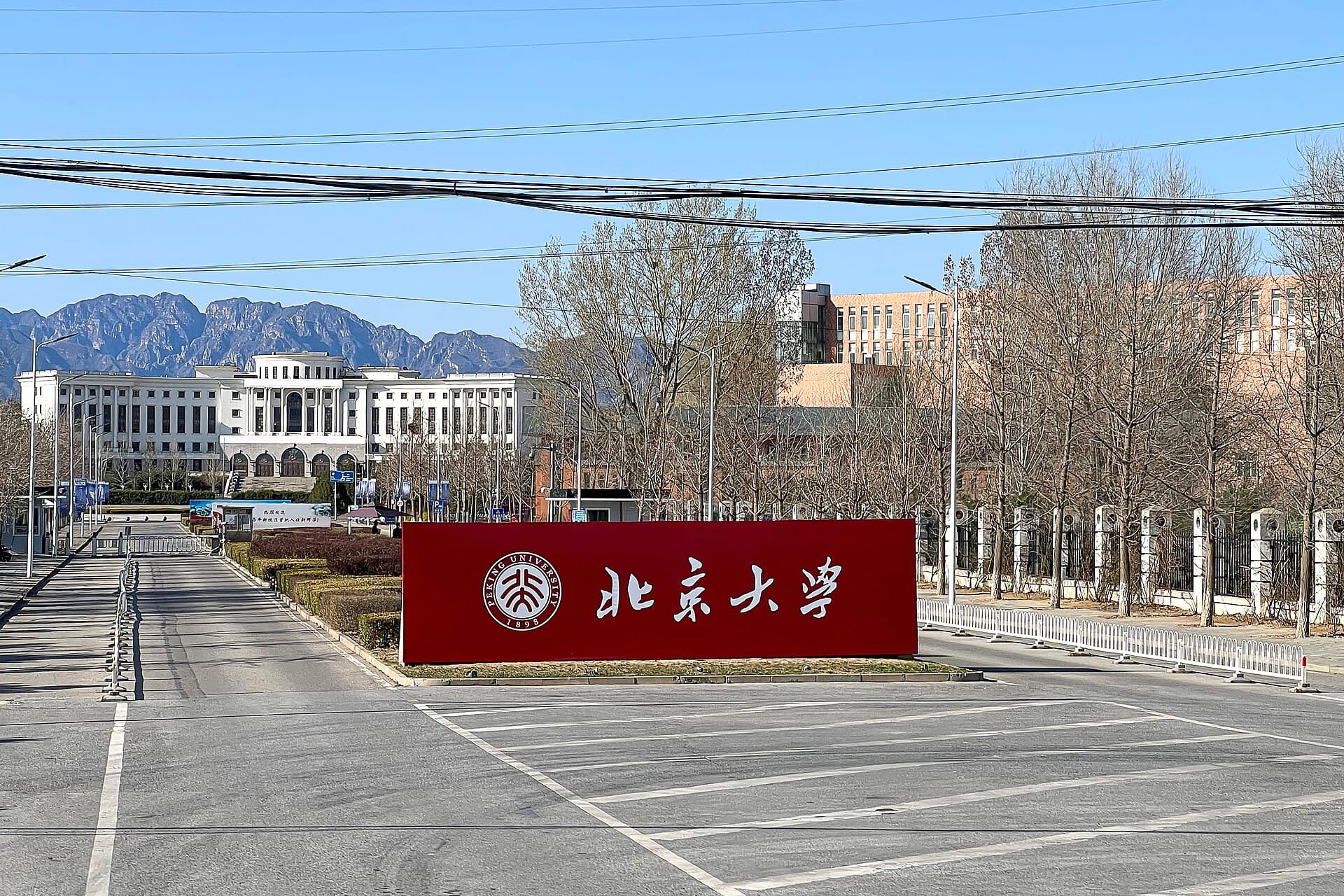
Photo: Nrwt1999 · CC BY-SA 4.0 · Wikimedia Commons
Shortlist a few and we'll compare them side by side and assess each one.
History and reputation: From "MIT of the East" to global top-50
Shanghai Jiao Tong University traces its origins to 1896, when reformist industrialist and educator Sheng Xuanhuai founded Nanyang Public School in Shanghai—one of China's earliest modern institutions and the cradle of engineering education in the country. By the 1920s and 1930s, the university (then known as Chiao Tung University) had earned the nickname "MIT of the East" for its rigorous curriculum and first-rate engineering graduates. After a westward split in the 1950s that saw much of the faculty relocate to Xi'an, the Shanghai branch was formally renamed Shanghai Jiao Tong University in 1959 and designated one of China's sixteen key national universities. Through decades of reform, SJTU strategically rebuilt its multidisciplinary profile: in 1999 it merged with Shanghai Agricultural College, and in 2005 it absorbed Shanghai Second Medical University, completing a transformation into a comprehensive research university spanning engineering, natural sciences, medicine, economics, management, law, humanities, agriculture, and the arts.
Today SJTU is a member of the elite C9 League (China's Ivy League), a pillar of the Double First-Class University initiative, and consistently ranks among the world's strongest institutions. QS World University Rankings 2026 places it joint 47th globally, while the 2025 Academic Ranking of World Universities (ARWU—Shanghai Ranking) ranks it 30th. In engineering and technology SJTU sits at 23rd worldwide (QS 2026), and its individual disciplines—biomedical engineering, marine/ocean engineering, energy science, nanoscience, computer science, robotics—regularly appear in the global top ten by subject. The university has produced more than 200 members of the Chinese Academy of Sciences and Chinese Academy of Engineering, six contributors to China's "Two Bombs, One Satellite" programme, five winners of the State Preeminent Science and Technology Award (including rocket-scientist Qian Xuesen, class of 1934), and a long roster of political leaders, entrepreneurs, and Nobel-calibre scholars. This lineage underscores SJTU's enduring mission to cultivate "first-class talent" for the nation and the world.
Chinese universities tighten portfolio and motivation-letter requirements every year — we track this university by university, so every application matches what the admissions committee actually expects right now.
Academic strengths and research infrastructure
Shanghai Jiao Tong University comprises 40 schools and departments, 13 affiliated hospitals, 13 affiliated medical research institutes, 23 directly governed units, and five university-owned enterprises. It offers 56 first-level doctoral programmes and 60 first-level master's programmes across ten broad disciplinary categories; 18 disciplines are included in China's Double First-Class construction list. Core strengths lie in engineering (mechanical, electrical, naval architecture, materials, chemical), computer and information sciences (artificial intelligence, integrated circuits), biomedicine (the School of Medicine is renowned in transplantation, oncology, and cardiovascular surgery), and applied natural sciences. Among the university's flagship undergraduate units is Zhiyuan College, an honours programme modelled on elite liberal-arts colleges, admitting top students for personalised, research-focused training; Zhiyuan alumni routinely publish in Nature and Science and enrol in PhD programmes at MIT, Stanford, and Caltech. In September 2025, two Zhiyuan chemistry graduates co-authored a breakthrough Nature paper on AI-driven catalyst discovery using a robotic platform developed at MIT, illustrating the college's impact on cutting-edge science.
Research infrastructure is vast. SJTU operates one national laboratory (under construction), two major national research facilities, 24 key national-level laboratories, eight national engineering research centres, three national collaborative innovation centres, and dozens of ministerial and provincial labs. Signature institutes include the Tsung-Dao Lee Institute (in partnership with Nobel laureate T.D. Lee, focusing on fundamental physics and cosmology), the Institute of Medical Robotics (founded by Professor Guang-Zhong Yang FREng, pioneer of surgical robotics and former director of Imperial College's Hamlyn Centre), the School of Artificial Intelligence (home to IAPR and IET Fellows leading deep-learning and computer-vision research), the Institute of Advanced Marine and Naval Architecture, and the Qingyuan Research Institute (cross-disciplinary AI-for-healthcare hub). The university has topped China in National Natural Science Foundation grants for eight consecutive years (through the 2010s), produces thousands of SCI-indexed papers annually (6,215 articles and reviews in 2016, including 2,912 in high-impact journals), and maintains an H-index above 80 for its most-cited faculty. Three national clinical medical research centres anchor translational medicine, rapidly moving discoveries from lab to bedside in precision diagnostics, oncology, and regenerative therapies.
Show the full profile
Campus life on Minhang and Xuhui, and living in Shanghai
The heart of SJTU is its Minhang Campus (800 Dongchuan Road, Minhang District)—over 300 hectares of modern, green university town on Shanghai's southwest edge. Here you'll find a network of libraries (open late, often full even on weekends—students praise the culture of quiet diligence), laboratory complexes, sports venues (stadiums, swimming pools, tennis and badminton courts, gyms, all bookable online via the campus app), and more than a dozen canteens offering Chinese regional, Korean, Japanese, Italian, and halal cuisines. The popular Fourth Canteen showcases dishes from across China's provinces; students also frequent cafés, convenience stores, and a full-service supermarket. Tree-lined paths beside the lake at Siyuan Gate, the botanical garden, and the expansive lawn near the School of Electronic Information and Electrical Engineering are favourite spots for picnics, photography, and relaxation. The historic Xuhui Campus (1954 Huashan Road, Xuhui District) sits in the city centre near metro lines 1, 9, 10, and 11; it houses humanities and law schools, parts of the medical faculty, and the landmark Pao Chao-lung Library. International students at Minhang typically reside at Nanyang Beiyuan International Student Apartment (360 Zhangjiali Road, two kilometres north of campus, with free shuttle service)—single rooms with private bath or two-bedroom suites with shared bath, all equipped with air conditioning, furniture, and free campus Wi-Fi; amenities include a canteen, supermarket, café, laundry, gym, and meeting rooms. At Xuhui, students are housed in Taoliyuan dormitory.
Transport links are good: metro line 5 (Dongchuan Road station) plus bus Jiangchuan 7, or line 15 (Zizhu Hi-tech Park station), connect Minhang to the city; a campus shuttle runs between Xuhui and Minhang (roughly 40 minutes). As a global financial and cultural hub, Shanghai offers world-class internships, conferences, museums, and networking—plus the convenience of universal QR-code payments, an extensive metro system, and 24/7 safety. Student life at SJTU is vibrant and diverse: dozens of clubs (robotics, coding competitions, space modelling, music and dance ensembles, volunteering, sports), regular international mixers, cultural festivals (new international undergraduates recently enjoyed a Mid-Autumn mooncake-making workshop), hackathons, and career fairs with Huawei, Alibaba, Tencent, ByteDance, and multinationals like Microsoft, Apple, and BMW. Many international students note that the rigor and collaborative spirit among Chinese peers sets a high bar and drives academic excellence.
Admissions selectivity and entry requirements
Admission to SJTU is highly competitive. Given its QS top-50 ranking and dense pools of high-achieving applicants from across Asia, Europe, and Latin America, undergraduate acceptance rates hover around 10–15%, and graduate admissions depend heavily on programme, supervisor availability, and research fit (for many doctoral tracks, securing a supervisor's pre-acceptance letter is de facto required). The university offers Chinese-taught undergraduate programmes, English-taught undergraduate tracks (notably at the UM-SJTU Joint Institute, JI, and Paris Elite Institute of Technology, SPEIT), and fully English-taught master's and doctoral programmes in engineering, business, medicine, and computer science.
For Chinese-taught undergraduate entry in 2026, applications are accepted in two rounds: early round (8 December 2025 – 5 February 2026, Beijing Time) and regular round (6 February – 10 March 2026). Applicants must provide a high-school diploma (or pre-graduation certificate, diploma due before enrolment), full transcripts, standardised test scores—SAT (code 9184), ACT (code 3038), A-Level, IB (code N010601), UEC, or equivalent—and language certificates: Chinese proficiency HSK level 5 ≥200 (with Writing ≥60) or HSK 6 ≥180 (Writing ≥60); English proficiency via TOEFL (code D070) or IELTS. From 2026, SJTU also requires scores from the China Scholastic Competency Assessment (CSCA) in Mathematics and other subjects depending on the programme category (see the catalogue at isc.sjtu.edu.cn); applicants who have not yet sat CSCA may submit other materials initially, receive pre-admission, and supplement CSCA scores by 30 June 2026. The necessity, subject list, and language of CSCA depend on the target university, programme, and admission year; verify the official requirements of both the university and CSCA before registering. Regular-round applicants also sit SJTU's own online entrance exam (21–22 March 2026) and attend interviews; pre-admitted candidates must confirm enrolment by prepaying tuition within two weeks of the result. Application fee: CNY 800; annual tuition for Chinese-taught programmes: CNY 24,800/year (Puyuan Future Technology Institute: CNY 120,000/year); insurance CNY 800/year; accommodation CNY 6,600–12,600/semester depending on room type and campus.
For English-taught undergraduate programmes (e.g. JI, Global College), requirements are similar but English thresholds are higher: TOEFL iBT ≥90 for tests before January 2026; for tests from January 2026 onward, minimum score 4.5, recommended 5.0 (new TOEFL scoring); or IELTS ≥6.0. CSCA is also mandatory under the same deadline policy. All international undergraduate students must attain HSK level 4 to meet SJTU's graduation requirement. Graduate admissions open 15 October 2025; deadlines vary by funding source: Chinese Government Scholarship (CGS Type B, via SJTU) first round closes 15 December 2025, final round 15 February 2026; Shanghai Government Scholarship and SJTU scholarships close 31 March 2026; self-funded applicants until 31 May 2026. Master's applicants need a bachelor's degree (or equivalent recognised in China); doctoral applicants a master's (some schools accept direct bachelor-to-PhD with supervisor approval). Required documents: transcripts, two recommendation letters from associate professors or above, personal statement and research plan, language proof (HSK for Chinese-taught, TOEFL/IELTS for English), passport copy, and for certain schools/programmes a supervisor acceptance letter (full list at apply.sjtu.edu.cn). Application fee CNY 800; master's tuition ranges from CNY 28,900/year (general programmes) up to CNY 207,200/year (select business programmes); doctoral tuition CNY 45,500/year. Competition for top fields—AI, biomedicine, microelectronics, robotics—is fierce; strong research experience, publications, or a portfolio significantly strengthen your file.
Scholarships
SJTU actively supports international students through a range of scholarships. The Chinese Government Scholarship (CGS) is the most prestigious, covering full tuition, insurance, a monthly stipend (CNY 2,500 for undergraduates, 3,000 for master's, 3,500 for doctoral students), and an accommodation subsidy (CNY 1,100/month for general scholars, 1,650/month for senior scholars—SJTU does not provide free dormitories; the subsidy partially offsets rental costs). CGS applications can be submitted through two channels: Type B via SJTU (agency code 10248 on the CSC portal studyinchina.csc.edu.cn) or Type A via the Chinese embassy/consulate in your home country (check locally for deadlines and procedures). For 2026 entry via SJTU, the first-round CGS deadline is 15 December 2025, final round 15 February 2026; candidates must first obtain a pre-admission notice from SJTU, then register on the CSC website.
Shanghai Government Scholarship and SJTU internal scholarships are tiered. For undergraduates: first-class covers full tuition, CNY 2,500/month stipend, 1,100/month accommodation subsidy, and insurance (for four years); second-class covers 50% tuition, 1,100/month accommodation subsidy, insurance; third-class covers 25% tuition and insurance. For master's and doctoral students: first-class includes tuition, insurance, 1,100/month accommodation subsidy, and 2,500/month stipend (for the full study duration); second-class tuition, insurance, accommodation subsidy; third-class insurance and accommodation subsidy. Applications are made directly in the online system (apply.sjtu.edu.cn) by checking the relevant box; deadline 31 March 2026. The International Chinese Language Teachers Scholarship (formerly Confucius Institute Scholarship) supports those learning or preparing to teach Chinese; details at the Chinese International Education Foundation website. Note that scholarship winners must still prepay a registration deposit (CNY 3,000), which is refunded after enrolment.
How we help you apply
Shanghai Jiao Tong is not just a prestigious line on your CV—it's a gateway to world-class faculty, cutting-edge labs, and Shanghai's innovation ecosystem. Yet the multi-stage selection, CSCA requirement, language hurdles, and exacting document formats create significant barriers for applicants from Russia and the CIS. UNIPROFI specialises in admissions to China's top universities and knows every step inside out.
The Admission to China's Top-10 Universities plan offers end-to-end support for SJTU and peer institutions. You'll receive a detailed profile audit and programme shortlisting (many applicants overlook niche tracks or joint programmes with lower competition but strong teaching), a tailored document strategy (transcripts, recommendations, CV, motivation letter adapted to Chinese admissions norms), full application management (registration on apply.sjtu.edu.cn, uploading scans in the required format, status tracking, correspondence with faculty offices), assistance finding a doctoral supervisor (often critical for graduate admission), interview prep (mock sessions in English or Chinese covering typical SJTU questions), and scholarship-application consulting (CGS, Shanghai, SJTU). After your offer, consultants walk you through deposit payment, JW202 issuance, X1/X2 visa submission, and pre-departure planning.
The Turnkey Admission to China plan handles the full cycle—programme selection through dormitory registration—ideal for those who want professionals managing logistics. Guided Admission to China provides step-by-step advice and document review, but you fill forms yourself. Self-Guided Admission to China grants access to verified instructions, templates, insider tips, and expert feedback on your drafts—perfect for organised applicants with good English or Chinese.
Among standalone services, especially popular are: Consultation with a Tsinghua University expert (profile review and recommendations from a top-university insider), Admission strategy for China's top universities (a multi-month roadmap with CSCA prep, recommendation gathering, motivation-letter finalisation), CSCA prep: intensive course (targeted training for the new mandatory exam, still unfamiliar to many—a real edge), Mock interview for China's top universities (rehearsal with feedback on common pitfalls and presentation polish), and Chinese student visa support (full visa-process management, including translation and notarisation). UNIPROFI's team has stewarded dozens of successful SJTU cases—from Chinese-taught bachelor's to AI and engineering PhDs—and delivers transparency, honesty, and realistic forecasts at every stage. Let the experts handle logistics; you focus on sharpening your academic skills and language—and maximise your shot at joining Shanghai Jiao Tong University.
Tell us about yourself — we'll build an admissions strategy for this exact university.
Many students get in through our preparatory Language Year — an intensive year of Chinese at a partner university, followed by a move onto the main program.
What the Language Year isFrom application to admission
Profile review and strategy
We study your academic profile, goals and budget, assess your real chances, and shortlist universities and grants for your specific situation.
Document preparation
We help with translation, notarization, your motivation letter, CV and recommendations — tailored to each university's requirements.
Filing applications and university correspondence
We file your documents, track status, respond promptly to admissions offices, and keep every deadline under control.
Visa, move and your first weeks
We arrange your visa, insurance and medical exam, help with housing and transfer, and stay in touch after you arrive.
How we support admission here
From filing documents on your own to admission at one of China's top-10 universities — pick the level of involvement that fits you, and see exactly what's included in each tier.
If you're not admitted to any of your chosen universities, then under the terms of the agreement we'll refund your payment minus documented expenses, or support a free re-application the following year.
Common questions about admission
Why apply through UNIPROFI specifically?
UNIPROFI is about a well-thought-out application and a strong outcome: we build an application path around your profile, goals and the requirements of your selected universities. You work with mentors who are current students or graduates of these schools, so you get real understanding of the system, campuses and opportunities — not theory. We take on complex cases (including minors and admission without an 11th-grade diploma), build an individual strategy for your profile and goals, and support you through every stage, from documents to your visa.
Do you guarantee admission?
We don't offer "guarantees for the sake of a sale," because no one can directly influence a university's decision. What we do is structure everything to minimize the risk of rejection — matching you to the right universities, building a strong application strategy, and preparing documents carefully. Any refund or re-application arrangement is governed only by the current service agreement and the circumstances of the case.
What are my actual chances of getting in?
We do not state a universal admission probability because the decision belongs to the university. We instead assess your profile, programme requirements and application strategy.
Can I apply on my own — why do I need you?
You can, but most students end up losing time, making mistakes, or settling for weaker universities. We save you months, help you start at a stronger level, and prevent the mistakes that can cost you admission.
Get in touch to get started
Tell us about yourself and what you're specifically interested in — our specialists will help you find the right format.