
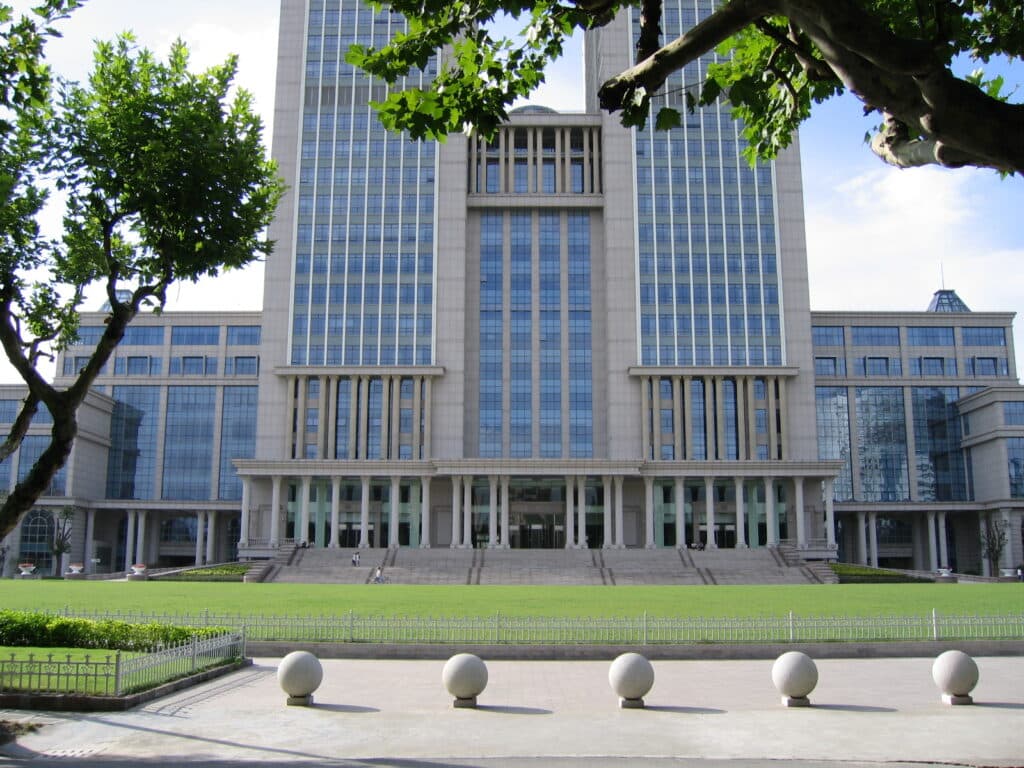
Fudan University
Fudan University
Tell us about your profile and we will answer for this university: your chances, the deadlines and what to prepare.
Shortlist a few and we'll compare them side by side and assess each one.
A Century of Excellence: History and Global Standing
Founded in 1905 during China's modernization movement, Fudan University stands today as one of the nation's premier comprehensive research institutions and a flagship member of the elite "Double First-Class" initiative, the earlier "Project 985," and "Project 211." Located in Shanghai—China's financial and cultural capital—Fudan has steadily climbed the global rankings and now commands respect far beyond East Asia. In the 2026 QS World University Rankings, Fudan achieved 30th place worldwide, a remarkable leap from 39th the previous year, while the Times Higher Education World University Rankings 2026 placed it 36th globally. These rankings reflect exceptional performance across academic reputation (93.7 in QS 2026), employer reputation (95.1), and research citations (92.8), underscoring both the university's scholarly output and the value employers worldwide place on its graduates.
The name "Fudan" itself, drawn from classical Chinese literature, symbolizes self-renewal and the relentless pursuit of knowledge—a philosophy that has guided the institution for over a century. From its origins as a small liberal-arts college, Fudan has grown into a multidisciplinary powerhouse encompassing more than twenty schools and faculties, spanning the humanities, social sciences, natural sciences, engineering, medicine, and management. Its alumni network includes leaders in government, academia, business, and the arts, and a Fudan degree is recognized by employers and graduate schools around the world as a mark of rigorous training and intellectual depth.
Chinese universities tighten portfolio and motivation-letter requirements every year — we track this university by university, so every application matches what the admissions committee actually expects right now.
Academic Strengths and Research Frontiers
Fudan's reputation rests on genuine research strength across a broad spectrum of disciplines. The physical sciences rank 22nd worldwide in the THE 2026 subject rankings; engineering stands at 36th, life sciences at 37th, and computer science at 46th. Economics and finance are particularly distinguished: the School of Economics operates the Undergraduate International Program in Economics (UIPE), taught entirely in English, which attracts top students from around the globe and prepares them for careers in policy, finance, and research. The School of International Relations and Public Affairs is renowned throughout Asia for its programs in global governance, diplomacy, and public administration, while the School of Journalism has trained generations of China's leading media professionals.
The Shanghai Medical College, integrated into Fudan in 2000, is one of China's oldest and most prestigious medical schools, with affiliated teaching hospitals—Huashan Hospital and Zhongshan Hospital among them—where students gain hands-on clinical experience. Fudan has invested heavily in emerging interdisciplinary fields: the School of Data Science leads the nation in big data and artificial intelligence education, while specialized innovation institutes focus on intelligent materials, advanced manufacturing, robotics, and biomedical engineering. The university fosters deep partnerships with leading institutions worldwide, including joint research labs, dual-degree programs, and faculty exchanges, ensuring that its students and scholars engage with the global research community.
Show the full profile
Campus Life in Shanghai: A Global City, a Green Campus
Fudan's main Handan Campus occupies a leafy enclave in the Yangpu District of northern Shanghai. Historic buildings from the early 20th century stand alongside modern lecture halls, state-of-the-art laboratories, sprawling libraries, sports complexes, and student dormitories. The campus atmosphere balances academic intensity with vibrant extracurricular life: students join research groups, volunteer initiatives, sports teams, cultural clubs, and entrepreneurship incubators. International students are typically housed in on-campus dormitories, with options ranging from single to shared rooms; costs are modest compared to private rental in Shanghai, and living on campus offers easy access to libraries, dining halls, and peer networks.
Shanghai itself is a megacity of more than twenty-five million people, a global financial hub, and a cultural crossroads where East meets West. The metro system is vast and efficient, connecting Fudan's campus to historic neighborhoods like the Bund, the futuristic skyline of Pudong, art districts, parks, and innovation hubs. For students, Shanghai offers unparalleled internship and career opportunities: multinational corporations, startups, research institutes, and government agencies all maintain a significant presence. Living costs in Shanghai are higher than in most other Chinese cities—monthly expenses (accommodation, food, transport, personal spending) typically range from 2,500 to 5,000 RMB (roughly 350 to 700 USD)—but many international students offset these costs through scholarships, part-time work, or family support. The city's dynamism, safety, and cosmopolitan character make it an ideal environment for ambitious students seeking both academic rigor and real-world engagement.
Competition and entry requirements
Fudan is highly selective, and admission to its most prestigious programs is intensely competitive. International applicants follow separate tracks from Chinese nationals, and requirements vary by degree level (undergraduate, master's, doctoral), language of instruction (Chinese or English), and field of study. For Chinese-taught undergraduate programs, applicants must demonstrate Chinese proficiency—typically HSK level 5 (score 210 or above) or level 6 (score 180 or above), with humanities and social science majors often requiring higher thresholds than science and engineering—and must sit the China Scholastic Competency Assessment (CSCA), a standardized exam administered by the China Scholarship Council on behalf of the Ministry of Education. The necessity of CSCA, the list of required subjects, and the exam language depend on the target university, program, and admission year; applicants should verify the official requirements from both Fudan and CSCA before registering.
English-taught undergraduate programs—such as UIPE (economics), UIPDB (data science), the Global Bachelor of Fintech, International Organizations and Global Governance, and the six-year MBBS (clinical medicine)—require proof of English proficiency (TOEFL ≥90, IELTS ≥6.5, Duolingo ≥110, or PTE ≥61 for non-native speakers), strong performance on CSCA in mathematics and relevant science subjects (physics for data science and engineering, chemistry for medicine), and an excellent high school transcript. Application windows for 2026 undergraduate entry run in two phases: Phase 1 (January 1–15, 2026) and Phase 2 (February 23–March 6, 2026). Pre-admission results are announced in mid-February and early April respectively; admitted students must pay the first-year tuition within two weeks to confirm enrollment, and formal admission notices are downloadable from June 1, 2026.
Graduate admissions (master's and doctoral) also operate in two cycles: Phase 1 (October 13–December 12, 2025, during which applicants can apply for Chinese Government Scholarship and Shanghai Government Scholarship) and Phase 2 (March 1–31, 2026). Master's applicants need a bachelor's degree, two recommendation letters from professors, language certification (HSK for Chinese programs, TOEFL/IELTS for English programs), and must pass departmental assessments (interviews or written exams). Doctoral applicants must hold a master's degree and secure the agreement of a prospective supervisor before applying. Tuition for international students varies widely: Chinese-taught undergraduate programs generally cost 26,000–30,000 RMB per year, while English-taught programs range from 75,000 to 100,000 RMB per year (MBBS and some economics programs at the higher end). Graduate tuition for Chinese-taught programs runs from 26,000 RMB (humanities) to 54,000 RMB per year (doctoral medicine). The application fee is 800 RMB, non-refundable, and exact tuition figures are confirmed upon enrollment.
Scholarships
Fudan offers international students multiple scholarship channels. The most prestigious is the Chinese Government Scholarship (CGS), which comes in several forms: bilateral programs (administered by Chinese embassies in the applicant's home country) and university-administered quotas including the High Level Graduate Program, the Silk Road Program, and the Chinese University Program. CGS recipients receive full tuition waiver, free on-campus accommodation (or housing subsidy), comprehensive medical insurance, and a monthly stipend (3,000 RMB for master's students, 3,500 RMB for doctoral students). To apply via Fudan's quota, candidates complete an online application on the Campus China portal (selecting Program Category B and Agency Number 10246 for Fudan) during Phase 1 (October 13–December 12, 2025) and upload the CGS application form in Fudan's admissions system.
The Shanghai Government Scholarship offers similar benefits and is awarded to outstanding students with financial need; it is recommended to apply for both CGS and Shanghai scholarship simultaneously during the Phase 1 window. Fudan also provides its own International Students' Scholarships, awarded automatically at admission based on academic merit without requiring a separate application. For students in select English-taught programs (e.g., UIPE), Dean's Scholarships covering up to half of annual tuition are available to top performers. Scholarship availability, quotas, and eligibility criteria can change from year to year, so it is essential to consult the official website of Fudan's International Students Office (iso.fudan.edu.cn) and verify the current requirements for your intended admission cycle.
How we help you apply
Gaining admission to Fudan University is more than submitting a strong transcript: it demands strategic planning, mastery of unfamiliar processes—CSCA registration and preparation, scholarship portals, multi-stage application windows—and the ability to present your story compellingly to a highly selective committee. A misstep in document formatting, a missed deadline, or a poorly matched program choice can cost you a year and a rare opportunity. UNIPROFI specializes in guiding students through the complexities of China's top-tier admissions, and we know what Fudan's admissions committees expect because we work with this system every cycle.
We help you build an individualized strategy: identifying realistic target programs at Fudan (and backup options elsewhere), crafting a CV and motivation letter in the format Chinese universities expect, assembling and translating required documents, navigating CSCA registration and test preparation, completing online applications and scholarship portals accurately, and rehearsing interviews for the most competitive programs. If you're aiming specifically for China's top-10 universities, including Fudan, consider our Admission to China's Top-10 Universities package. It includes everything from an initial consultation with an expert who graduated from Tsinghua University, to full end-to-end support—application strategy, document preparation, CSCA coaching, mock interviews, scholarship guidance, and visa assistance.
If your situation is simpler—solid academic record, but you need expert support at key stages—our Turnkey Admission to China, Guided Admission to China, or Self-Guided Admission to China tiers offer varying levels of hands-on help and access to resources like our CSCA prep: foundation course and CSCA prep: intensive course. You can also add individual services as needed: Admission strategy for China's top universities, Building a strong CV for Chinese universities, Mock interview for China's top universities, or Grants for studying in China. UNIPROFI is your navigator in a complex and competitive landscape: we don't just help you submit an application—we help you get in, thrive, and launch the career you've worked so hard to build.
Tell us about yourself — we'll build an admissions strategy for this exact university.
Many students get in through our preparatory Language Year — an intensive year of Chinese at a partner university, followed by a move onto the main program.
What the Language Year isFrom application to admission
Profile review and strategy
We study your academic profile, goals and budget, assess your real chances, and shortlist universities and grants for your specific situation.
Document preparation
We help with translation, notarization, your motivation letter, CV and recommendations — tailored to each university's requirements.
Filing applications and university correspondence
We file your documents, track status, respond promptly to admissions offices, and keep every deadline under control.
Visa, move and your first weeks
We arrange your visa, insurance and medical exam, help with housing and transfer, and stay in touch after you arrive.
How we support admission here
From filing documents on your own to admission at one of China's top-10 universities — pick the level of involvement that fits you, and see exactly what's included in each tier.
If you're not admitted to any of your chosen universities, then under the terms of the agreement we'll refund your payment minus documented expenses, or support a free re-application the following year.

Common questions about admission
Why apply through UNIPROFI specifically?
UNIPROFI is about a well-thought-out application and a strong outcome: we build an application path around your profile, goals and the requirements of your selected universities. You work with mentors who are current students or graduates of these schools, so you get real understanding of the system, campuses and opportunities — not theory. We take on complex cases (including minors and admission without an 11th-grade diploma), build an individual strategy for your profile and goals, and support you through every stage, from documents to your visa.
Do you guarantee admission?
We don't offer "guarantees for the sake of a sale," because no one can directly influence a university's decision. What we do is structure everything to minimize the risk of rejection — matching you to the right universities, building a strong application strategy, and preparing documents carefully. Any refund or re-application arrangement is governed only by the current service agreement and the circumstances of the case.
What are my actual chances of getting in?
We do not state a universal admission probability because the decision belongs to the university. We instead assess your profile, programme requirements and application strategy.
Can I apply on my own — why do I need you?
You can, but most students end up losing time, making mistakes, or settling for weaker universities. We save you months, help you start at a stronger level, and prevent the mistakes that can cost you admission.
Get in touch to get started
Tell us about yourself and what you're specifically interested in — our specialists will help you find the right format.